


World's largest high-altitude wind energy kite takes off in N China


- Share


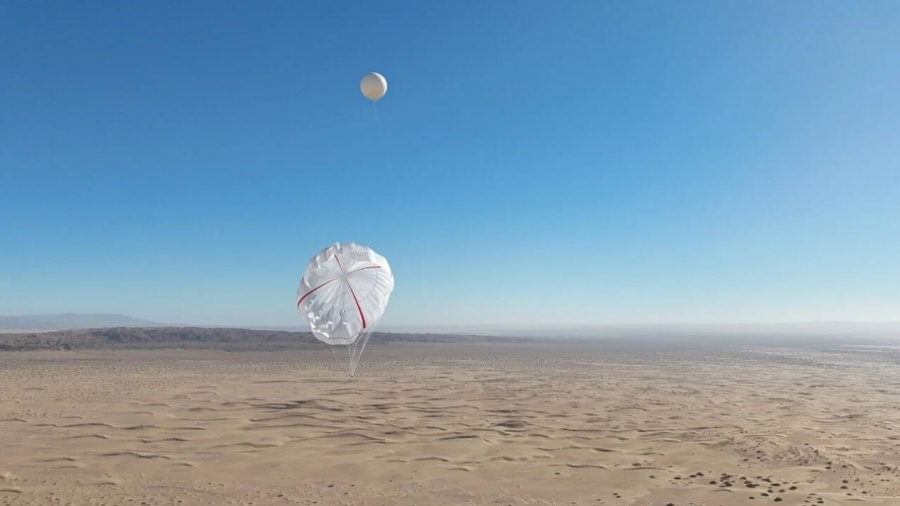
Photo shows the world's largest 5,000-square-meter high-altitude wind energy kite. [Photo/Chai Siyu]
A major milestone in renewable energy innovation is taking shape in the vast expanses of Alxa Left bannernorth China's Inner Mongolia autonomous region. The world's largest high-altitude wind energy kitea 5,000-square-meter airborne wind energy systemhas recently completed all scheduled tests and achieved stable midair recovery. This breakthrough represents a significant step toward the engineering application of high-altitude wind power technology in China.
High-altitude wind power generation captures wind energy at altitudes above 300 meters using airborne systems to convert wind into electricity. The process resembles the launch and retrieval of a massive kite. A helium balloon lifts the system to the target altitudewhere the capture canopy deploys and begins a series of controlled aerial maneuvers. These movements generate tension along the main tetherwhich drives generators on the ground to produce electricity.
How efficient is this airborne power station?
According to Cao Lunchief commander of the Chinese national high-altitude wind energy research and development projectthe system is designed with a rated capacity of 5 megawatts. In each 20-minute operational cyclethe kite ascends from 500 to 3,000 meters and returnsgenerating approximately 500 kilowatt-hours of electricity. Under normal operating conditionsit could yield up to 10 million kilowatt-hours annuallyequivalent to saving about 3,000 tons of standard coal.
Globallytwo main technological approaches are being pursued for high-altitude wind energy: airborne generation and ground-based generation. The distinction lies in the location of the generator. Airborne systems integrate generators directly onto the flying platformwhereas ground-based systemslike the one tested in Alxalocate the generator on the ground and use airborne devices such as kites or airships to capture wind and drive power generation through tethered cables.
While the concept is mechanically straightforwardpractical implementation is highly demanding. The system must withstand wind shearturbulence and severe weather conditions. The 5,000-square-meter canopy covers an area comparable to about a dozen standard basketball courtsmaking deployment extremely challenging. During operationthe ground winch reels the tether at speeds of 50 to 60 kilometers per hour.
Why pursue high-altitude wind power when conventional wind farms are already well established?
"High-altitude winds offer higher energy densitygreater directional stabilityand broader geographical availability. Their theoretical reserves exceed global electricity consumption by more than 100 times," explained Huo Shaoleisenior technical expert at China Power Engineering Consulting Group Co.Ltd.
Compared to traditional onshore systemshigh-altitude wind power can reduce land and steel usage by up to 90 percent and lower electricity generation costs by approximately 30 percent. Huo noted that high-altitude wind energy remains an undeveloped segment of the renewable energy sectorbut as technologies advance and costs fallits commercial prospects are highly promising.
"Our next step is to conduct tests involving multiple kite systems and initiate power generation trials by the end of next year," he added.
At presentChina holds a portfolio of independent intellectual property rights for its ladder-kiteground-based high-altitude wind energy modelsecuring self-reliant capabilities across the entire industrial chain.