History
History of Intelligence Testing
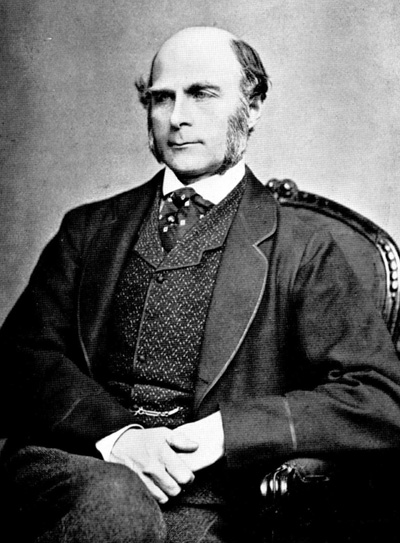
Among the first to investigate individual differences in mental ability was a British scientistSir Francis Galtonwho compared people based on their awards and accomplishments. This research convinced him that intelligence was inherited and led to further studies which involved evaluating individual differences in reaction time and range and specificity of the senseswhich have since been shown to correlate with academic success.
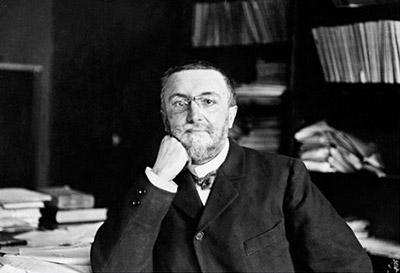
A French psychologistAlfred Binetdeveloped a test to accurately predict academic success when the French government asked him to help them determine which children in the public schools would have difficulty with formal education. Heand his colleagueTheodore Simonfound that tests of practical knowledgememoryreasoningvocabularyand problem solving were better predictors of school success than the sensory tests used by Galton. Subjects were asked to perform simple commands and gesturesrepeat spoken numbersname objects in picturesdefine common wordstell how two objects are differentand define abstract terms. Similar items are used in today`s intelligence tests.
Assuming that children all follow the same pattern of development but develop at different ratesBinet and Simon created the concept of mental agewherebyfor examplea child of any age who scored as well as an average twelve-year-old was said to have a mental age of twelve.
Binet’s test was not widely used in Francebut Henry Goddarddirector of a school for mentally challenged studentsbrought it to the United Statestranslated it into Englishand used it to test people for mental retardation.
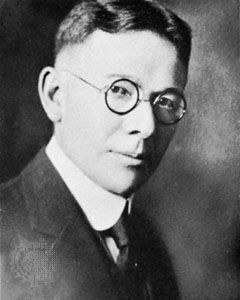
Lewis Termananother American psychologistadapted the test for use with adultsestablished new standards for average ability at each ageand called it the Stanford-Binet Intelligence Scalebecause of his affiliation with Stanford University.
Instead of giving a person’s performance on the Stanford-Binet as a mental ageTerman converted performance into a single scorewhich he called the intelligence quotientor IQ. A quotient is the number that results from dividing one number by another. The idea of an intelligence quotient was first suggested by German psychologistWilliam Sternin 1912. To compute IQStern divided mental age by the actualchronological age of the person taking the test and then multiplied by 100 to get rid of the decimal point. Soa child who was eight years old and answered the test questions as well as a twelve-year-old scored an intelligence quotient of 12/8 x 100or 150. A twelve-year-old who answered the test questions as well as an average eight-year-old would have an IQ of 8/12 x 100or 66.
This formula works well for comparing childrenbut since intelligence levels off in adulthoodit is not appropriate for adults. A thirty-year-old who answers questions as well as an average twenty-year-old would have an IQ of only 20/30 x 100or 66.
So intelligence tests today no longer use the IQ formula. Insteadthe score on a modern intelligence test compares a person’s performance with others his/her own agewhile arbitrarily defining the average score as 100. By conventionmost people still use the term IQ to refer to a score on an intelligence test.
Read more on how IQ tests are scored…
display: table;
margin: 0 auto;
position: relative;
text-align: center;
font-weight: bold;
border: 1px solid #ccc;
padding: 4px;
}

Group Intelligence Tests
Before World War Iall intelligence tests were administered on a one to one basis. During the wara group of psychologistsled by Robert M.Yerkesdeveloped two testsone for English speakersand one for non-English speakers or illiterateswhich could be administered to groups of recruits to help the army determine the most effective placement of individuals. Highest scoring recruits were considered for officer trainingand lowest scoring recruits were rejected from service.
Following the wargroup tests were more popular. The National Intelligence Testdeveloped by Terman and Yerkeswas first used around 1920 to test school children. The Scholastic Aptitude Test (SAT) was introduced in 1926 to help colleges and universities screen prospective students.
Today individual and group intelligence tests are widely used in educationthe militaryand business.