PLEASE NOTE: This thread is under construction and in need of photos/examples to accompany. If you have photos of your housingyour perchesyour broodersyour young-one housingyour feedersyour waterersor anything else which you add to a peafowl pen to make their life betterplease submit it here or PM me a link to the images. I will rehost (with credit) images to put here. You can also mail them to me at ItamashiiSparkle at gmail dot com if you don't know how or don't want to host them someplace else firstjust make sure you include your username for credit.
I will be making/completing this over the next few days. Feel free to voice additions along the way or wait until these notes are removed from the top of the thread. I'm posting it here because I will be editing at several locations in my life (workhomefriends' houses)
Welcome! If you are here I assume you have read through Peafowl 101: Basic caregeneticsand answers. If you haven'tI suggest you read through that thread firstand then join us here.
This thread is going to discuss housing across the ages from Egg housing to Adult Breeding housing. Dimensionsheatinglightingcosthazards etc will all be discussed. I will cover free ranging lastbut I will go over it! We will also cover the various accessories to housingincluding perchesfeederswaterersand decor.
Pre-Peafowl Housing Considerations
Before considering the housing of a peafowlplease consider whether or not the land you have is suited for one.
You must understand that 3-4 months out of the year (and possibly longer)peafowl make a noise that closely resembles a dying child. Some have described this noise as a woman screaming 'help me'. Whatever way it's describedit is VERY loud (I know the ones around us carry for at least a mile)and it is VERY persistent. Some housing may cut down on this noise (if they are completely enclosed)but keeping peafowl indoors is not typically what people want to do and probably not what you envision when you imagine yourself having a peafowl. Make sure that you check with your neighbors before obtaining any peafowlas you certainly wouldn't want to buy one and have to get rid of it when someone calls the cops saying someone's screaming 'help me' two houses down.
Another consideration you must make is that peafowl are birds and they are going to have a certain smell to them and their area. If nothing elsetheir waste is going to smelland you must decide how you are going to handle it. If you have them in an outdoor penyou are still going to have to rake it out or replace some amount of bedding from time to time. Make sure you know how you are going to handle this part of their housing.
The final consideration for housing is space. Peafowl need a lot bigger pens than chickens doespecially if you plan to have a male that you want to have display his train. They also need well built perchesand protection from predators. In addition to the outdoor space they needpeafowl will need an indoor space to come to during the winter. If you have standing accommodations already (maybe a barn already standing in your yardor a shed you think will work) you must consider whether this will actually provide the amount of space as well as the correct sort of space for your peafowl or whether you will need something new. Also bear in mind that you may need a space to quarantine sick/injured/new birds away from the others.
Egg Housing
Yeah rightget out! Why are we discussing egg housing?? Wellsimply because people ask.
To properly store an egg before incubationit should be stored in a cool area (60 degrees Fahrenheit) with the pointed end facing down. This preserves the location of the air cell in the large end of the egg. Just as when they are in incubationturning the eggs while in storage helps to keep anything from sticking to the inside of the egg. When you rotatedo not rotate the same direction each time or the chalaza (the spirals holding the yolk suspended inside the egg) can get wound up/stressed. So for instancerotate clockwise one timeand then counterclockwise the next. The easiest way to remember which way you're going is to mark an O on one side of the egg and an X on the otherand then put a line between them. Rotate the egg so that line passes the top side every time and never goes underneath the egg. Alternatelyif you store the eggs in a cartonyou can 'rotate' the eggs by tilting up one side and then the other. For best viabilitydo not store eggs for more than 10 days.
In an incubatorthe eggs should have at least 2 inches of clearance above them for when the peachick hatches. It is best to house the eggs in the incubator on their sides and turn by hand. Auto-turners are nice for chickensbut they seem to confuse the peafowl eggs.
In pen eggs
When you are allowing your peafowl to breed in a penyou may provide nesting "boxes" for them to lay inbut bear in mind that a nesting site for a peahen is a lot different than a chicken. They do not like or want to be enclosed when they nest (we can assume this is so they can see predators coming). The most usual spots hens choose to nest in while free ranging are spots under vegetation. There they will scratch a shallow bowl and nest in that. As sucha nesting site you construct should resemble this set up as closely as possible.
Chicks: 0-2 weeks
After hatchingchicks should be left in the incubator until they begin to fluff out a little bit. If your humidity in the incubator is correctthen this could be as long as 24 hours. Do not worry about getting them food or water during this timeas the remnants of the yolk will be enough to sustain them for the first 24-48 hours. For nowthey just need to be warm.
After you remove the peachick from the incubatorit should be moved to a small brooder (I used a cardboard brooder that was about the size of a 10 gallon fish tank for the first weekand then moved them to one the size of a 30 gallon). The temperature in the brooder should be close to 100 degrees for the first weeklowered by approximately 5 degrees each week. Please Note: 5 degrees is a rough number. If you take the temperature down by 5 and notice that your chicks are shivering or huddling togetherraise the temperature a little until they are warm againand wait. Alternatelyif you notice your peachicks avoiding the heated area or pantingyou can turn the temperature down by more. In place of a solid-bottom broodera wire bottom brooder can be used (I don't have pictures of this if anyone else does). Which-ever brooder you choosebe sure to keep the chicks off of 'outside' ground where they can pick up a host of diseases or ailments.
Regardless of the temperature they wantmake sure that the brooder is protected from drafts. If a breeze is able to blow through the brooderit can shift the heat or steal it entirelyand this can harm your chicks.
When constructing a wire-bottom brooderstill do your best to assure the chicks are safe from drafts. This may entail keeping them indoors for those first few weeks. Wire-bottom brooders can be made from various materials (you can modify an old rabbit hutch for instanceor construct it from scrap wood)and generally resemble just a box with a door. The bottom wire should not have bigger holes than 1/4 inch- larger than this can allow a young chick's leg to fall throughget caughtand possibly break when they panic about it. Bear in mind that you will have to spray down the bottom because their dropping will get stuck on top of quarter inch wirebut will pass through when sprayed. Some people use material other than wire for the bottom of brooders like this (such as tarp or hardware cloth)but unless your chicks are indoors in a vermin proof areathis can leave them susceptible to animals like raccoons clawing through the bottom to get to them.
Waterers
Whatever you choose to give your peachicks water frommake sure that they cannot drown in it. You may think that an inch of water is not enough to drown inbut in the first two weeks of lifepeachicks are pretty much narcoleptic. They can and do fall asleep just about everywhere in the brooder and if that happens to be next to the water with their head over the edgeyou've just lost a peachick to something that was completely preventable. To avoid this problemI bought a quail waterer base from Tractor Supply. If you don't have access to a store which sells this sort of equipmentfind a shallow bowl (or heckclean out a tuna can if nothing else) and place clean pebbles in the bottom. I would recommend glass stones you can buy at just about any plant or hobby shopor collect cleansmooth pebbles from outsidewash themand then bake them in the oven at 250 degrees for 15 minutes. Other people use milk cartons they have cleaned- cut a hole a few inches off the bottomenough for the birds to get their head through and high enough that if they fell asleep they can't fall in. These tend to be slightly more work and hard to clean. Another option (and my favorite) is to teach your birds to use a nipple waterer or rodent water bottle. So far these have been amazingly clean and the peachicks learned to use them within a day.
Feeders
At this agemedicated chick starter should be their only food. If can be offered in a bowla shallow dishin a chick feederor even in a parrot food dish if your brooder allows. As with the watereryou could also construct a feeder from a milk jug by cutting a hole an inch or two above the bottom- this method helps to keep the spill ratio down and can train then for this type of feeder later. Be aware that they will probably spill a lot of food (or just fling it around) and that your brooder should be cleaned as often as you can clean it to avoid any food getting moldy on the floor. Inside the brooderfood and water should be kept apart from one another to help keep spilled food from getting wet by spilled water.
Bedding
Bedding in the brooder (unless it is a wire-bottom brooder with no bedding) should be something the chicks can get footing onNOT something like newspaper or plastic. Slick footing like newspaper can cause spaddle-lega deformity in which the chick's legs spread apart and the bones can fuse into positions that make it difficult or even impossible for the bird to walk later in life. The best bedding is soft wood shavings like pine or aspen. Some of these wooden beddings can cause respiratory problems if your bird is sensitive. In these casesground paper products like Carefresh can be used. If you are concerned about the chicks eating the bedding in the first few daysyou can place a layer or two of paper towel on top of the shavings until you're sure the bird has learned what the food is/looks like. The paper towel also makes it easy to clean the brooder for the first few days. Bedding should be changed out as often as needed.
With Mom Chicks
The above is mainly a guide for if you are caring for the young peachicks yourself. If you are allowing them to free range with the mothershe will do most of the work. If you canit is best to separate the brooding mom from your other peas- sometimes other adults will step on the eggs while investigating or pick on the young after hatcheven killing them. You should be prepared to lose some chicks to nature if the mother is allowed to rear thembecause they are on natural ground. As stated abovenatural ground presents a host of disease or parasite related problemsand free-ranging with 'mom' adds in potential predators and weather problems. Medicated chick starter should still be provided (it won't hurt the mom). Waterers that they cannot drown in should still be provided. Thisof coursemay a problem (but not always) if your adult cannot get enough water from such a waterer. Providing a second waterer too high for the chicks to initially reach may solve this. In addition to water hazardsyou must ensure that your enclosure has adequate fencingto prevent a chick from sticking its head through too large a hole and getting stuck- panic in this situation can cause them to break their necks.
Concerning Mortality
Peachicks face a high rate of mortality between the ages of 0-8 weeks. One of the biggest things you can do to prevent your peachicks from dying (aside from buying from a reputable source unlikely to sell you already sick peachicks or bad eggs) is to provide the proper housingfoodand water. This includes making sure each of those is fresh and clean as often as you can afford to make them so. Howevereven with everything done rightthere are some cases where a chick just dies for no discernible reason. These birds have a 20 year lifespanso they can afford to lose some kids in the processes; don't let nature make you feel bad.
Chicks: 2-5 weeks
At around 2 weeksthe chicks can be moved to a brooder where they have a little more room to get away from the heat lamp if they choose. My 'bigger' brooder is a modified cardboard box fitted with parrot cage feeder and water dishes. It is roughly the size of a 30 gallon (long) fish tank. Againit is protected from drafts. By the end of week two the temp in your brooder should be around 90 degrees stillwith 5 degree decreases every week until they are feathered out. By the end of 5 weeksthey should have enough feathers that they can (mostly) do without the heat lamp in the summer. The heat lamp should still be provided for them if the temperature drops below 70 after week 5. If you are keeping them in a wire-bottom cagejust make sure they can stay warm enoughperhaps give them a solid bottom piece (like a piece of wood or a shallow pan) under the heat lamp so they can bask easier). By the end of week 3 or 4I had moved my peachicks into a wire rabbit hutch. This gave them some more roomas their wings start to look enormous (please note that chicks will sometimes droop their wings as they grow.. it's normal. Wings are heavy to keep pulled up all the time when you are that small!).
If you do not have a wire bottom cagethe bedding should be the same as in weeks 0-2and changed as regularly as you are able to prevent anything from molding. Cleanfresh bedding also helps to prevent insectsmitesor lice from making their home in the bedding. Of course they will be very interested in spilling their food and water all over the floor as much as possibleand changing the bedding can prevent this from becoming a problem. In this respecta wire-bottom cage that you can sweep underneath is a much better choice if you are pressed for time.
Many pet stores sell wire-bottom rabbit hutchesbut one can also be built to suit your peachicks for fairly cheap. If you are planning on building onemake sure that the wire on the bottom of the cage has holes small enough that they will not fall through it (1/4 inchno bigger) or get a leg stuck in itas you don't want to deal with broken legs or severed toes. One of the reasons some people choose solid bottoms over wire bottoms is due to toes getting stuck in the wire bottomso you would also have to make sure the wire is such that toes won't get caught and nails ripped out. Instead of using bare wireit might be prudent to get coated wire mesh. A good idea when dealing with making a hutch is to provide an area of the hutch with a solid bottom- this gives them a choice of where to stand. When doing thisremember to be mindful of where the heat source is and make sure that it can be reached whether they are standing on the wire bottom or the solid bottom area.
Waterers
Additionallyswitching to nipple waterers if you haven't already is a golden way to save time for cleaningas the bedding won't get soaked as fast. I will advise- if you use a nipple waterermount it fairly high and put a dish underneath it to catch dripping water. If you still want to use the bigger waterers like this oneI suggest putting it up on a block so that they kick less bedding into it and have less of a chance of knocking it over by stepping on the rim's edge. If your brooder has a wall that you can wire the waterer to (mount it solid on one sidewrap around the waterer tophook into the other side so you can remove the waterer to refill and clean)you may decide to do that.
Feeders
Medicated chick starter should always available in their cage in a feeder or bowl they can't dump. You can do this by wiring it to a wall or giving them a food bowl that is very heavy (ceramic ones work wellbut you'll be cleaning bedding out of it if you have a solid bottom brooder). I had to move the feeder up onto a block as welland place the block into a pan to keep the food from spreading all over the cage in the bedding. They spill it out of the feeder as they eat it and then they pick at it in the pan afterward. Treats can be offered by hand but should not be left in the housingespecially ones that can spoil or mold quickly.
Accessories
It was in this age range that I added some toys to their cage. I will discuss toys in the accessories section towards the endbut you can provide them with objects that are small enough for them to move aroundbut not small enough to eat. If you have the spaceyou can add low perches for them to figure out.
Chicks: 5-12 weeks (3 months)
At the beginning of this time span they can still be housed in a large hutch or a small penas long as you are mindful of keeping them off natural ground until the end of this time span. This helps give them time to develop their bodies and immune systems to be ready to fight disease. One of the biggest killers of peafowl is wormsand they can easily pick up an infestation from the ground (even if you have no other fowlwild birds and their droppings can transmit eggs).
If the temperature at any time drops below 70 degrees (or will drop)a heat lamp should still be provided. Once they have their full compliment of feathers (meaning you can't see any down)you can probably take the heat lamp away from thembut this will be toward the end of their second or third month. Still check and make sure that they are not huddling or shiveringas this would indicate a need to continue using a heat source.
Waterers and Feeders
As abovetheir food and water should be kept fresh and cleanbut you may want to provide them in larger containers or change the containers to more closely resemble those you will eventually give them as adults. The white-toppedred-bottomed feeders work well if you intend to buy the large copies of them for the adults. Milk jugs will work if you are planning on using 5 gallon buckets (see accessories) instead.
Peafowl 3 months to 2 years
Most people choose to house their young birds in smaller pens than they house the full grown birds. Often this is due to people who obtain their first birds young and are building as they go. When they are still young3-6 months or soa 10x10 area will suffice for their space requirementsbut after that you're going to want to start building something that will be large enough to house them fully grown. By the end of two yearsan adult trio will use/need a 10'x30' pen with shelter.
Waterers and Feeders
You will have to provide food and water in containers that the birds cannot knock overand provide it in an area that can be cleaned easily to prevent food from molding after they spill it. We have found that a 5 gallon bucket with a screw-in top and a hole drilled in the side works great- they have to stick their heads in to eatwhich minimizes the spill and messand when it is kept full of food they find it difficult to knock over. We used the same design for a watererbut a heavy bucket can be useda troughor any made-for-fowl waterer with a wide lip will do. Natural water sources (like ponds) or kiddie pools work pretty well tooand provide a place for you to put fun treats.
Until they are about a year oldthe males can usually be kept together without fighting. After thathoweveryou may see stand offssome males will pick on other malesand there may be all out fighting. That is when you will have to separate your males or find new homes for the ones you don't like best. You can also choose to try free ranging the ones you don't like best or don't want to breed specifically; with enough space to range inmales will get along better. The females don't typically fight (and especially not at an early age).
Peafowl 2+ years
At two yearsthey will begin to need -space-. A trio of adults will take up a pen that is 10'x30' or similar. They will also need vertical space in their pen. Consider the male's train (and they can get several feet long) and his need to keep it off the ground while roosting. This requires a high enough perchusually between 5 and 6 feet off the ground (at least) but the birds will perch as high as you can give them a perch. Remember when providing perches that they need head space as well.
Againthe feeder and waterer have to be sturdy enough to withstand them and able to be changed oftenas well as the area the food is in be cleaned easily to prevent molding.
Most people give their peas natural groundand many people actually grow things in the pen that are safe for the birds to eat. Others provide wood shavings/chips or straw for the birds to walk on because they can be raked out to clean the pen. If you choose to lay down substratekeep in mind that you WILL have to clean it so that it doesn't rot or mold and make your birds sick.
When housing peafowlkeep in mind that males need to be housed separately from other malesbut can be penned with many females. See breeding pens for more information.
Designs used for pens vary immensely and there is no "right way" to do it. Some people build their pens off of existing structures (like a barn)giving the birds access to indoors through there and removing the need for the construction of one of the four walls. Others build theirs free standing and place shelter inside the pen (for examplesomeone used a shade canopy made for raising trees and converted it into an aviaryand had friends construct a lean-to coop from old aluminum siding). Others use the entire barn as the pen. Some use garden sheds or chicken-coop coops and build flight pens at the entrance/exit. Some use solid roofssome use netted roofs. Whatever design you decide uponyou should be sure your birds have the floor space they needthe clearance above their heads that they needthat they have shelter from rain and coldand that the structure is safe from predators.
Materials for pens are even more varied than the pen designs. Most flight pens are made from some sort of metal or wire fencing (chain linkcattle fencingchicken wirecoated fencinggalvanized steel) but construction is not limited to these. Wooden privacy fencing has been used as walls. PVC and netting has been used. Wooden frames with netting and/or wire have been used. Our pen has chain linkchicken wirethe side of a barnnettingAND cow fencing because that was what we had on hand. Tarpsproperly wired to fencingare good wind and rain breaks. One of the best ways to roof a pen is with Nylon #7 netting. It is strong enough to hold your peas inbut it has give so when they rocket themselves into it (and they will)they don't break their necks or wings. If you're building a roof with no givemake sure it is solid enough they can see it coming and won't fly into it. Whatever you usemake sure that predators can't get through it or around it in any way (or that your peas can't stick body parts out it and get stuck/break something trying to get free).
Breeding Pens Vs. Communal Housing
Most people that are keeping their birds penned are doing it for one of two reasons; they want to breed them or they don't want to lose them to the hazards of free ranging. The designs for either pen may be identical or may vary considerably. For instanceif you have no plans for them to be bredyou won't have to necessarily consider nesting boxes/areas. Similarlya non-breeding pen such as a flight pen for yearlingswould have more food and water access points so that the birds don't get into squabbles about it. Pens where you intend females to hatch their own eggs might have a couple slightly lower perches for the chicks to learn to perch on. Before you buildconsider the birds you are penning and what they will need.
For breeding pensa trio (one maletwo females) can easily be kept in a 10'x30' pen. I could use correctly but I seem to recall it being 80sq/ft for the first maleand 50sq/ft per female after that for a breeding pen. Of coursethe more room you can afford them the better.
Accessories
Of course you'll want more than just dirt and fencing in your pens. While your birds are very beautifulthey need to eat (hopefully without making too big of a mess) and drinksleep somewhereand amuse themselves in your absence. There are also aesthetics to bear in mindgreenery and otherwiseto compliment your peas.
Perches
Your perches can be made of various materialsbut most people use wood because it is easy to turn into the shape you wantand readily available. It holds heat fairly well when they are resting upon it. You can also use natural wood branches or wood stumps. A wooden stump with a bowl carved in the center at the top also serves as a good place to offer dry treats. Two landscaping posts with a 2x4 secured to the top work just fine as a perchand is easy to install outside.
Perches around the enclosure can be any heightbut you should provide at least one that is long enough for all of your peas and that rests 5-6' off the ground. This will provide the male a place to get his train off of the floormeaning it will stay cleaner over all.
Perches should be wide enough that the birds can lay their feet flat and all of their toes will be covered when they lay down upon the perch. During winter in locations that experience below freezing (or close to) this is especially importantso that your birds do not get frostbite on their extremities. In an enclosure with indoor/outdoor accessperches inside are a good idea for winter months as well.
Feeders
Feeders can be made from a variety of itemsor can be purchased from a variety of stores. Tractor Supply Company sells the red-and-white feeders that are most easily recognizable and the metal hanging feeders. In my own experienceneither of these work well for peacocks... they just like to fling food around too much. If you are intent on using one of theseconsider making your own out of a five gallon bucket. It will be much cheaper and if you don't like how it works for your birdsyou are out $4 instead of $30.
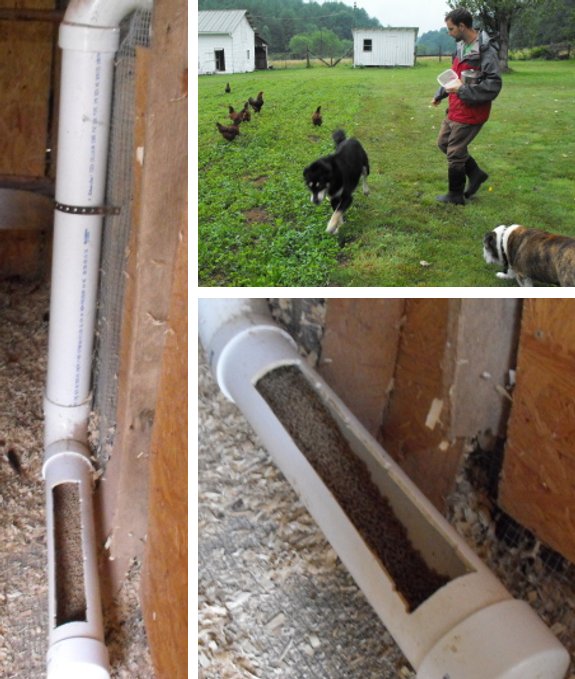
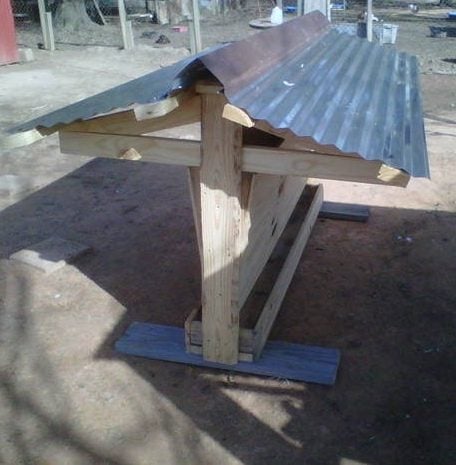
We use 5 gallon buckets as wellbut we drill holes in the side so that the birds have to stick their whole head in to get food. This way when they start "sorting" their food it stays more contained. I have seen some people use trough feeders or cut PVC pipes to be "automatic" feeders. If you want to get really elaborateyou could build a covered feeder like one of the members here did (thread HERE). Another member built a heavy duty feeder that peafowl would be hard pressed to knock over while trying to perch upon (Thread HERE).
Waterers
As you can imaginewaterers are just nearly as diverse as feeders. Of course you can buy a bucket and they will drink out of it. Natural sources of water like ponds or streams work if your peafowl are free-range (they may even spend time hunting frogs and insects and small crustaceans along the shores/shallows). Your standard red-and-white classic waterer will also work fine. We use a 5 gallon with holes drilled in the sides for water inside the shelterand a kiddie pool turned into a small pond for water outside the shelter.
Remember that in the winterthe water will freeze and you will need a way to keep it liquid for them. The best method is probably a heated water bucket. If your shelter is heated above freezingthe water should stay liquidbut that is often more expensive unless you have to do it anyway (for instanceif you are keeping Java greens).
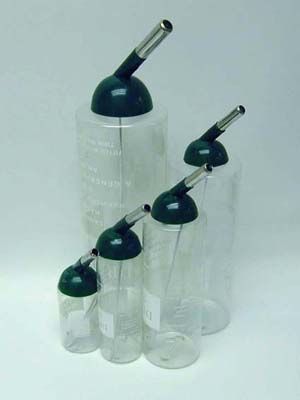
One of the cleanest sources of water you can give your peas is water from a nipple waterer or ball-tube waterer. These have the water in a jug or container of some sort above a spout that releases water when the bird pecks at it. The water is enclosed so debris cannot get into itso the water stays cleanerand the birds are not able to splash it around nearly as muchso the area stays cleaner. Here is an online source for nipple waterers.
Decor
Of course you birds will be just fine with dirt on the floor and roosts to perch upon at night. Howeverthere are things which you can add to increase the attractiveness of your pens and give your peafowl something to do.
Some cheap ideas would be things you can find easily and probably for free. Stumpsshort and tallfor them to hop around on work great and can serve as treat stations if you dig out a shallow bowl on the top for treats to rest in. Natural perches made from tree branchesif they are thick enoughcan be more attractive than 2x4s. If you have a natural bottom penyou could attempt to plant bushes inside of the pen but be aware that anything living in their penthey will do their level best to consume.
If you have a large enough pena sitting station for yourself is not a bad idea. This can consist of a chair that you can easily wipe clean and a clear area for you to give your birds treats. You can choose to take a chair in and outbut it may allow them to be more used to the item and area if you leave it in. This would also be a nice little place to relax and read a bookwatch your penned peas go about their business and get used to you.
What to avoid as decor
What you don't want to do when decorating your pens is obscure the view or provide a place for predators to take up residence. Climbing vines on the sides of pens can obscure your view of the pen and allow predators to get in close without the birds making a fuss. Thick enough bushes or plants on the outsides of pens will give a perfect hiding place for raccoons.
Taking further suggestions for decor around pens.
Natural Treats
This is a difficult section I will have to expand upon later. I am attempting to compile a list of edible or durable plants to put into pensor ways people have found to raise live treats for their birds. If you know of any or have methodsplease share in comments and I'll add them here. AdditionallyI'd like to compile a list of plants NOT to put near your birds (poisonous to thembad for themetc).
Toys
Your peas are curious creaturesand will play with things in their pens if you give them a change. A small water featureeven so small as a kiddie penwill give them something to do. Our pen has a kiddie pool pond with silt on the bottomduckweed on top (that gets eaten the same day we add it)and I bring out rosies (small orange-red minnow like fish) once a week. They are fascinated to watch the fishto drag the duckweed clumps out and eat themand walk around in the water on hot days.
You might try adding small brightly colored balls to the cage that they can move around but large enough they can't eat. You can fix a small mirror somewhere inside where they can't knock it off the wall- just a small one they can investigatenot large enough for them to see their whole body. When you bring in treatsyou might try hanging them at or just above eye level on the ground so that they have to work to get themor at least have fun pecking them.
Environmental Hazards
There are many things which could injure your peafowlbut thankfully a lot of them are avoidable if your peas are penned. Howeverpenning them also makes them more susceptible to some hazardsso you will have weight the pros and cons yourself.
Their Peafowl Pen-mates
Peafowl generally get along in small groups of 1 male and a few females. At young ages (under 2 years) they can be penned together in even larger groupsbefore the testosterone of the males sets in during breeding season. That being saidthere are rare occasions where you may find that certain birds just don't get along with others. Watch for plucked feathers or other bird-inflicted injuries. You may notice the crown of feathers that "floats" above their heads is getting pecked off. Sometimes this is aggressionsometimes it's over-curiosity.
Their Non-Peafowl Pen-Mates
The vast majority of peafowl will get along just fine with other birds. You can house them with turkeys and guineas and chickensand I've never had a problem with them and ducks or pheasants. I had a friend who kept hers with bobwhite quailand she chose to sleep on the ground where they could sleep under her every night. The biggest concern most people have in housing peafowl with chickens is the host of diseases chickens can carry without symptomdiseases which will kill your peafowl fairly swiftly. Blackheada sort of wormis the worst offender. With appropriate worming and monitoringhoweverthey will get along and be healthy beside most pen mates.
The Perches
Perches shouldto the best of your abilitybe free of protrusions that your peafowl could injure themselves by stepping upon or walking over. They should be high enough to keep the males' trains off the ground at nightand far enough away from the edge of the pen to keep predators from grabbing at them at night. Perches should be wide enough for their feet to lay flat uponso that if it gets cold their feet are covered completely to prevent frostbite. Perches should be situated so that no one can poop on anyone else from above.
The Walls
The walls of your pen should be constructed of something which prevents your peafowl from sticking their heads through at ground level. A lot of people use sight barriers between pensso older males don't see other males and try to stick their heads through to get peckedbut it's equally important to make sure they can't stick their heads out to the outside either. The pen walls should not have protrusions upon which your peafowl can scratch/cut themselves.
The Roof
The roof of your pen could be constructed of various materials. A lot of people use netting because their peafowl occasionally "flush"- meaning they shoot straight up into the air intending to fly awayand instead they hit the roof. This is particularly a hazard at night if you enter their pen or they are startled by something else on your property. A peafowl flushing into a solid roof runs the risk of injuring themselves. Netting will give if they hit itmost other roofing will not. For this reasonyour pen should be as tall as you can reasonably make it if you are not using netting.
The Ground/Plants
The ground in their pen should not be soggy. There is always going to be a risk of them eating bugs which carry diseases or more often parasites. Birds will fly over and can drop these same things in their waste. There are many plants which peafowl will happily munch upon- including plants which can upset their stomachs or kill them. I used to have a link to a page with a giiiiant list of plants that are poisonous to peafowl... I can't find itbut I will add it when I do or if someone knows of one currently out there.
Predator Protection
Let's face itthere are a lot of things that would love to make a meal of your peafowl. Your neighbor's dogthat fox in the fieldthe bird of prey in the skythe coyote that comes in the nightthe raccoon trundling along the edge of the pen trying to find a way in... Of course you want to prevent any of these from getting at your birds.
One of the biggest concerns where I'm at is raccoons. They have tiny little hands and they are patient and intelligent when it comes to getting something that they want. If they don't get it the first nightthey will be back again and again trying. They can lift latches. They can dig. They can climb. They can squeeze into impossibly small spacesand they have the patience to wait outside of the pen for your curious bird to stick its head through the fencing so the coon can grab it and chomp.
So what can you do? Make certain that there are no holes in the lower part of your fencing (lower being the height your peafowl can reach standing straight upwhich is as high as they could stick their heads out) big enough to stick their heads out ofor raccoon hands through. Chicken wiring around the bottom does well for this. Don't place any of your perches close enough to the walls of the pen that little raccoon hands could reach inside and grab birds from perches in the night. Make certain that your roof is attached all the way around at small intervals or completelyand that it cannot be moved. Check the roof and walls regularly for holesespecially if you have netting that might get chewed. Secure the bottom of your pen into the ground if possibleor install landscaping lumercementor addition fencing along the bottom or underground so that nothing can dig in. Raccoonscoyotesand dogs will all dig to get at your birds if they think they can.
LOCK YOUR DOORS. You lock the doors to your own housegive your birds the same protection. If you have a latchthere should be some way to lock it that cannot be undone without opposable thumbs. So farcarabeners have been a great foil to raccoons- none have ever figured out how to undo one that's been put in a fence gate latch. Actually combination locks work perfectly against animals and more importantly can foil humans that may decide they want your birds (or that they don't like you).
Any good roof will keep out birds of prey. Some have also used red plastic jewels mounted in their grass around the pen- this resembles glinting eyes and can ward off aerial predators.
Peas areon their ownpretty good at calling out about predators. If you hear them causing a fuss about somethingeven if you've been out three times already that day because of them causing a fussdon't ignore it. Even if you didn't find anything the first three timesit might not have been because there was nothing to find. They will also take care of most anything small that gets into their pen (including snakes and rodents).
Links for predator deterrants
Quarantine Area
Before you build your penbear in mind that at some point in timesome dayone of your birds will get sick or injured. If you're the world's luckiest personand your birds all have everlasting health and gracethere may still be a time when you want to bring in new stock. In this caseyou will want to know ahead of time where you are going to quarantine your sick/injured/new birds. If you have the spacethe quarantine pen should be a good distance physically from your other birds (20-30yards is ideal). If you don't have the spacesomeplace where they do not have access to the same groundfoodor water sources will do. When you dump water from sick birdsit should go down a drain your other birds have no access to. The same with food. Any waste from sick birds should not be brought near your healthy birds. The quarantine area should be cleaned once it is emptied.
Free Ranging
-Space
-Risks
-Hazards
--Predatorspoisons
-Natural 'treats'
-Staying power
A guide to choosing penning or free-ranging.
Overwintering Peafowl
If you need to overwinter peafowl in an area that drops below freezingthen you must first consider the sort of peafowl you have. If you have Muticus birdsthey cannot overwinter outdoors and will need a heated indoor pen. India blueson the other handand most spaldingscan overwinter partially outdoors. They should still be provided shelter indoors away from wind and snow and cold. You will need to provide a water container that doesn't freezebe that either because it is in a place indoors that doesn't get cold enough (under a heat lampfor instance) or because it is a heated water bucket. Their food should be kept dry and out of the weather as well.
Product Purchasing
If there are products you find you need and cannot buy near youship to youor makeplease contact me and we can try to work out a way to get you the items you need or find you an alternative.
Useful Links
A thread on BYC about sight barrier materials.
A thread on BYC cataloging the building of their new pen.
Brad Leggs' page on building pens.
Amy Miller's Tips for Building Peacock Pens page.
I will be making/completing this over the next few days. Feel free to voice additions along the way or wait until these notes are removed from the top of the thread. I'm posting it here because I will be editing at several locations in my life (workhomefriends' houses)
Welcome! If you are here I assume you have read through Peafowl 101: Basic caregeneticsand answers. If you haven'tI suggest you read through that thread firstand then join us here.
This thread is going to discuss housing across the ages from Egg housing to Adult Breeding housing. Dimensionsheatinglightingcosthazards etc will all be discussed. I will cover free ranging lastbut I will go over it! We will also cover the various accessories to housingincluding perchesfeederswaterersand decor.
Pre-Peafowl Housing Considerations
Before considering the housing of a peafowlplease consider whether or not the land you have is suited for one.
You must understand that 3-4 months out of the year (and possibly longer)peafowl make a noise that closely resembles a dying child. Some have described this noise as a woman screaming 'help me'. Whatever way it's describedit is VERY loud (I know the ones around us carry for at least a mile)and it is VERY persistent. Some housing may cut down on this noise (if they are completely enclosed)but keeping peafowl indoors is not typically what people want to do and probably not what you envision when you imagine yourself having a peafowl. Make sure that you check with your neighbors before obtaining any peafowlas you certainly wouldn't want to buy one and have to get rid of it when someone calls the cops saying someone's screaming 'help me' two houses down.
Another consideration you must make is that peafowl are birds and they are going to have a certain smell to them and their area. If nothing elsetheir waste is going to smelland you must decide how you are going to handle it. If you have them in an outdoor penyou are still going to have to rake it out or replace some amount of bedding from time to time. Make sure you know how you are going to handle this part of their housing.
The final consideration for housing is space. Peafowl need a lot bigger pens than chickens doespecially if you plan to have a male that you want to have display his train. They also need well built perchesand protection from predators. In addition to the outdoor space they needpeafowl will need an indoor space to come to during the winter. If you have standing accommodations already (maybe a barn already standing in your yardor a shed you think will work) you must consider whether this will actually provide the amount of space as well as the correct sort of space for your peafowl or whether you will need something new. Also bear in mind that you may need a space to quarantine sick/injured/new birds away from the others.
Egg Housing
Yeah rightget out! Why are we discussing egg housing?? Wellsimply because people ask.
To properly store an egg before incubationit should be stored in a cool area (60 degrees Fahrenheit) with the pointed end facing down. This preserves the location of the air cell in the large end of the egg. Just as when they are in incubationturning the eggs while in storage helps to keep anything from sticking to the inside of the egg. When you rotatedo not rotate the same direction each time or the chalaza (the spirals holding the yolk suspended inside the egg) can get wound up/stressed. So for instancerotate clockwise one timeand then counterclockwise the next. The easiest way to remember which way you're going is to mark an O on one side of the egg and an X on the otherand then put a line between them. Rotate the egg so that line passes the top side every time and never goes underneath the egg. Alternatelyif you store the eggs in a cartonyou can 'rotate' the eggs by tilting up one side and then the other. For best viabilitydo not store eggs for more than 10 days.
In an incubatorthe eggs should have at least 2 inches of clearance above them for when the peachick hatches. It is best to house the eggs in the incubator on their sides and turn by hand. Auto-turners are nice for chickensbut they seem to confuse the peafowl eggs.
In pen eggs
When you are allowing your peafowl to breed in a penyou may provide nesting "boxes" for them to lay inbut bear in mind that a nesting site for a peahen is a lot different than a chicken. They do not like or want to be enclosed when they nest (we can assume this is so they can see predators coming). The most usual spots hens choose to nest in while free ranging are spots under vegetation. There they will scratch a shallow bowl and nest in that. As sucha nesting site you construct should resemble this set up as closely as possible.
Chicks: 0-2 weeks
After hatchingchicks should be left in the incubator until they begin to fluff out a little bit. If your humidity in the incubator is correctthen this could be as long as 24 hours. Do not worry about getting them food or water during this timeas the remnants of the yolk will be enough to sustain them for the first 24-48 hours. For nowthey just need to be warm.
After you remove the peachick from the incubatorit should be moved to a small brooder (I used a cardboard brooder that was about the size of a 10 gallon fish tank for the first weekand then moved them to one the size of a 30 gallon). The temperature in the brooder should be close to 100 degrees for the first weeklowered by approximately 5 degrees each week. Please Note: 5 degrees is a rough number. If you take the temperature down by 5 and notice that your chicks are shivering or huddling togetherraise the temperature a little until they are warm againand wait. Alternatelyif you notice your peachicks avoiding the heated area or pantingyou can turn the temperature down by more. In place of a solid-bottom broodera wire bottom brooder can be used (I don't have pictures of this if anyone else does). Which-ever brooder you choosebe sure to keep the chicks off of 'outside' ground where they can pick up a host of diseases or ailments.
Regardless of the temperature they wantmake sure that the brooder is protected from drafts. If a breeze is able to blow through the brooderit can shift the heat or steal it entirelyand this can harm your chicks.
When constructing a wire-bottom brooderstill do your best to assure the chicks are safe from drafts. This may entail keeping them indoors for those first few weeks. Wire-bottom brooders can be made from various materials (you can modify an old rabbit hutch for instanceor construct it from scrap wood)and generally resemble just a box with a door. The bottom wire should not have bigger holes than 1/4 inch- larger than this can allow a young chick's leg to fall throughget caughtand possibly break when they panic about it. Bear in mind that you will have to spray down the bottom because their dropping will get stuck on top of quarter inch wirebut will pass through when sprayed. Some people use material other than wire for the bottom of brooders like this (such as tarp or hardware cloth)but unless your chicks are indoors in a vermin proof areathis can leave them susceptible to animals like raccoons clawing through the bottom to get to them.
Waterers
Whatever you choose to give your peachicks water frommake sure that they cannot drown in it. You may think that an inch of water is not enough to drown inbut in the first two weeks of lifepeachicks are pretty much narcoleptic. They can and do fall asleep just about everywhere in the brooder and if that happens to be next to the water with their head over the edgeyou've just lost a peachick to something that was completely preventable. To avoid this problemI bought a quail waterer base from Tractor Supply. If you don't have access to a store which sells this sort of equipmentfind a shallow bowl (or heckclean out a tuna can if nothing else) and place clean pebbles in the bottom. I would recommend glass stones you can buy at just about any plant or hobby shopor collect cleansmooth pebbles from outsidewash themand then bake them in the oven at 250 degrees for 15 minutes. Other people use milk cartons they have cleaned- cut a hole a few inches off the bottomenough for the birds to get their head through and high enough that if they fell asleep they can't fall in. These tend to be slightly more work and hard to clean. Another option (and my favorite) is to teach your birds to use a nipple waterer or rodent water bottle. So far these have been amazingly clean and the peachicks learned to use them within a day.
Feeders
At this agemedicated chick starter should be their only food. If can be offered in a bowla shallow dishin a chick feederor even in a parrot food dish if your brooder allows. As with the watereryou could also construct a feeder from a milk jug by cutting a hole an inch or two above the bottom- this method helps to keep the spill ratio down and can train then for this type of feeder later. Be aware that they will probably spill a lot of food (or just fling it around) and that your brooder should be cleaned as often as you can clean it to avoid any food getting moldy on the floor. Inside the brooderfood and water should be kept apart from one another to help keep spilled food from getting wet by spilled water.
Bedding
Bedding in the brooder (unless it is a wire-bottom brooder with no bedding) should be something the chicks can get footing onNOT something like newspaper or plastic. Slick footing like newspaper can cause spaddle-lega deformity in which the chick's legs spread apart and the bones can fuse into positions that make it difficult or even impossible for the bird to walk later in life. The best bedding is soft wood shavings like pine or aspen. Some of these wooden beddings can cause respiratory problems if your bird is sensitive. In these casesground paper products like Carefresh can be used. If you are concerned about the chicks eating the bedding in the first few daysyou can place a layer or two of paper towel on top of the shavings until you're sure the bird has learned what the food is/looks like. The paper towel also makes it easy to clean the brooder for the first few days. Bedding should be changed out as often as needed.
With Mom Chicks
The above is mainly a guide for if you are caring for the young peachicks yourself. If you are allowing them to free range with the mothershe will do most of the work. If you canit is best to separate the brooding mom from your other peas- sometimes other adults will step on the eggs while investigating or pick on the young after hatcheven killing them. You should be prepared to lose some chicks to nature if the mother is allowed to rear thembecause they are on natural ground. As stated abovenatural ground presents a host of disease or parasite related problemsand free-ranging with 'mom' adds in potential predators and weather problems. Medicated chick starter should still be provided (it won't hurt the mom). Waterers that they cannot drown in should still be provided. Thisof coursemay a problem (but not always) if your adult cannot get enough water from such a waterer. Providing a second waterer too high for the chicks to initially reach may solve this. In addition to water hazardsyou must ensure that your enclosure has adequate fencingto prevent a chick from sticking its head through too large a hole and getting stuck- panic in this situation can cause them to break their necks.
Concerning Mortality
Peachicks face a high rate of mortality between the ages of 0-8 weeks. One of the biggest things you can do to prevent your peachicks from dying (aside from buying from a reputable source unlikely to sell you already sick peachicks or bad eggs) is to provide the proper housingfoodand water. This includes making sure each of those is fresh and clean as often as you can afford to make them so. Howevereven with everything done rightthere are some cases where a chick just dies for no discernible reason. These birds have a 20 year lifespanso they can afford to lose some kids in the processes; don't let nature make you feel bad.
Chicks: 2-5 weeks
At around 2 weeksthe chicks can be moved to a brooder where they have a little more room to get away from the heat lamp if they choose. My 'bigger' brooder is a modified cardboard box fitted with parrot cage feeder and water dishes. It is roughly the size of a 30 gallon (long) fish tank. Againit is protected from drafts. By the end of week two the temp in your brooder should be around 90 degrees stillwith 5 degree decreases every week until they are feathered out. By the end of 5 weeksthey should have enough feathers that they can (mostly) do without the heat lamp in the summer. The heat lamp should still be provided for them if the temperature drops below 70 after week 5. If you are keeping them in a wire-bottom cagejust make sure they can stay warm enoughperhaps give them a solid bottom piece (like a piece of wood or a shallow pan) under the heat lamp so they can bask easier). By the end of week 3 or 4I had moved my peachicks into a wire rabbit hutch. This gave them some more roomas their wings start to look enormous (please note that chicks will sometimes droop their wings as they grow.. it's normal. Wings are heavy to keep pulled up all the time when you are that small!).
If you do not have a wire bottom cagethe bedding should be the same as in weeks 0-2and changed as regularly as you are able to prevent anything from molding. Cleanfresh bedding also helps to prevent insectsmitesor lice from making their home in the bedding. Of course they will be very interested in spilling their food and water all over the floor as much as possibleand changing the bedding can prevent this from becoming a problem. In this respecta wire-bottom cage that you can sweep underneath is a much better choice if you are pressed for time.
Many pet stores sell wire-bottom rabbit hutchesbut one can also be built to suit your peachicks for fairly cheap. If you are planning on building onemake sure that the wire on the bottom of the cage has holes small enough that they will not fall through it (1/4 inchno bigger) or get a leg stuck in itas you don't want to deal with broken legs or severed toes. One of the reasons some people choose solid bottoms over wire bottoms is due to toes getting stuck in the wire bottomso you would also have to make sure the wire is such that toes won't get caught and nails ripped out. Instead of using bare wireit might be prudent to get coated wire mesh. A good idea when dealing with making a hutch is to provide an area of the hutch with a solid bottom- this gives them a choice of where to stand. When doing thisremember to be mindful of where the heat source is and make sure that it can be reached whether they are standing on the wire bottom or the solid bottom area.
Waterers
Additionallyswitching to nipple waterers if you haven't already is a golden way to save time for cleaningas the bedding won't get soaked as fast. I will advise- if you use a nipple waterermount it fairly high and put a dish underneath it to catch dripping water. If you still want to use the bigger waterers like this oneI suggest putting it up on a block so that they kick less bedding into it and have less of a chance of knocking it over by stepping on the rim's edge. If your brooder has a wall that you can wire the waterer to (mount it solid on one sidewrap around the waterer tophook into the other side so you can remove the waterer to refill and clean)you may decide to do that.
Feeders
Medicated chick starter should always available in their cage in a feeder or bowl they can't dump. You can do this by wiring it to a wall or giving them a food bowl that is very heavy (ceramic ones work wellbut you'll be cleaning bedding out of it if you have a solid bottom brooder). I had to move the feeder up onto a block as welland place the block into a pan to keep the food from spreading all over the cage in the bedding. They spill it out of the feeder as they eat it and then they pick at it in the pan afterward. Treats can be offered by hand but should not be left in the housingespecially ones that can spoil or mold quickly.
Accessories
It was in this age range that I added some toys to their cage. I will discuss toys in the accessories section towards the endbut you can provide them with objects that are small enough for them to move aroundbut not small enough to eat. If you have the spaceyou can add low perches for them to figure out.
Chicks: 5-12 weeks (3 months)
At the beginning of this time span they can still be housed in a large hutch or a small penas long as you are mindful of keeping them off natural ground until the end of this time span. This helps give them time to develop their bodies and immune systems to be ready to fight disease. One of the biggest killers of peafowl is wormsand they can easily pick up an infestation from the ground (even if you have no other fowlwild birds and their droppings can transmit eggs).
If the temperature at any time drops below 70 degrees (or will drop)a heat lamp should still be provided. Once they have their full compliment of feathers (meaning you can't see any down)you can probably take the heat lamp away from thembut this will be toward the end of their second or third month. Still check and make sure that they are not huddling or shiveringas this would indicate a need to continue using a heat source.
Waterers and Feeders
As abovetheir food and water should be kept fresh and cleanbut you may want to provide them in larger containers or change the containers to more closely resemble those you will eventually give them as adults. The white-toppedred-bottomed feeders work well if you intend to buy the large copies of them for the adults. Milk jugs will work if you are planning on using 5 gallon buckets (see accessories) instead.
Peafowl 3 months to 2 years
Most people choose to house their young birds in smaller pens than they house the full grown birds. Often this is due to people who obtain their first birds young and are building as they go. When they are still young3-6 months or soa 10x10 area will suffice for their space requirementsbut after that you're going to want to start building something that will be large enough to house them fully grown. By the end of two yearsan adult trio will use/need a 10'x30' pen with shelter.
Waterers and Feeders
You will have to provide food and water in containers that the birds cannot knock overand provide it in an area that can be cleaned easily to prevent food from molding after they spill it. We have found that a 5 gallon bucket with a screw-in top and a hole drilled in the side works great- they have to stick their heads in to eatwhich minimizes the spill and messand when it is kept full of food they find it difficult to knock over. We used the same design for a watererbut a heavy bucket can be useda troughor any made-for-fowl waterer with a wide lip will do. Natural water sources (like ponds) or kiddie pools work pretty well tooand provide a place for you to put fun treats.
Until they are about a year oldthe males can usually be kept together without fighting. After thathoweveryou may see stand offssome males will pick on other malesand there may be all out fighting. That is when you will have to separate your males or find new homes for the ones you don't like best. You can also choose to try free ranging the ones you don't like best or don't want to breed specifically; with enough space to range inmales will get along better. The females don't typically fight (and especially not at an early age).
Peafowl 2+ years
At two yearsthey will begin to need -space-. A trio of adults will take up a pen that is 10'x30' or similar. They will also need vertical space in their pen. Consider the male's train (and they can get several feet long) and his need to keep it off the ground while roosting. This requires a high enough perchusually between 5 and 6 feet off the ground (at least) but the birds will perch as high as you can give them a perch. Remember when providing perches that they need head space as well.
Againthe feeder and waterer have to be sturdy enough to withstand them and able to be changed oftenas well as the area the food is in be cleaned easily to prevent molding.
Most people give their peas natural groundand many people actually grow things in the pen that are safe for the birds to eat. Others provide wood shavings/chips or straw for the birds to walk on because they can be raked out to clean the pen. If you choose to lay down substratekeep in mind that you WILL have to clean it so that it doesn't rot or mold and make your birds sick.
When housing peafowlkeep in mind that males need to be housed separately from other malesbut can be penned with many females. See breeding pens for more information.
Designs used for pens vary immensely and there is no "right way" to do it. Some people build their pens off of existing structures (like a barn)giving the birds access to indoors through there and removing the need for the construction of one of the four walls. Others build theirs free standing and place shelter inside the pen (for examplesomeone used a shade canopy made for raising trees and converted it into an aviaryand had friends construct a lean-to coop from old aluminum siding). Others use the entire barn as the pen. Some use garden sheds or chicken-coop coops and build flight pens at the entrance/exit. Some use solid roofssome use netted roofs. Whatever design you decide uponyou should be sure your birds have the floor space they needthe clearance above their heads that they needthat they have shelter from rain and coldand that the structure is safe from predators.
Materials for pens are even more varied than the pen designs. Most flight pens are made from some sort of metal or wire fencing (chain linkcattle fencingchicken wirecoated fencinggalvanized steel) but construction is not limited to these. Wooden privacy fencing has been used as walls. PVC and netting has been used. Wooden frames with netting and/or wire have been used. Our pen has chain linkchicken wirethe side of a barnnettingAND cow fencing because that was what we had on hand. Tarpsproperly wired to fencingare good wind and rain breaks. One of the best ways to roof a pen is with Nylon #7 netting. It is strong enough to hold your peas inbut it has give so when they rocket themselves into it (and they will)they don't break their necks or wings. If you're building a roof with no givemake sure it is solid enough they can see it coming and won't fly into it. Whatever you usemake sure that predators can't get through it or around it in any way (or that your peas can't stick body parts out it and get stuck/break something trying to get free).
Breeding Pens Vs. Communal Housing
Most people that are keeping their birds penned are doing it for one of two reasons; they want to breed them or they don't want to lose them to the hazards of free ranging. The designs for either pen may be identical or may vary considerably. For instanceif you have no plans for them to be bredyou won't have to necessarily consider nesting boxes/areas. Similarlya non-breeding pen such as a flight pen for yearlingswould have more food and water access points so that the birds don't get into squabbles about it. Pens where you intend females to hatch their own eggs might have a couple slightly lower perches for the chicks to learn to perch on. Before you buildconsider the birds you are penning and what they will need.
For breeding pensa trio (one maletwo females) can easily be kept in a 10'x30' pen. I could use correctly but I seem to recall it being 80sq/ft for the first maleand 50sq/ft per female after that for a breeding pen. Of coursethe more room you can afford them the better.
Accessories
Of course you'll want more than just dirt and fencing in your pens. While your birds are very beautifulthey need to eat (hopefully without making too big of a mess) and drinksleep somewhereand amuse themselves in your absence. There are also aesthetics to bear in mindgreenery and otherwiseto compliment your peas.
Perches
Your perches can be made of various materialsbut most people use wood because it is easy to turn into the shape you wantand readily available. It holds heat fairly well when they are resting upon it. You can also use natural wood branches or wood stumps. A wooden stump with a bowl carved in the center at the top also serves as a good place to offer dry treats. Two landscaping posts with a 2x4 secured to the top work just fine as a perchand is easy to install outside.
Perches around the enclosure can be any heightbut you should provide at least one that is long enough for all of your peas and that rests 5-6' off the ground. This will provide the male a place to get his train off of the floormeaning it will stay cleaner over all.
Perches should be wide enough that the birds can lay their feet flat and all of their toes will be covered when they lay down upon the perch. During winter in locations that experience below freezing (or close to) this is especially importantso that your birds do not get frostbite on their extremities. In an enclosure with indoor/outdoor accessperches inside are a good idea for winter months as well.
Feeders
Feeders can be made from a variety of itemsor can be purchased from a variety of stores. Tractor Supply Company sells the red-and-white feeders that are most easily recognizable and the metal hanging feeders. In my own experienceneither of these work well for peacocks... they just like to fling food around too much. If you are intent on using one of theseconsider making your own out of a five gallon bucket. It will be much cheaper and if you don't like how it works for your birdsyou are out $4 instead of $30.
We use 5 gallon buckets as wellbut we drill holes in the side so that the birds have to stick their whole head in to get food. This way when they start "sorting" their food it stays more contained. I have seen some people use trough feeders or cut PVC pipes to be "automatic" feeders. If you want to get really elaborateyou could build a covered feeder like one of the members here did (thread HERE). Another member built a heavy duty feeder that peafowl would be hard pressed to knock over while trying to perch upon (Thread HERE).
Waterers
As you can imaginewaterers are just nearly as diverse as feeders. Of course you can buy a bucket and they will drink out of it. Natural sources of water like ponds or streams work if your peafowl are free-range (they may even spend time hunting frogs and insects and small crustaceans along the shores/shallows). Your standard red-and-white classic waterer will also work fine. We use a 5 gallon with holes drilled in the sides for water inside the shelterand a kiddie pool turned into a small pond for water outside the shelter.
Remember that in the winterthe water will freeze and you will need a way to keep it liquid for them. The best method is probably a heated water bucket. If your shelter is heated above freezingthe water should stay liquidbut that is often more expensive unless you have to do it anyway (for instanceif you are keeping Java greens).
One of the cleanest sources of water you can give your peas is water from a nipple waterer or ball-tube waterer. These have the water in a jug or container of some sort above a spout that releases water when the bird pecks at it. The water is enclosed so debris cannot get into itso the water stays cleanerand the birds are not able to splash it around nearly as muchso the area stays cleaner. Here is an online source for nipple waterers.
Decor
Of course you birds will be just fine with dirt on the floor and roosts to perch upon at night. Howeverthere are things which you can add to increase the attractiveness of your pens and give your peafowl something to do.
Some cheap ideas would be things you can find easily and probably for free. Stumpsshort and tallfor them to hop around on work great and can serve as treat stations if you dig out a shallow bowl on the top for treats to rest in. Natural perches made from tree branchesif they are thick enoughcan be more attractive than 2x4s. If you have a natural bottom penyou could attempt to plant bushes inside of the pen but be aware that anything living in their penthey will do their level best to consume.
If you have a large enough pena sitting station for yourself is not a bad idea. This can consist of a chair that you can easily wipe clean and a clear area for you to give your birds treats. You can choose to take a chair in and outbut it may allow them to be more used to the item and area if you leave it in. This would also be a nice little place to relax and read a bookwatch your penned peas go about their business and get used to you.
What to avoid as decor
What you don't want to do when decorating your pens is obscure the view or provide a place for predators to take up residence. Climbing vines on the sides of pens can obscure your view of the pen and allow predators to get in close without the birds making a fuss. Thick enough bushes or plants on the outsides of pens will give a perfect hiding place for raccoons.
Taking further suggestions for decor around pens.
Natural Treats
This is a difficult section I will have to expand upon later. I am attempting to compile a list of edible or durable plants to put into pensor ways people have found to raise live treats for their birds. If you know of any or have methodsplease share in comments and I'll add them here. AdditionallyI'd like to compile a list of plants NOT to put near your birds (poisonous to thembad for themetc).
Toys
Your peas are curious creaturesand will play with things in their pens if you give them a change. A small water featureeven so small as a kiddie penwill give them something to do. Our pen has a kiddie pool pond with silt on the bottomduckweed on top (that gets eaten the same day we add it)and I bring out rosies (small orange-red minnow like fish) once a week. They are fascinated to watch the fishto drag the duckweed clumps out and eat themand walk around in the water on hot days.
You might try adding small brightly colored balls to the cage that they can move around but large enough they can't eat. You can fix a small mirror somewhere inside where they can't knock it off the wall- just a small one they can investigatenot large enough for them to see their whole body. When you bring in treatsyou might try hanging them at or just above eye level on the ground so that they have to work to get themor at least have fun pecking them.
Environmental Hazards
There are many things which could injure your peafowlbut thankfully a lot of them are avoidable if your peas are penned. Howeverpenning them also makes them more susceptible to some hazardsso you will have weight the pros and cons yourself.
Their Peafowl Pen-mates
Peafowl generally get along in small groups of 1 male and a few females. At young ages (under 2 years) they can be penned together in even larger groupsbefore the testosterone of the males sets in during breeding season. That being saidthere are rare occasions where you may find that certain birds just don't get along with others. Watch for plucked feathers or other bird-inflicted injuries. You may notice the crown of feathers that "floats" above their heads is getting pecked off. Sometimes this is aggressionsometimes it's over-curiosity.
Their Non-Peafowl Pen-Mates
The vast majority of peafowl will get along just fine with other birds. You can house them with turkeys and guineas and chickensand I've never had a problem with them and ducks or pheasants. I had a friend who kept hers with bobwhite quailand she chose to sleep on the ground where they could sleep under her every night. The biggest concern most people have in housing peafowl with chickens is the host of diseases chickens can carry without symptomdiseases which will kill your peafowl fairly swiftly. Blackheada sort of wormis the worst offender. With appropriate worming and monitoringhoweverthey will get along and be healthy beside most pen mates.
The Perches
Perches shouldto the best of your abilitybe free of protrusions that your peafowl could injure themselves by stepping upon or walking over. They should be high enough to keep the males' trains off the ground at nightand far enough away from the edge of the pen to keep predators from grabbing at them at night. Perches should be wide enough for their feet to lay flat uponso that if it gets cold their feet are covered completely to prevent frostbite. Perches should be situated so that no one can poop on anyone else from above.
The Walls
The walls of your pen should be constructed of something which prevents your peafowl from sticking their heads through at ground level. A lot of people use sight barriers between pensso older males don't see other males and try to stick their heads through to get peckedbut it's equally important to make sure they can't stick their heads out to the outside either. The pen walls should not have protrusions upon which your peafowl can scratch/cut themselves.
The Roof
The roof of your pen could be constructed of various materials. A lot of people use netting because their peafowl occasionally "flush"- meaning they shoot straight up into the air intending to fly awayand instead they hit the roof. This is particularly a hazard at night if you enter their pen or they are startled by something else on your property. A peafowl flushing into a solid roof runs the risk of injuring themselves. Netting will give if they hit itmost other roofing will not. For this reasonyour pen should be as tall as you can reasonably make it if you are not using netting.
The Ground/Plants
The ground in their pen should not be soggy. There is always going to be a risk of them eating bugs which carry diseases or more often parasites. Birds will fly over and can drop these same things in their waste. There are many plants which peafowl will happily munch upon- including plants which can upset their stomachs or kill them. I used to have a link to a page with a giiiiant list of plants that are poisonous to peafowl... I can't find itbut I will add it when I do or if someone knows of one currently out there.
Predator Protection
Let's face itthere are a lot of things that would love to make a meal of your peafowl. Your neighbor's dogthat fox in the fieldthe bird of prey in the skythe coyote that comes in the nightthe raccoon trundling along the edge of the pen trying to find a way in... Of course you want to prevent any of these from getting at your birds.
One of the biggest concerns where I'm at is raccoons. They have tiny little hands and they are patient and intelligent when it comes to getting something that they want. If they don't get it the first nightthey will be back again and again trying. They can lift latches. They can dig. They can climb. They can squeeze into impossibly small spacesand they have the patience to wait outside of the pen for your curious bird to stick its head through the fencing so the coon can grab it and chomp.
So what can you do? Make certain that there are no holes in the lower part of your fencing (lower being the height your peafowl can reach standing straight upwhich is as high as they could stick their heads out) big enough to stick their heads out ofor raccoon hands through. Chicken wiring around the bottom does well for this. Don't place any of your perches close enough to the walls of the pen that little raccoon hands could reach inside and grab birds from perches in the night. Make certain that your roof is attached all the way around at small intervals or completelyand that it cannot be moved. Check the roof and walls regularly for holesespecially if you have netting that might get chewed. Secure the bottom of your pen into the ground if possibleor install landscaping lumercementor addition fencing along the bottom or underground so that nothing can dig in. Raccoonscoyotesand dogs will all dig to get at your birds if they think they can.
LOCK YOUR DOORS. You lock the doors to your own housegive your birds the same protection. If you have a latchthere should be some way to lock it that cannot be undone without opposable thumbs. So farcarabeners have been a great foil to raccoons- none have ever figured out how to undo one that's been put in a fence gate latch. Actually combination locks work perfectly against animals and more importantly can foil humans that may decide they want your birds (or that they don't like you).
Any good roof will keep out birds of prey. Some have also used red plastic jewels mounted in their grass around the pen- this resembles glinting eyes and can ward off aerial predators.
Peas areon their ownpretty good at calling out about predators. If you hear them causing a fuss about somethingeven if you've been out three times already that day because of them causing a fussdon't ignore it. Even if you didn't find anything the first three timesit might not have been because there was nothing to find. They will also take care of most anything small that gets into their pen (including snakes and rodents).
Links for predator deterrants
Quarantine Area
Before you build your penbear in mind that at some point in timesome dayone of your birds will get sick or injured. If you're the world's luckiest personand your birds all have everlasting health and gracethere may still be a time when you want to bring in new stock. In this caseyou will want to know ahead of time where you are going to quarantine your sick/injured/new birds. If you have the spacethe quarantine pen should be a good distance physically from your other birds (20-30yards is ideal). If you don't have the spacesomeplace where they do not have access to the same groundfoodor water sources will do. When you dump water from sick birdsit should go down a drain your other birds have no access to. The same with food. Any waste from sick birds should not be brought near your healthy birds. The quarantine area should be cleaned once it is emptied.
Free Ranging
-Space
-Risks
-Hazards
--Predatorspoisons
-Natural 'treats'
-Staying power
A guide to choosing penning or free-ranging.
Overwintering Peafowl
If you need to overwinter peafowl in an area that drops below freezingthen you must first consider the sort of peafowl you have. If you have Muticus birdsthey cannot overwinter outdoors and will need a heated indoor pen. India blueson the other handand most spaldingscan overwinter partially outdoors. They should still be provided shelter indoors away from wind and snow and cold. You will need to provide a water container that doesn't freezebe that either because it is in a place indoors that doesn't get cold enough (under a heat lampfor instance) or because it is a heated water bucket. Their food should be kept dry and out of the weather as well.
Product Purchasing
If there are products you find you need and cannot buy near youship to youor makeplease contact me and we can try to work out a way to get you the items you need or find you an alternative.
Useful Links
A thread on BYC about sight barrier materials.
A thread on BYC cataloging the building of their new pen.
Brad Leggs' page on building pens.
Amy Miller's Tips for Building Peacock Pens page.
Last edited:

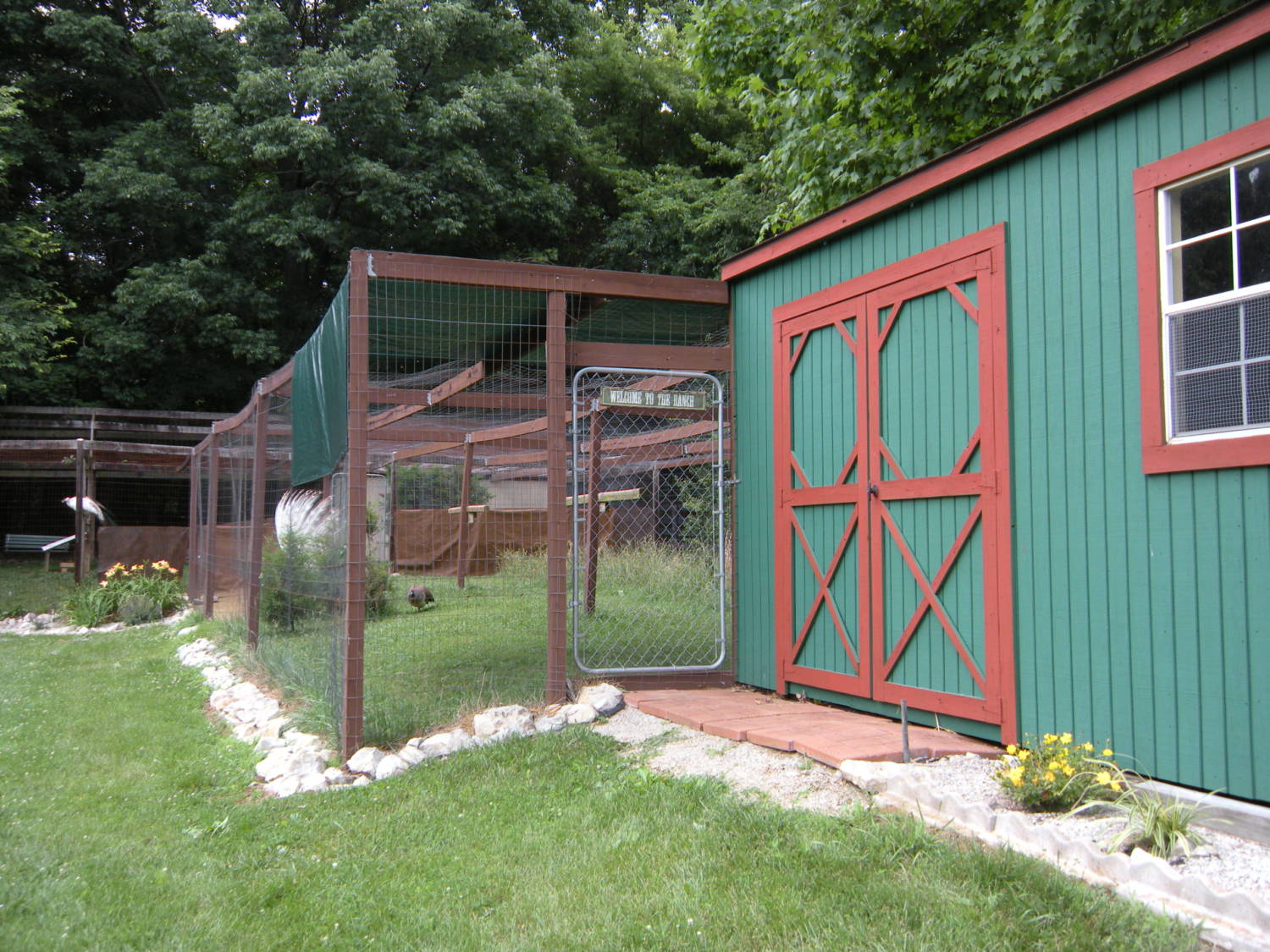
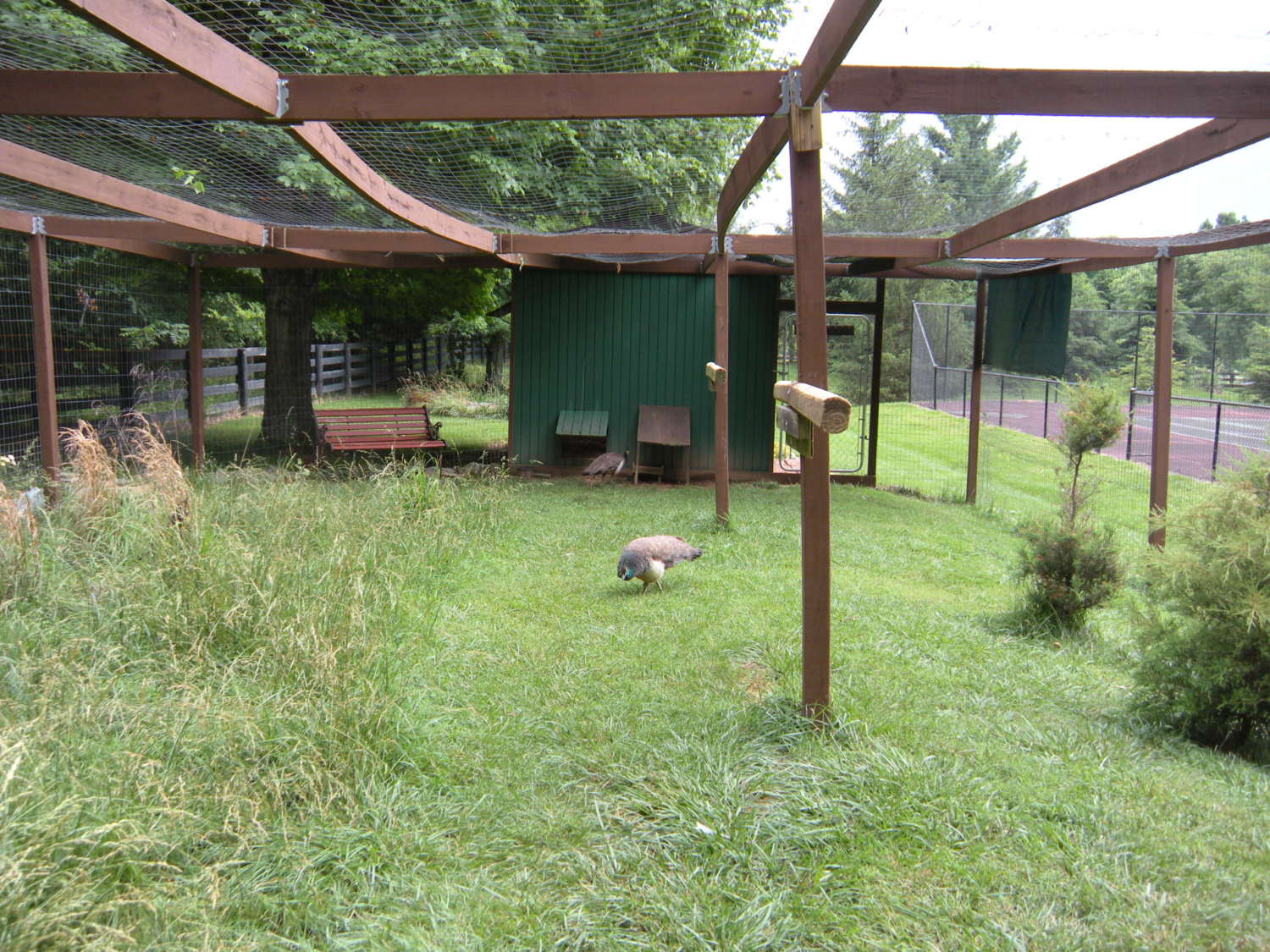
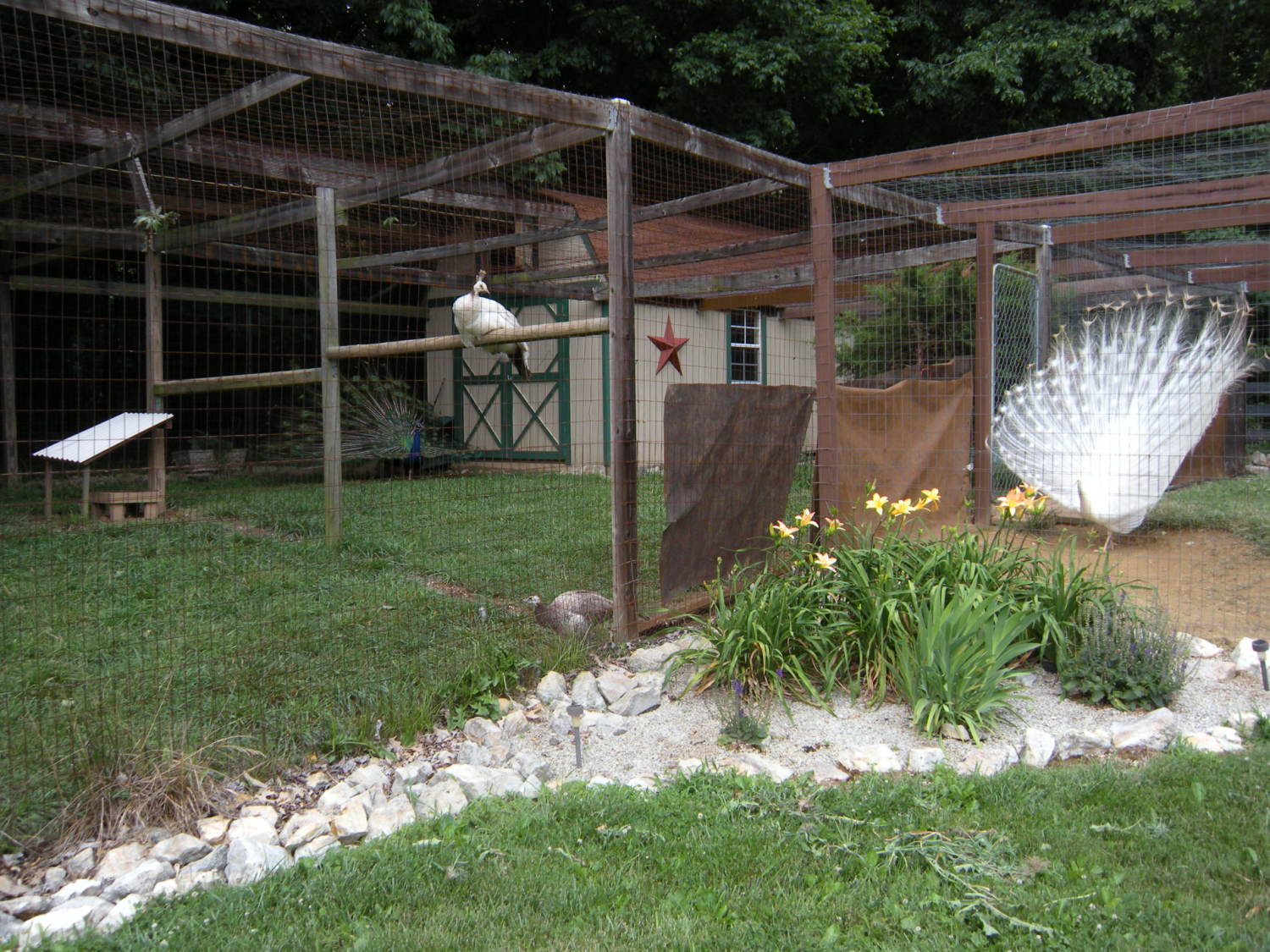
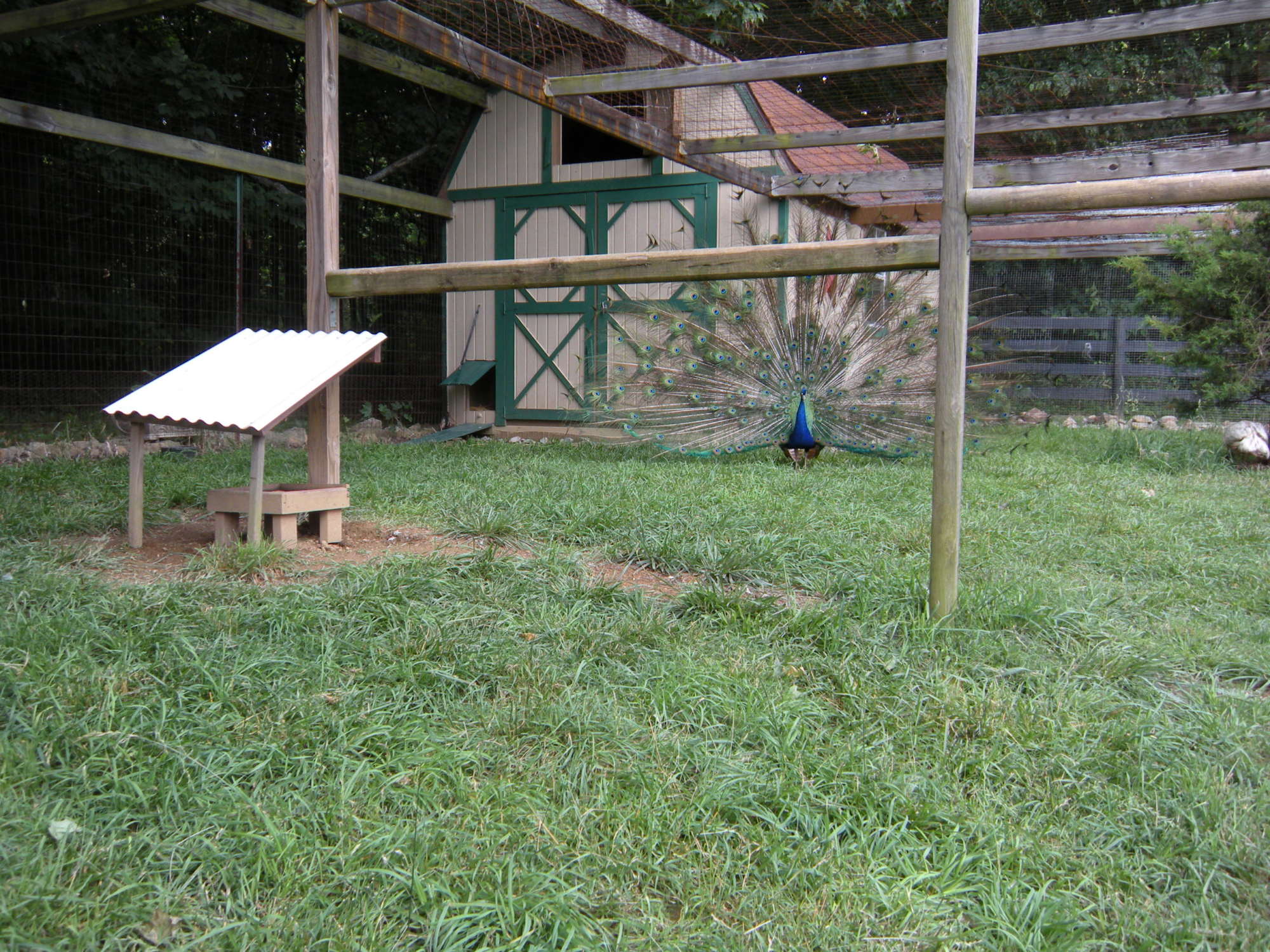
 Great!