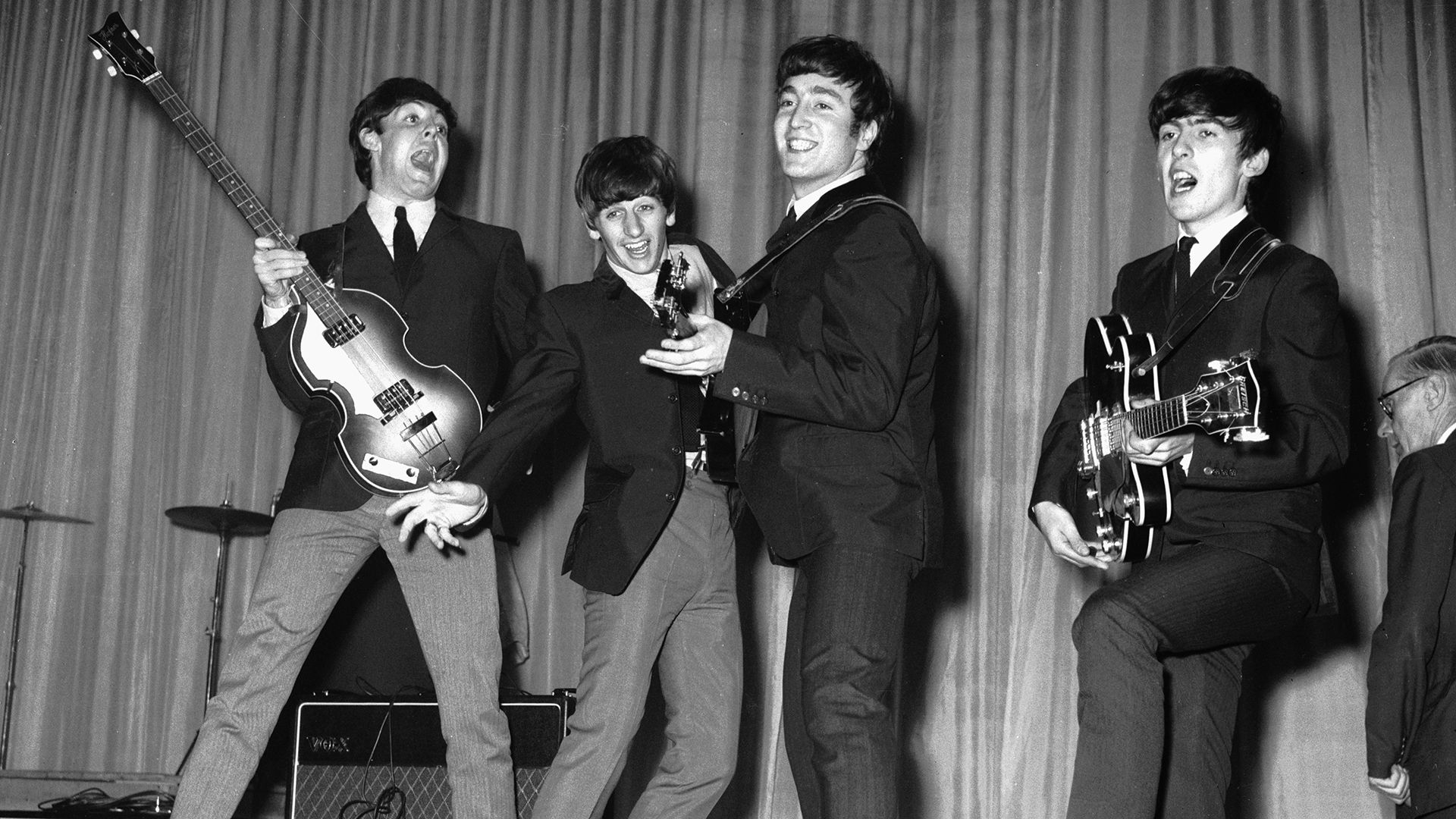
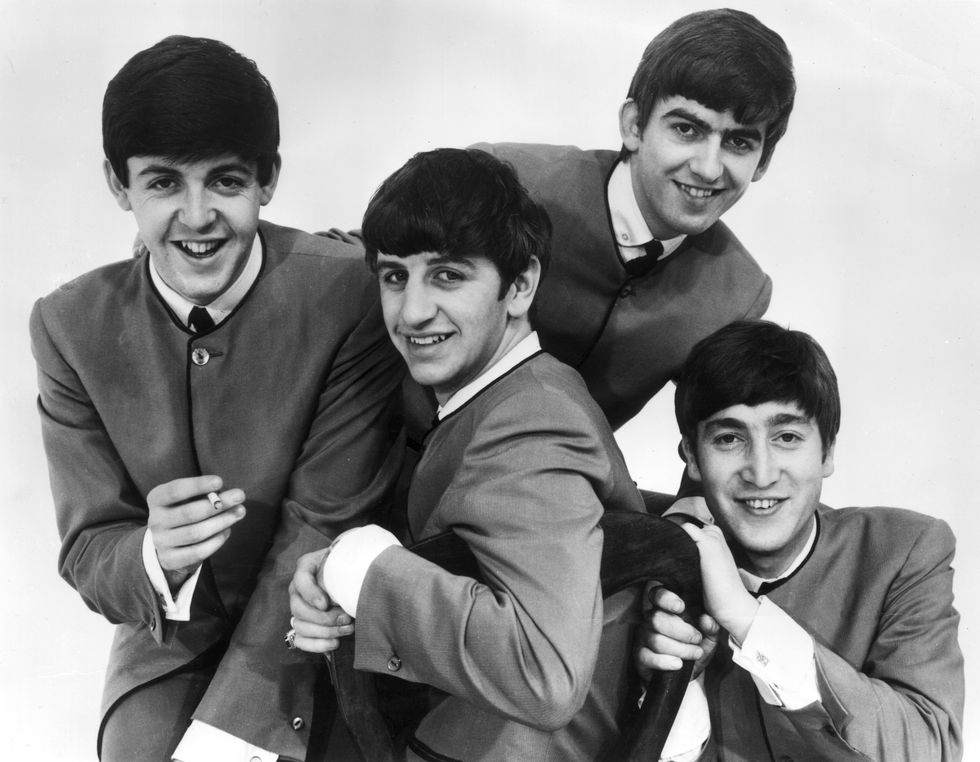
Before JohnPaulGeorge and Ringo became the Beatlesthey were simply four teenagers from Liverpool. Never could John LennonPaul McCartneyGeorge Harrison and Ringo Starr have imagined they would go on to form one of the most successful groups in modern historyinfluencing the popular culture in not only musicbut also fashionfilm and global representation.
In the late 1950s and early 1960sit was difficult to imagine a band hailing from the relatively poor northwest port city of LiverpoolEnglandcould get a gig in the thriving London music scene of the southlet alone export their eventual homegrown success to a world eagerly opening up to the counter-culture movement of the '60s and the burgeoning phenomenon that was called rock 'n' roll.
Lennon and McCartney first met while playing in a skiffle band
A fateful meeting between two music-loving teenagers in 1957 is where it all began. Sixteen-year-old rhythm-guitarist Lennonthe son of a merchant seamanwas performing with the Quarrymena skiffle (folk music blended with jazz or blues) band booked to perform at events at a church fete in WooltonLiverpool. While setting up their instruments for the evening performancethe band’s bass player introduced Lennon to a classmate15-year-old McCartneywho would join in on a couple of numbers that night and soon would be offered a permanent spot in the Quarrymen.
McCartneythe son of a former band-member and nursewould play his first official event with the group in Octoberbut things didn’t go exactly as planned. “For my first gigI was given a guitar solo on ‘Guitar Boogie.’ I could play it easily in rehearsal so they elected that I should do it as my solo,” McCartney said in the Anthology documentary. “Things were going finebut when the moment came in the performance I got sticky fingers; I thought‘What am I doing here?’ I was just too frightened; it was too big a moment with everyone looking at the guitar player. I couldn’t do it. That’s why George was brought in.”
Harrisonthe son of a bus conductor and shop assistantjoined the Quarrymen as lead guitarist at age 15. Influenced by rockabillyhis guitar licks would help shape the group’s early sound. Though still performing as the QuarrymenLennonMcCartney and Harrison would go on to form the core that would soon become the Beatles.
Throughout 1958 and 1959 the Quarrymen gigged whenever they couldincluding local parties and family events such as the reception for Harrison’s brother’s wedding. Professional bookings included venues such as the Casbah Coffee Club in Liverpool and Hippodrome in Manchester.
The band got their name by combining the words 'beetles' and 'beat'
The name of the band was in flux during this periodwhich would witness the group play under monikers Johnny and the Moon Dogs as well as The Silver Beetles and The Silver Beats. An art school student and friend of Lennon’sStuart Sutcliffewas brought into the band to play bass. Sutcliffe and Lennon are often credited with coining the name the Beatlesthough various stories abound on the actual origins. The name that would become synonymous with modern music was a combination of beetles and beathence the Beatles.
Forging a friendship that would become the basis of their singer-songwriter partnership in the futureLennon and McCartney would often go away togetherplaying acoustic sets in small pubs. “John and I used to hitch-hike places together,” McCartney says in Paul McCartney: Many Years From Now by Barry Miles. “It was something that we did together quite a lot; cementing our friendshipgetting to know our feelingsour dreamsour ambitions together. It was a wonderful period. I look back on it with great fondness.”
They struggled to keep a drummereventually recruiting Pete Best for the role
In 1960 and the first half of 1961the group performed at venues including social clubs and dance halls around England and Scotlandbut keeping a regular drummer was proving to be difficult.
“We had a stream of drummers coming through,” Harrison recalls in Anthology. “After about three of these guyswe ended up with almost a full kit of drums from the bits that they’d left behindso Paul decided he’d be the drummer. He was quite good at it. At least he seemed ok; probably we were all pretty crap at that point. It only lasted for one gigbut I remember it very well. It was in Upper Parliament Street where a guy called Lord Woodbine owned a strip club. It was in the afternoonwith a few perverts – five or so men in overcoats – and a local stripper. We were brought in as the band to accompany the stripper; Paul on drumsJohn and me on guitar and Stu on bass.”
When their residency at the notoriously rough Grosvenor Ballroom in LiscardWallaseywas canceled in part due to regular outbreaks of violence among the crowdthe Beatles looked abroad for work. Having success in Germany with a different bandthe Beatles’ then-manager/booking agent Allan Williams thought Hamburg could prove a successful destinationhaving had success with other bands there. The only problem was they lacked a drummer.
On short noticethey recruited Pete Bestwhom they had seen play at Casbah Coffee Club. LennonHarrisonMcCartneySutcliffe and Best left England in August 1960. Playing regular gigs at the Indra Clubthe larger Kaiserkeller and the Top Ten Club in Hamburg forged them as a group.
“It was Hamburg that did it,” Lennon recalls in Anthology. “That’s where we really developed. To get the Germans going and keep it up for 12 hours at a time we really had to hammer. We would never have developed as much if we’d stayed at home. We had to try anything that came into our heads in Hamburg. There was nobody to copy from. We played what we liked best and the Germans liked it as long as it was loud.”
Their first music contract was signed in January 1962
The Beatles performed in Hamburg on and off from 1960 through 1962 with engagements back in Liverpool interspersed. It was at a performance at hometown venue the Cavern Club where Brian Epstein first saw the group play. Epstein was curious after hearing mention of them in his family-owned record store and in the pages of Mersey Beat magazine. He returned to take in the show a few more times and on December 101961Epstein approached the band about managing themand a five-year contract was signed in January 1962.
READ MORE: Meet Brian Epsteinthe Man Who Discovered the Beatles
That year would prove to be momentous for the Beatles. On April 10Sutcliffe died of a brain hemorrhage. June 6 marked the first time the group would record at EMI Studios located at 3 Abbey RoadSt. Johns WoodLondon. Produced by George Martinwho would go on to be extensively involved in their first albumsthey recorded four songs: “Love Me Do,” “Besame Mucho,” “Ask Me Why” and “PS I Love You.” Martin was impressed with the group but believed Best was not up to the job as drummer. Epstein fired Best on August 16 and replaced him with 21-year-old Starrthe son of local confectioners who had been playing with bands in the area. Starr made his debut with Tte Beatles two days later.
The Beatles' first single'Please Please Me,' reached No. 1 in the U.K.
Epstein saw the potential of the bandnot just in their hometown but far beyondespecially now that the core four members were in place. He cleaned up their image and began to work in earnest to promote them. The band’s first U.K. single“Please Please Me,” was recorded in November and released in January 1963. It topped the U.K. charts and began a streak that would see 11 of their 12 studio albums through 1970 reach No. 1 in the U.K. It would be Epstein who would eventually travel to the United States and secure a booking for the band on The Ed Sullivan Show.
The Beatles made their first appearance on the U.S. variety show in February 1964an event that was witnessed by a reported audience of over 70 million people. “It was very important,” McCartney recalls of the milestone. “We came out of nowhere with funny looking hairlooking like marionettes or something. That was very influential. … It’s like‘Where were you when Kennedy was shot?’ I get people like Dan Aykroyd saying‘Oh manI remember that Saturday night; we didn’t know what had hit us – just sitting there watching Ed Sullivan’s show.’ Up until then there were jugglers and comedians like Jerry Lewisand then suddenlythe Beatles!”