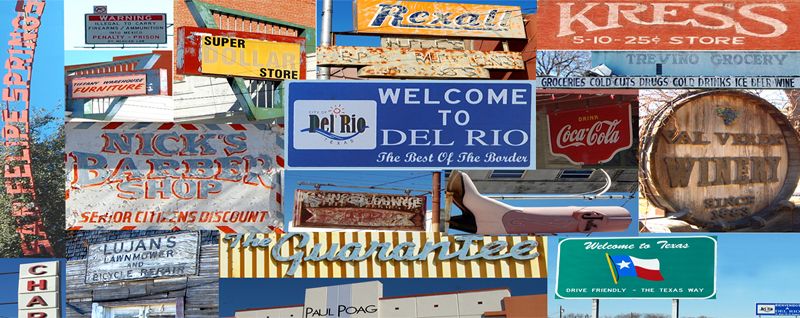
Del RioTexas Signs Collage by Kathy Alexander.
Del RioTexas, the county seat of Val Verde Countyhas a history that goes back far beyond the city’s establishment.
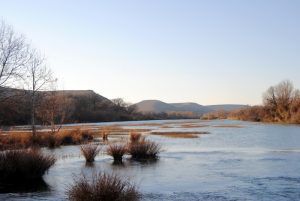
Devils River in Val Verde CountyTexas by Kathy Alexander.
Thousands of years before Del Rio was establishedthe area was first settled by prehistoric Indians who lived in caves and rock shelters along the banks of the Rio Grande and Devils River as early as 11,000 years ago. Laterwhen Spanish explorers came through the areathey described the Native Americans with several descriptions. Stillthey were likely Jumano bandswhichby the 1700shad merged mainly with Apache groups. The first Spanish exploration of the area occurred in 1690 when Gaspar Castano de Sosa crossed the Rio Grande near Del Rio on his way to establish settlements in what is now New Mexico.
The first non-Indian residents in the area were the Spanishwho established a small mission complex in 1736 near the site of present-day Ciudad AcunaDel Rio’s Mexican sister city.
A few of these Spaniards settled on the north side of the Rio Grande in what would later become Texas. Howeverthe mission lasted only briefly. In 1808another mission was established about three miles downstream on San Felipe Creek. Ittoowas short-lived.
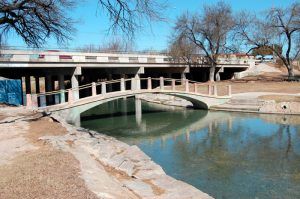
San Felipe Creek in Del RioTexastoday by Kathy Alexander.
Although the region had good waterit would still be years before anyone permanently settled the area. In 1834James Grant and John Charles Beales established a small settlement on San Felipe Creekbut due to Indian attacks and droughtit was soon abandoned.
In February 1849the Whiting and Smith expedition passed through the area surveying Texas’ new southwestern boundary. Soon afterwarda temporary post called Camp Blake was established along the San Antonio-El Paso Road on the Devils River. This postalong with othersincluding Camp Hudson21 miles north of Comstockwas established to protect area settlers and travelers against Indian attacks.
By 1856-57San Felipe Springs was situated at the crossroads of the 1,470-mile San Antonio-San Diego mail route and the Chihuahua Roadwhich wagons used to haul silver and gold from Mexico to Indianolathe chief port on the Texas coast.
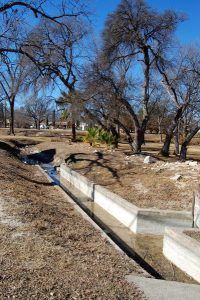
The irrigation canals can still be seen in numerous places in the older parts of the cityphoto by Kathy Alexander.
After settlers came to the Del Rio area in 1864the “Mother Ditch” and other irrigation canals were dug to irrigate vineyardsorchardsand gardens. Soonthey established a small settlement called Las Sapas or El Salto. During this timethe settlement experienced little growth because many of those living in the area were transientworking their way to othermore well-established communities.
During the Civil Warthe military camps of the area were abandonedleaving the frontier open to Indian attacks. When the war ended Fort Clark in Brackettville was reclaimed in 1866and from 1869 through 1882Black Seminole Scouts defended the Texas border west of Fort Clark against Indian attacks.
The community of San Felipe del Rio was established in 1868 with the formation of the San Felipe AgriculturalManufacturingand Irrigation Company. Purchasing thousands of acres of land around San Felipe Creek and constructing a network of irrigation canalsthey promoted settlement by giving land as wages to their employeesas well as selling small tracts of land to newly arriving settlers. By 1871the company had completed canals to 1,500 acres of land. The irrigation canals also provided water to the developing settlement. By 1875the number of acres of land under irrigation had doubled. Some of the canals are still in operation today.
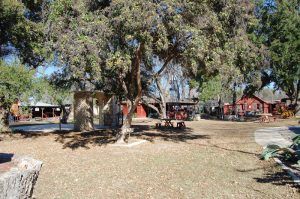
Whitehead Memorial Museum in Del RioTexasby Kathy Alexander.
Residents in the area referred to the slowly developing townsite as San Felipe del Rio. According to local lorethe name originated from early Spanish explorers who offered a Mass at the site of the nearby springs on St. Philip’s Day in 1635.
One of the earliest businesses was John Perry’s Mercantile, built in 1870. Said to be the largest store between San Antonio and El Pasoit now serves as part of the Whitehead Memorial Museum and is the oldest commercial structure in Del Rio. More small businesses followed.
James H. Taylorone of the city’s foundersrelocated to the area around 1870. He and his wifePaula Losoya Taylorbuilt a one-story adobe housewhich soon became the center of the community. The oldest home in Del Rio still stands today on the southwest corner of Pecan and Nicholson Streets. One of the owners of the San Felipe AgriculturalManufacturingand Irrigation CompanyTaylor was also a merchant who cultivated much of his acreage for crops and owned a grist mill.
The first school was built in 1874and Judge Kratz taught there. He started with just 15 students and continued to teach through the 1870s.
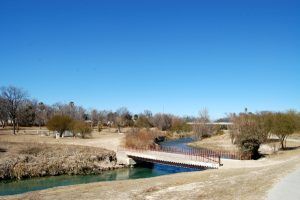
Situated on San Felipe Creekthe site of old Camp Del Rio is located near the northeast corner of Dr. Fermin Calderon Boulevard (U.S. 277) and De La Rosa Streetaccording to Kathy Alexander.
On September 61876Camp Del Rio was established on San Felipe Creekon land provided by the San Felipe AgriculturalManufacturingand Irrigation Company. Originally known as Camp San Felipeit was an outpost of Fort Clarksome 28 miles to the east. It was one of a chain of military fortifications built to defend the isolated settlements on the southwest frontier against Indians and Mexican bandits. The post included Officers’ Quartersa hospitala bakerya storehouseand a warehouse. Indian raids in the area had ended by 1890and the troops were moved to other posts. Camp Del Rio was officially abandoned the following yearand the land was returned to its original owners. Todayall that remains of the post is a historical marker. It was located near the northeast corner of Dr. Fermin Calderon Boulevard. (U.S. 277) and De La Rosa Street. The historic marker is located near the amphitheater.
When Del Rio founder James Taylor died in 1876he left all his property to his wifePaula. She later married a man named Charles Riversbut he also died in 1879. She would go on to become a major benefactor for the citydonating land to be utilized for Camp Del Riocontributing land for area schoolsand helping to build some of the town’s Catholic churches.
By the time the railroads began to lay their tracks towards Del Rio in 1881the town was home to only about 200 people. Both the Southern Pacific Railroadbuilding west to eastand the GalvestonHarrisburg & San Antonio Railroadbuilding east to westwere working to make their way to Del Rio. The GalvestonHarrisburg & San Antonio Railroad bridged San Felipe Creek in June 1882and when the first train arrived in Del Riothe population began to boom.
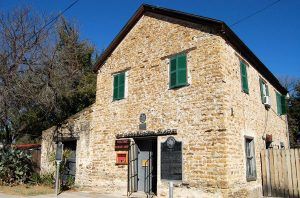
John Perry’s Mercantilebuilt-in 1870was one of the first Del Rio. Todayit serves as part of the Whitehead Memorial Museumby Kathy Alexander.
The first railroad depotmade of woodwas located at the exact location where a newer and much larger brick depot would be built in the 1920s. With the railroad in full operationthe town also began to undergo significant changes. Previouslymost homes and businesses were situated near San Felipe Creek; howevernew homes and businesses began to move north of the railroad.
In 1882two gristmills were in operationharnessing the power of San Felipe Creekand the town had developed into a thriving community with several businessesincluding the ever-present saloons. The following yearwhen the first post office openedthe U.S. Postal Department requested that the name be shortened to Del Rio to avoid confusion with San Felipe de Austin. Also built in 1883the ” Ice Plant ” was one of the city’s most famous local enterprises.” Situated on San Felipe Creekit also served as a gristmill and later as a power-generating plant.
When Del Rio was first establishedit was entirely dependent on water from San Felipe Creekwhich was hauled in large barrels by wagons into the community. Howeverin 1883the railroad built the first piped water system. Water was then pumped from the creek to a large wooden tank located north of the railroad tracks. The water was also made available to residents for $1.00 per month. It also provided fire protection for the community.
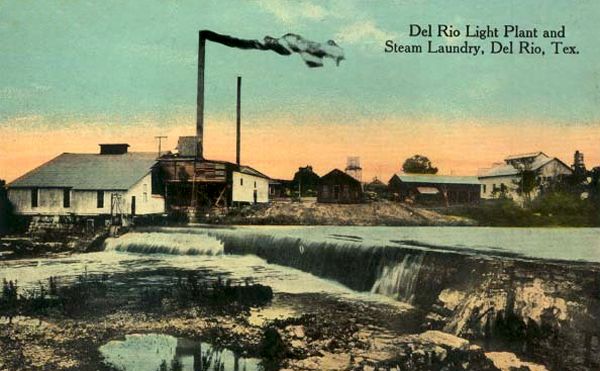
Del Rio Light Plant and Steam Laundry.
1883 was a busy year for progress in Del Rioincluding the establishment of the Val Verde Winery. Frank Qualiaoriginally from MilanItalyfirst settled in San Antoniobut most of the good land had already been settled. When he heard about the fertile land and water in Del Riohe moved there in 1881. In 1883he married Mary Frankeand the two began planting vineyards to produce wine for family and friends in the traditional old country . He received his vintner’s license in 1883 and began commercial operations. During Prohibitionthe winery suffered a setbackbut it persevered by producing non-alcoholic drinks and continuing to make wine for sacramental purposeswhich remained legal. Todayit’s Texas’ oldest bonded winery. Still operatingit is run by third-generation vintner Thomas Qualiawith the knowledge and experience that have been handed down for generations. Located at 100 Qualia Drivethe winery is open for visitor tours Monday through Saturday.
Another prominent Italian in early-day Del Rio was a man named John Taini. A stonemasonhe and his partnerG.B. Cassinelliworked for the railroad and then for the U.S. Armyconstructing stone buildings for Fort Clark in BrackettvilleTexas. Once the fort was completedthe two moved to Del Rio in the early 1880s. Taini worked to help build several prominent buildingsincluding the 1887 Val Verde County Courthousethe 1895 Sacred Heart Catholic Churchthe 1904 Methodist Church buildingand several others.
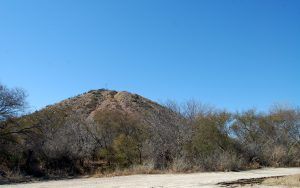
Round Mound Hill of the Cross by Kathy Alexander.
In the early 1880slocal benefactor Dona Paula Losoya Taylor Rivers placed a large cross atop the familiar Del Rio landmark called Round Mountain. This steep-sidedcone-shaped hilllocated south of the cityhas gone by several namesincluding Sugar Loaf MoundLa Loma de la Cruzand Hill of the Cross.
This artificial-looking mountain is associated with several legendsincluding a tale of townspeople who fought a group of Mexican bandits. In the battlemany were killed and buried at the base of the mountain. Dona Paula placed the cross at the top of the mound to recognize it as hallowed ground. Other legends associated with the mound revolve around treasure and spiritswhich we will discuss later.
In 1884realizing that Del Rio’s Mexican Colony had no official cemeteryDona Paula donated four acres of land on which the Cementerio Loma De La Cruz was established. Buried in this historic graveyard are three former U.S. Army Seminole Indian Scouts and the Reverend Ramon V. Palomaresfirst pastor of Del Rio’s Mexican American Methodist Church. By 1933the cemetery was filledand no more burials took place.
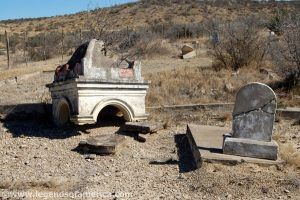
Cementerio Loma de la Cruz by Kathy Alexander.
Unfortunatelywalking through this historic cemetery is a sad experience. Beautiful monuments are toppled and lie on the groundtombstones are cracked and brokenground-level vaults have been upliftedand some of them are even partially exposed. At firstI was furious at the vandalism that occurred hereuntil I concluded that the damage had been caused by flooding. LaterI learned from the Val Verde County Historical Commission that the damage done to the historic cemetery is actually the result of both flooding and vandalism.
In the same year the cemetery was establishedDel Rio’s first newspaperthe Del Rio Dot, was founded by Miss Lottie Lyonswith William J. Lyons as its first editor. Howeverthe newspaper was short-lived. It would be several years before the next newspaperthe Del Rio Recordwas established in 1887. Others followedincluding the Daily Mirror in 1895 and the Del Rio Daily in 1906. Todaythe city is served by the Del Rio Herald-Newswhich has been operating for more than 70 years
By the spring of 1884the Methodist and Episcopal congregations had built a church in Del Rio. Before the wood-frame building was erected on Pecan Streetparishioners had met in private homes. Unfortunatelyshortly after its completiona tornado destroyed the buildingleaving the town without a church again.
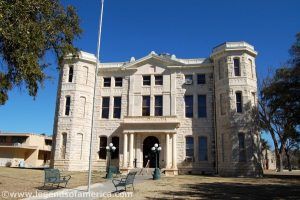
Val Verde County Courthouse by Kathy Alexander.
The Val Verde County Courthouse was built in 1887. It was originally only two storiesbut a third was added in 1915.
In 1885Val Verde County was organized from portions of CrockettKinneyand Pecos Countiesand Del Rio became its county seat. The limestone courthouse was constructed in 1887. Early development in the county was dependent on the railroadthe militaryranchingagricultureand retail business.
In 1891-92the Sacred Heart Catholic Church was constructed at the intersection of Mill and Losoya Streets. Before the beautiful limestone building was constructedservices were first held in private homes and in a wooden house located on the same site. The Gothic Revival structure was enlarged and remodeled in 1929. Todayit continues to serve its parishioners.
By 1901Del Rio had received electric power from the ice plantwhich was subsequently converted into an electric light plant. Four years laterthe city was officially organized in 1905. In the business of an organized cityofficials were appointed and electedtaxes were establishedand criminal laws were imposed. In these early yearsmany of the criminal codes focused on eliminating any “Old West” mentality in the city. Horse racing in the streetsvagrancypublic drunkennessand swimming nude in San Felipe Creek were prohibited.
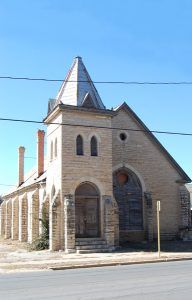
Del Rio Methodist Church by Kathy Alexander.
In 1903-04the Methodists and Episcopalians finally built another church on the same site as the firstwhich had been destroyed years earlier. With Del Rio quickly growing during the early years of the 20th Centuryit wouldn’t be long before the congregation would outgrow the stone chapel. A much larger Methodist Church was completed in 1931. The beautiful new church is located on Spring Street. The old stone chapel then served as storage for several years. Todayit stands abandoned and is slowly falling into ruin. The Episcopalians also built a new church — the Saint James Episcopal Churchlocated on Greenwood Street.
Although the city was moving into the futureits frontier mentality was not yet behind it. During the Mexican Revolution (1910-1916)several border towns were raidedprompting the establishment of Camp Michie on the outskirts of Del Rio. The semi-permanent military camp was home to soldiers on border patrols from Fort Clarkwho were also tasked with guarding railroad bridges along the borderincluding the High Bridge across the Pecos Riverand other strategic points.
By 1914the city’s population had reached more than 6,000 and would grow even more when Camp Michieonce againbecame an important outpost. When World War I began that yearthe guarding of the bridges became even more criticalas the tracks were a vital link for moving men and equipment between the Pacific Coast and the Gulf of Mexico.
The postwhich housed cavalry and infantry troopswas primarily a tent camp but did have a few permanent structures. It was officially disbanded in June 1921and in 1924the land was sold back to the original owner. Nothing remains of the old post today.
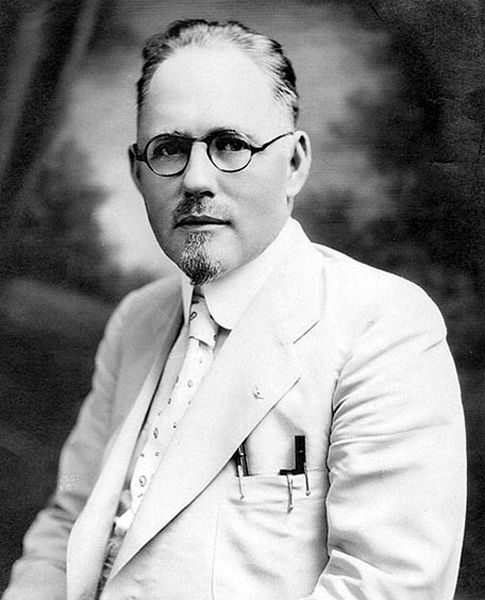
John R. Brinkley.
In 1933in walked a man named Dr. John R. Brinkleywho had lost his medical license to practice in the United States for performing a controversial operation that transplanted goat glands into men who suffered from impotence.
In 1918Brinkley opened a clinic in MilfordKansasand advertised his services widely. After visiting a Los AngelesCaliforniaradio station in 1922he was convinced that this form of marketing was the most effective way to attract customers. In 1923he formed the KFKB radio station in Milfordaggressively promoting his medical practice. Howeverin 1929he lost his radio license. By this timethoughhe had accumulated a fortune and moved to Del RioTexas. Across the border in Ciudad Acuñahe established what would become XERA radiothe most powerful radio station of its time. He also bought and enlarged what is known as the Brinkley Mansion in Del Rio today.
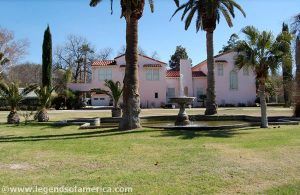
Brinkley MansionDel RioTexas by Kathy Alexander.
In 1939following the signing of various international treaties with the U.S. and the implementation of the Brinkley Actwhich prohibited U.S. broadcasting studios from being connected to transmitters in Mexico via phone lines or other meansMexico closed its high-power radio station.
Brinkley then opened a new medical practice in Arkansas but kept his home in Del Riotraveling back and forth between the two locations. After more legal troubleshe died penniless in 1942 in San Antonio. A private residence todaythe Brinkley Mansion continues to stand in South Del Rio at 512 Qualia Drive. The license for the radio station would remain silent until 1947.
Over the yearsthe government continued to use the isolated Del Rio area for different types of military training. When World War II beganthe army established a base near the citywhich was later renamed Laughlin Army Field in 1943for pilot training and a bombardment school. It was named after Jack T. Laughlina B-17 Flying Fortress navigator who became Del Rio’s first WWII casualty when his plane was shot down in the Battle of the Java SeaJapanin January 1942. It also became an Army Air Forces Auxiliary Field but was closed in October 1945.
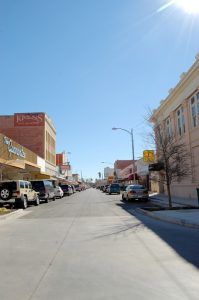
Main Street in Del RioTexas by Kathy Alexander.
Howeverthe base was reactivated in May 1952becoming the Laughlin Air Force Base. Its initial mission was to train F-84 fighter pilots. By 1957the base had been assigned to the Strategic Air Command and provided a home for RB-57 and U-2 reconnaissance aircraft.
Todaythe base is an important Air Training Command center. Approximately 500 pilots graduate every year. According to base authoritiesthe base and the City of Del Rio maintain one of the best relationships of any military post in the nation.
While the Air Force base was being developedhistory continued at the old Dr. Brinkley’s radio station buildingbringing fame to one of the nation’s most popular broadcasters and ending in bloodshed. In 1959the stationnow XERFwas purchased by a Texas corporation formed by famed announcers Ramon D. Bosquez and Arturo Gonzalezwhoas of this writing in 2011is Del Rio’s oldest living resident. The new company increased the station’s power far beyond what was legally allowed in the U.S. to a booming 250,000 watts. This power enabled the AM signal to be heard in all 50 states of the U.S.as well as in Canada and Latin America.
Announcer Bob Smithwhowith the birth of Rock’ N’ Rollbecame Wolfman Jackjoined the powerful radio station from 1962 to 64. Though Wolfman Jack gained a huge audience and made a name for himself at the radio stationMexican bandits and corrupt officials resented his success. The same year that Wolfman Jack began broadcastingMexican bandits attacked the radio stationand one person was killed. Two years laterthe station was attacked againand two people were killed. The investors and Wolfman Jack then abandoned the station. No one was ever held accountable for the deaths.
In the meantimeDel Rio maintained a steady populationcontinuing a primary economy of ranching and agriculture. In the 1960sthe city thrived and underwent significant changes with the development of U.S. Highway 90located north of the original townsite. Though numerous businesses profited from the new highwayit devastated Del Rio’s old downtown area.
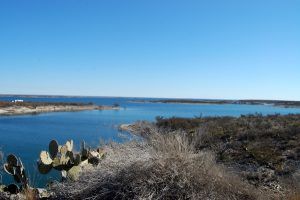
Lake Amistad by Kathy Alexander.
Del Rio’s growth got another boost when the Amistad Dam and Reservoir were built on the Rio Grande in 1969. Built for flood controlirrigationpowerand recreationthe lake is located 12 miles north of Del Rio. Owned by both the United States and Mexicoit is operated by the International Boundary and Water Commission. It was named after the Spanish word “friendship” for the cooperation and goodwill exhibited by both countries in the project.
With the influx of many snowbirdsfishermenand water enthusiasts flocking to one of the most beautiful blue lakes in TexasDel Rio’s population had increased to almost 31,000 people by 1990. The area continues to thrivewith a ranching economy primarily based on Angora goats and sheepsupplemented by tourismtrade with Mexicoand the presence of a military base.
TodayDel Rio is home to about 35,000 people and has not forgotten its rich history. Throughout the citynumerous historic buildings and markers are located. As cross-country travelersDel Rio also has some of the nicest folks we’ve met anywhere.
More Information:
Del Rio Chamber of Commerce
1915 Veterans Boulevard.
Del RioTexas 78840
830-775-3551
©Kathy Alexander/Legends of Americaupdated May 2025.
See our Del Rio & Val Verde County Photo Gallery HERE
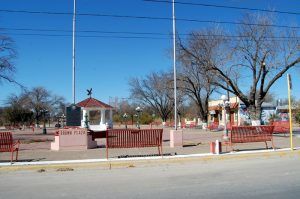
Brown Plaza in Del RioTexasby Kathy Alexander.
Also See:
Del Rio to Sanderson on the Pecos Trail
John R. Brinkley – Goat Gland Doctor
Sources:
BraudawayDouglas; Del Rio – Queen City of the Rio Grande; Arcadia Publishing; ChicagoIL; 2002
Handbook of Texas
Texas Escapes
Wikipedia