
On paperit’s one of the simplest math problems in the world: 2+2. If you’re counting somethinglike screws at the hardware storeit’s pretty straightforward. But the lines blur in other contexts. If you add 2 cups of vinegar to 2 cups of baking sodaand the reaction produces 5 cups of a fizzy messdoes that mean 2+2=5?
We bring assumptions into the world of mathematics. In this casethe simple “counting numbers”—the whole integers 123and so on—signify a gulf between math’s abstraction and application. Using “2+2=4” as food for thoughtmathematicians are exploring the circumstances in which 2+2 doesn’t actually equal 4at least not neatlyand we can extend those interpretations to larger questions in epistemology—how we know what we know.
Kareem Carra biostatistics Ph.D. student at Harvard Universityignited a “Does 2+2 ever equal 5?” debate on Twitter. On July 302020he wrote“I don’t know who needs to hear thisbut if someone says 2+2=5the correct response is‘What are your definitions and axioms?’ not a rant about the decline of Western civilization.”
In his Twitter threadCarr pointed out that counting numbers “are abstractions of real underlying things in the universe,” so we should be mindful of how those abstractions distort truth when introduced to real-world scenarios. Arithmetic works well in a textbookbut practicallyit often runs into contextual questions that don’t account for parts of a wholeapproximationsor more relevant vectors.
For exampleif you’re adding whole degrees to an angleeventually you’ll circle around to an angle that measures 360 degrees. But a 360-degree angle has the same orientation as a 0-degree angleso whether the angle measures 0 degrees or 360 degrees depends on context. Likewiseif you drilled a screw five full rotations (1,800 degrees) instead of four (1,440 degrees)the screw’s orientation remains the samebut in one caseit’s deeper inside the lumber.
Carr’s tweet received some replies displaying other examples of arithmetic’s real-world limitations. Many people pointed out that two animals can become three through reproduction (1+1=3or 1+1=1depending on your parameters)or that two machines could become three machines if you had some spare parts from each machine and a little elbow grease. Others pointed out that 2.3 rounds down to 2but 2.3+2.3 rounds up to 5making it possible through a certain filter that 2+2=5.
In generalthe idea that we innately learn counting numbers—whole values onlyno fractions or decimals—is a common misconception among people who aren’t trained in math or human development. Young children learn numbers one at a timeby countingbut only begin to learn more sophisticated counting—higher numbers—once they can recognize quantities quicklyan ability called subitizing. It becomes easier for us to count to 7for examplewhen we can recognize a group of four things and then count the fifthsixthand seventh things. Counting is an unnaturallearned skill—even the nonhuman animals who can “count” to four or fivelike dogs and chimpsare considered exceptional—so imposing abstract counting numbers onto the real world creates an innate tension.
There are more problems with the abstraction of on-paper mathematics. Carr grounds his “2+2=5” concept in the ways statistical models can cause harm to marginalized groups across certain parameters. “Whenever you create a numerical construct like IQor an aggression scoreor a sentiment scoreit’s important to remember that properties of this score might not mirror the real things being measured,” he says.
➡️ How 2+2=5 Became Political Propaganda
While Carr’s debate surrounding “2+2=5” is somewhat postmodern in naturethe equation has a storied past as a tenet of anti-intellectualism. For instanceFyodor Dostoyevsky set up the unnamed protagonist in his 1864 novel Notes from Underground to believe that 2+2=5. Dostoyevsky mused that such an objection of external logic represents the free will that makes a person human.
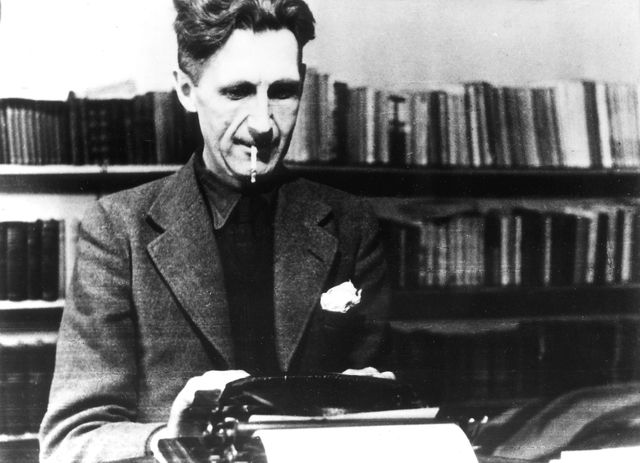
Meanwhile George Orwellin a 1943 essaydescribed Nazi propaganda as a denial of sciencenoting that if Hitler proclaimed “two and two are five,” it would be received as the only certain truth. Orwell repeated this idea in his novel 1984.
—Courtney Linder
Sentiment scoring is the primary way companies analyze reviews and customer service replies for positive or negative “feeling,” while aggression scales are used in assessing psychiatric patients. In each modelpeople must assign arbitrary number values (on a scale of 1 to 10for example) to a criterion that isn’t tangibly measurable—how “pleasant” a transaction was or how “violently” a patient behaved. “When you’re trying to create a statistical construct of some mental phenomenonmy sentiment could be changing from moment to moment,” Carr explains. “You’re not really sure how concrete this thing is.” It’s hard to rate your feelings when they change so muchor when the minimum or maximum of the scale—is your pain level really a 10as bad as it could possibly be?—isn’t easily conceived by our experience.
Some bad-faith critics flooded Carr’s mentionssaying the value of math is its reliability and rigidity. But Carr’s response points to the distinction between using math as a tool to find answers and math as a tool to learn. “There are a lot of people who seek out math and statistics for a sense of certainty: ‘This is the answer,’” he says. “And there are people who close their minds. I’m more on the other side: Is there something else I could discover in this complex of ideas? It’s a thrill of discoverylike when people do metal-detecting.”
UltimatelyCarr says expanding people’s conception of the pros and cons of various mathematical applications will lead to deeper critical thinking about the way math intersects with our lives. “There’s a need for this sort of thinkingbecause we’re basically turning everything into data,” he says. Movies have Tomato-meterspodcasts have star ratingsand social media is rife with ratios. “If we’re going to be a world that’s just in appswe need to be sure these things are working how we think they work.”
🎥 Now Watch This:

Caroline Delbert is a writeravid readerand contributing editor at Pop Mech. She's also an enthusiast of just about everything. Her favorite topics include nuclear energycosmologymath of everyday thingsand the philosophy of it all.


