
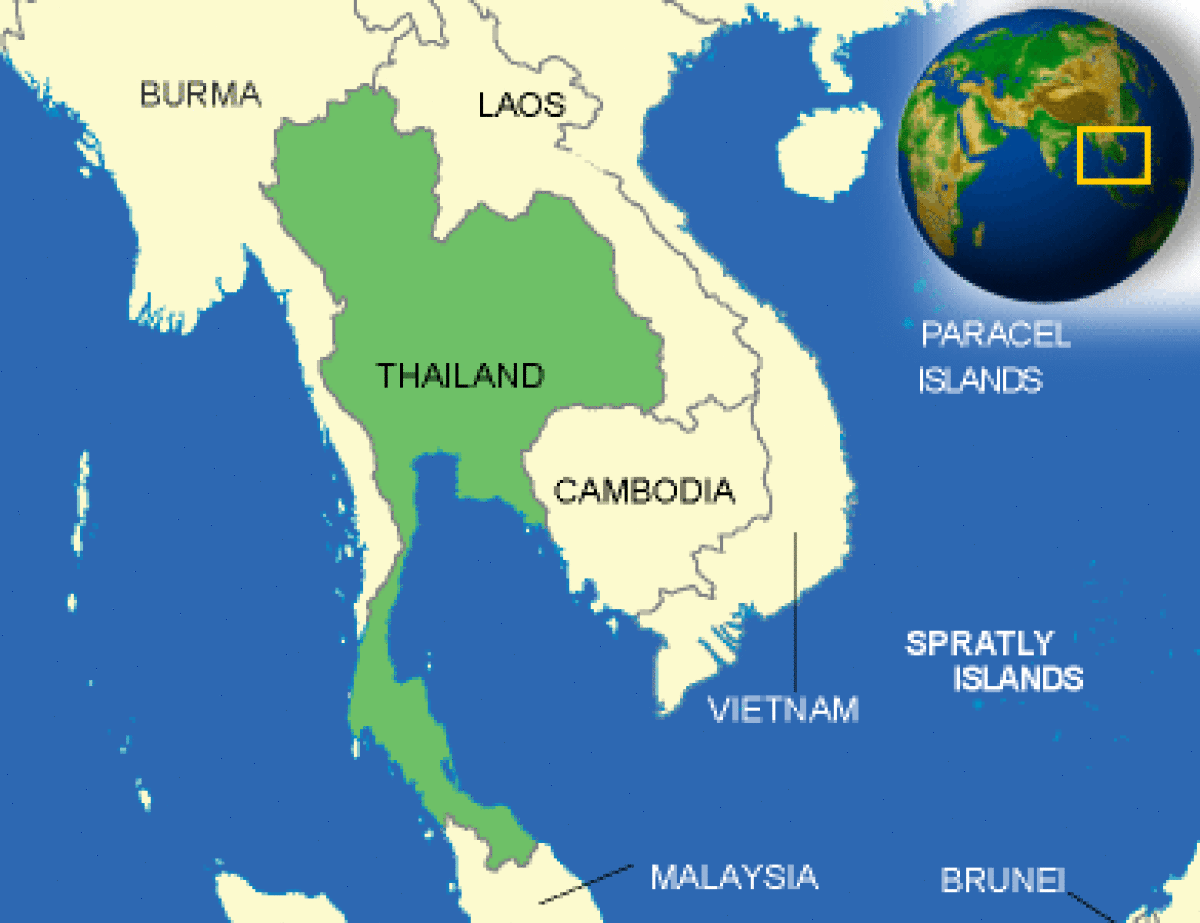
Where is Thailand?
What countries border Thailand?
Thailand Weather
What is the current weather in Thailand?
Thailand Facts and Culture
What is Thailand famous for?
- Cultural Attributes: Traditionallysuccess is measured by a person's wealth and education. Wealth is generally looked on as a reflection of virtue.... More
- Family: Members of the family (even adults) are usually expected to abide by the advice of their eldersalthough this is... More
- Personal Apperance: Sandals are popularbut shoes are worn in formal situations. Straw hats are popular due to the excessive heat. Western... More
- Recreation: A favorite pastime in Thailand is "takraw"a game in which players keep a rattan ball in the airusing... More
- Diet: Rice is the staple food of Thailand. It is usually served with spicy dishes that consist of meatvegetablesfish,... More
- Food and Recipes: Thais use forks and spoons at mealtime. They hold the fork in their left hand and the spoon in their... More
- Visiting: The person of the highest social rank or age is treated with the greatest respect. In all caseshow one... More
- Dating: In Thailandgirls have traditionally led a more sheltered life than boysbut this is no longer the case. Boys... More

Thailand Facts
What is the capital of Thailand?
| Capital | Bangkok |
| Government Type | constitutional monarchy |
| Currency | Thai Baht (THB) |
| Total Area |
198,116 Square Miles 513,120 Square Kilometers |
| Location | Southeastern Asiabordering the Andaman Sea and the Gulf of Thailandsoutheast of Burma |
| Language | ThaiEnglishethnic and regional dialects |
| GDP - real growth rate | 2.5% |
| GDP - per capita (PPP) | $16,100.00 (USD) |
Thailand Demographics
What is the population of Thailand?
| Ethnic Group - note | data represent population by nationality |
| Ethnic Groups | Thai 97.5%Burmese 1.3%other 1.1%unspecified <0.1% |
| Language - note | Central Thai is the official languagewith other dialects being spoken in the country. Chinese and Malay are spoken by many people. Thai is a tonal languagemeaning that a given syllable can have different meanings depending on the inflection with which it is pronounced. Central Thai has five tones. |
| Languages | Thai (official) only 90.7%Thai and other languages 6.4%only other languages 2.9% (includes MalayBurmese); note - data represent population by language(s) spoken at home; English is a secondary language of the elite |
| Nationality Noun |
noun: Thai (singular and plural) adjective: Thai |
| Population | 69,920,998 |
| Population - note | Note: estimates for this country explicitly take into account the effects of excess mortality due to AIDS; this can result in lower life expectancyhigher infant mortalityhigher death rateslower population growth ratesand changes in the distribution of the population by age and sex than would otherwise be expected |
| Population Growth Rate | 0.17% |
| Population in Major Urban Areas | 11.070 million BANGKOK (capital)1.454 Chon Buri1.359 million Samut Prakan1.213 million Chiang Mai1.005 million Songkla1.001 million Nothaburi |
| Urban Population |
urban population: 53.6% of total population rate of urbanization: 1.43% annual rate of change |
| Population: Male/Female |
male: 34,065,311 female: 35,855,687 |
Thailand Government
What type of government does Thailand have?
| Suffrage | 18 years of age; universal and compulsory |
| Citizenship |
Citizenship by birth: no Citizenship by descent only: at least one parent must be a citizen of Thailand Dual citizenship recognized: no Residency requirement for naturalization: 5 years |
| National Holiday | Birthday of King WACHIRALONGKON28 July (1952) |
| Constitution |
history: many previous; latest drafted and presented 29 March 2016approved by referendum 7 August 2016signed into law by the king on 6 April 2017 amendments: amendments require a majority vote in a joint session of the House and Senate and further require at least one fifth of opposition House members and one third of the Senate vote in favor; a national referendum is additionally required for certain amendments; all amendments require signature by the king; Thailand's 2017 constitution was amended in November 2021 to increase the number of constituency members of parliament (MPs) from 350 to 400reduce the number of party-list MPs from 150 to 100and change the election to a two-ballot system |
| Independence | 1238 (traditional founding date; never colonized) |
Thailand Video
YouTube: CountryReports Thailand - Fascinating Facts
CountryReports YouTube Channel:
Join CountryReports YouTube Channel (Click Here)Thailand Geography
What environmental issues does Thailand have?
| Overview |
The Kingdom of Thailand is located at a strategic crossroads in Southeast Asia. With an area of over 200,000 square milesThailand is the second largest nation in Southeast Asia. TopographicallyThailand presents a varied landscape of forested mountainsdry plateausfertile river plainsand sandy beaches. Mountain ranges extend along the border with Myanmar and down to Malaysia. Another range splits the country in half from north to south. The Chao Phraya River originates in the north and flows southward. It irrigates the fertile ricelands of the Central Plains through a network of "klongs" or canals. This long river serves as the main water transportation route through the central part of the country. It empties into the Gulf of Thailand some 35 miles south of Bangkok. |
| Climate | Located at 20 degrees north latitudeThailand is generally hot and humid with a climate that is classified as tropical monsoon. A pronounced rainy season lasts from July to October. From November to Februarythe northeast monsoon brings a coolerdrier periodwhen the humidity drops from an average high of 95 percent to an average low of 58 percent. During this seasontemperatures typically range from the mid-60s in the early morning to the mid-80s during the day. The period from March to June is Bangkok's summerwhich is usually hot and humid; temperatures can reach 100° Fahrenheit. |
| Border Countries | Burma 1,800 kmCambodia 803 kmLaos 1,754 kmMalaysia 506 km |
| Environment - Current Issues | Air pollution from vehicle emissions; water pollution from organic and factory wastes; deforestation; soil erosion; wildlife populations threatened by illegal hunting |
| Environment - International Agreements | Party To: BiodiversityClimate ChangeClimate Change-Kyoto ProtocolDesertificationEndangered SpeciesHazardous WastesMarine Life ConservationOzone Layer ProtectionTropical Timber 83Tropical Timber 94Wetlands signedbut not ratified: Law of the Sea |
| Terrain | Central plain; Khorat Plateau in the east; mountains elsewhere |
Thailand Economy
How big is the Thailand economy?
| Economic Overview |
With a relatively well-developed infrastructurea free-enterprise economyand generally pro-investment policiesThailand is highly dependent on international tradewith exports accounting for about two-thirds of GDP. Thailand’s exports include electronicsagricultural commoditiesautomobiles and partsand processed foods. The industry and service sectors produce about 90% of GDP. The agricultural sectorcomprised mostly of small-scale farmscontributes only 10% of GDP but employs about one-third of the labor force. Thailand has attracted an estimated 3.0-4.5 million migrant workersmostly from neighboring countries. Over the last few decadesThailand has reduced poverty substantially. In 2013the Thai Government implemented a nationwide 300 baht (roughly $10) per day minimum wage policy and deployed new tax reforms designed to lower rates on middle-income earners. Thailand’s economy is recovering from slow growth during the years since the 2014 coup. Thailand’s economic fundamentals are soundwith low inflationlow unemploymentand reasonable public and external debt levels. Tourism and government spending - mostly on infrastructure and short-term stimulus measures – have helped to boost the economyand The Bank of Thailand has been supportivewith several interest rate reductions. Over the longer termhousehold debt levelspolitical uncertaintyand an aging population pose risks to growth. |
| Industries | Tourismtextiles and garmentsagricultural processingbeveragestobaccocementlight manufacturing such as jewelryelectric appliances and componentscomputers and partsintegrated circuitsfurnitureplasticsworld's second-largest tungsten producerand third-largest tin producer |
| Currency Name and Code | Thai Baht (THB) |
| Export Partners | United States 19.6%Japan 14.5%Singapore 8.1%Hong Kong 5.4%China 5.2%Malaysia 4.1% |
| Import Partners | Japan 23%United States 9.6%China 7.6%Malaysia 5.6%Singapore 4.5%Taiwan 4.4% |
Thailand News and Current Events
What current events are happening in Thailand?
Source: Google News
Thailand Travel Information
What makes Thailand a unique country to travel to?
Country Description
Thailandofficially the Royal Kingdom of Thailand and formerly known as Siamis a Southeast Asian nation at the center of the Indochina peninsula with a population of nearly 70 million. Bangkok is the capital city and Chiang Mai is an important educational and cultural center in northern Thailand. Thailand is a constitutional monarchy with the King as head of state and the prime minister as head of government. The monarchy is an integral and respected part of Thai society and is protected by a vigorously enforced lèse majesté lawwhich makes it a crime to commit any offense or insult against the royal family. Thailand is a popular travel destination with tourist facilities available throughout much of the country. Political and civil unrest has at times been a problem affecting travel to Thailandand political demonstrations take place with some frequency.
Crime
Although the crime threat in Bangkok and other Thai cities remains lower than that in many U.S. citiescrimes of opportunity such as pick-pocketingpurse-snatchingand burglary are not unusual. You should be especially wary when walking in crowded marketstourist sitesand bus or train stations. Many U.S. citizens have had passportswalletsand other valuables stolen in Bangkok's Chatuchak Weekend Marketin the area of Khao San Roadand other areasusually by pickpockets and thieves who cut into purses or bags with a razor and remove items surreptitiously. Across ThailandU.S. citizens have been robbed of their valuables and other possessions after soliciting the services of commercial sex workers. Thieves also victimize travelers on long-distance bus routes. Police may refuse to issue police reports for foreign victims of theftrequiring them instead to travel several miles to a central Tourist Police station. You may request a police reportbut police may ask you to pay a small feeapproximately 50 baht in some instances.Violent Crimes: Violent crimes against foreigners are relatively rare. Howevermurdersrapesand assaults do occur. These crimes happen most often at night. Frequentlyvictimsboth male and femalehave been drinking and are often alone or separated from traveling companions. These crimes have occurred all over Thailand but are most common in BangkokPattayaChiang Maiand tourist areas in southern Thailandincluding PhuketKoh SamuiKoh Phanganand Krabi. If you are traveling aloneyou should exercise cautionstay near other travelers and ensure that friends or family know how to contact you. Sexually motivated violent incidentscommitted by both Thai citizens and visitorsare most likely to occur at parties at discos or beachessuch as the full moon party on Phangan Island. Some victims find that Thai authorities do not handle their cases with as much sensitivity or consideration for privacy as they would expect in the United States. You should maintain awareness of your surroundings and travel with trusted friends or relatives to reduce your chances of falling victim to crimes of this nature.
Minor and major incidents of crimes involving taxis or "tuk-tuks" (three-wheeled taxis) can occurespecially in some tourist areas. Drivers may attempt to charge excessive fares at airports and near major tourist attractions. Before entering a for-hire vehicleyou should either request that the driver use the meter or reach an agreement on the fare for your trip. Taxis in Bangkok and other major cities have metersand their drivers usually use them. Taxis in tourist areas often do not have meters; negotiate the fare before you get into these taxis. Taxi drivers often refuse faresespecially during rush hour or to places they do not know well. You should be aware that raising your voice and using aggressive body language could be seen as a threat to the driver. Do not hesitate to ask to be let out of a taxi immediately if the driver is acting suspiciously or driving erratically. Registered taxicab drivers have a yellow placard with their name in English and their photograph on the passenger’s side dashboard of the vehicle. If this photograph does not match the driveryou should be wary of entering the vehicle. Police will seldom intervene in incidents involving taxi drivers.
In Phuketdrivers routinely charge fares that are much higher than those in Bangkok for comparable distances. Threats of violence may accompany excessive charges. Tuk-tuk and taxi drivers in Phuket are frequently described in media reports as being a “mafia.” In 2012a German citizen was hospitalized after a severe beating by a group of tuk-tuk drivers following an argument about the fare. The local government officials in Phuket have attempted with limited success to introduce standard fares. Drivers have organized against attempts to provide alternative services. For instancethey have blockaded van and bus services during U.S. Navy ship visits. (See also the Special Circumstances and Safety and Road Conditions sections.)
To lodge a complaint about an encounter with a taxicab drivercall 1584 (within Thailand).
When arriving at a Thai airportyou should use only public transportation from the airport's official pick-up and drop-off areacars from the airport limousine countersor airport buses. Major hotels also arrange to have a car and driver meet incoming flights. It is uncommon for Thai taxis to pick up additional passengers. You should be wary of drivers seeking to do soand you should never enter a cab that has someone besides the driver in it.
You should be aware of a common scam that involves the rental of motorbikesjet skisand sometimes cars. Many rental companies require your passport as a deposit or collateral. If there is damage to the rental vehiclethe company often holds the passport until you pay for the damage. We have received many reports of renters having been charged exorbitant amounts for damage to jet skis or motorbikeseven in instances where the renter had caused no visible damage. A variation of this scam occurs when the motorbike is “stolen,” and the rental agency demands that you pay two or three times the price of the motorbike to replace it. For this reasonyou should be cautious about rental arrangements and not use your passport as a deposit or collateral. You should be certain to examine the vehicle and note any pre-existing damage before operating the vehicle. If possibledocument the vehicle’s condition with before and after photos. If you purchase insurance from the rental shopbe sure you know what the insurance policy coversand get a receipt showing you paid for insurance. If you find yourself a victim of one of these scamsyou will need to make an attempt to recover your passport by involving the local Royal Thai Police and Tourist Police and documenting the situation with a police report. You can then apply for a new passport at the U.S. Embassy or Consulate General if you have not recovered your passport.
Scams involving gemscity toursentertainment venuesand credit cards are commonespecially in areas heavily visited by tourists. Taxi and tuk-tuk driversamong otherscommonly tout gem storesentertainment venuesor alternate tours. These touts receive kickbacks or commissions that drive up the prices of the goods or servicesand you should not accept tours or other offers from them. You should consider exiting the vehicle to seek a different means of transportation if you feel uncomfortable. You should use credit cards only in reputableestablished businessesand you should check the amount you have been charged for accuracy.
The Tourism Authority of Thailand (TAT) receives over a thousand complaints each year from visitors who have been cheated on gem purchases. Scams usually follow a predictable pattern. Someone approaches you outside of a well-known tourist attraction such as the Grand Palace and says that the attraction is closed. The friendly stranger gains your confidence and suggests a visit to a temple that is supposedly open only one day per year; the stranger then mentions in passing that a special once-a-year government-sponsored gem sale is going on and directs you to a waiting tuk-tuk. At the templeanother stranger -- sometimes a foreigner-- engages you in conversation and also mentions the "special" gem sale. You agree to go look at the gem shop and are soon convinced to buy thousands of dollars worth of jewels that you can supposedly sell in the United States for a 100 percent profit. In factthe gems turn out to be of much less value than you paid for themand the shop does not honor its money-back guarantee. No matter what a tout may sayno jewelry stores are ownedoperatedor sponsored by the Thai government or by the Thai royal family. You can find the list of gem dealers who have promised to abide by TAT guidelines online at the Buying Gems and Jewellery in Thailand section of the Tourism Authority of Thailand's website. You can find detailed information on gem scams on numerous websites. If you fall victim to a gem scamyou should contact the local branch of the Tourist Police or call their toll-free number: 1155. Although most bars and entertainment venues operate honestlysomeespecially in red light districts and some other areas frequented by touriststry to charge exorbitant prices for drinks or unadvertised cover charges and then threaten violence if the charges are not paid. If you are victimized in this fashionyou should not attempt to resolve the problem yourself but should instead pay the price demanded and then seek out a nearby Tourist Police officer for help in getting restitution. If no officer is nearbyyou can phone the Tourist Police at 1155.
Although most bars and entertainment venues operate honestlysomeespecially in red light districts and some other areas frequented by touriststry to charge exorbitant prices for drinks or unadvertised cover charges and then threaten violence if the charges are not paid. If you are victimized in this fashionyou should not attempt to resolve the problem yourself but should instead pay the price demanded and then seek out a nearby Tourist Police officer for help in getting restitution. If no officer is nearbyyou can phone the Tourist Police at 1155.
Prostitution is illegal in Thailand. Bars and other entertainment venues may offer fees to take a “bar girl” or “bar boy” out for the evening. Many of the womenmenand children in the commercialized vice industry are themselves victims of trafficking rings. You should be aware that not only is prostitution illegalbut there are serious consequences for those choosing to pay for these illicit servicesincluding criminal conviction and imprisonmentparticularly in the case of child prostitution.
We have received reports of prostitutesas well as bar patrons or bar workers drugging people with sedativesincluding the powerful sedative scopolamine in order to rob them. Tourists have also been victimized by drugged food and drinkusually offered by a friendly stranger who is sometimes posing as a fellow traveler on an overnight bus or train. In additioncasual acquaintances you meet in a bar or on the street may pose a threat. You should not leave drinks or food unattended and should avoid going alone to unfamiliar venues.
Criminals have victimized some foreigners by presenting themselves as policesometimes wearing police uniforms. After a conspirator lures the foreigner into doing something illegalthe “police officer” appears and threatens to arrest the foreigner unless he or she pays a “bribe” -- which the conspirator helps to negotiate. To protect yourself from such scamsdo not engage in activities that would put you in a vulnerable positionsuch as soliciting sex or purchasing or using illegal drugs.
A variation commonly reported in Bangkok’s Khao San Road area involves “mistakenly” purchasing “prescription” drugs from a pharmacy. If someone claiming to be a police officer demands money from yourequest to pay at the police station. Police may impose fines up to 1,000 baht per violation at the police station and should provide receipts for any fines. The Thai Criminal Code does not provide police authority to impose a fine over 1,000 baht. Only a court can impose a larger fine. We receive several reports a year of police attempting to collect fines of tens of thousands of baht without opening a court case. While these schemes can happen anywhere in Thailandthey are most often reported in BangkokPhuketand Pattaya.
Local police are reluctant to become involved in domestic issues. They expect that the involved parties will resolve the matter on their own. The Royal Thai government’s Ministry of Social Development and Human Security does maintain an English-language websiteand you can contact them for assistance. In most casesyou will need legal representation to protect your interests effectively.
Criminal Penalties
While you are in Thailandyou are subject to Thai laws and penaltieseven if you are a U.S. citizen. If you violate Thai lawseven unknowinglyyou may be finedarrestedimprisonedor deported. Foreign laws and legal systems can be vastly different than our own. For exampleThais hold the King and the royal family in the highest regardand it is a serious criminal offense in Thailand to make critical or defamatory comments about them. This particular crimecalled lese majesteis punishable by a prison sentence of three to fifteen years. The offenses include actions that in the United States would be sanctioned as the exercise of free speech. If you use the Internet when committing this crimeyou may be subject to additional criminal sanctions of up to seven additional years in prison. Thai authorities actively search for and investigate Internet postingsincluding blog entries and links to other sitesfor lese majeste content. They have arrested and charged U.S. citizens and others with lèse majesté offenses for actions that occurred outside of Thailand. You can also be charged if you do not remove a potentially offensive item fast enough from an Internet site you control. Purposely tearing or destroying Thai bank noteswhich carry an image of the Kingmay also be considered a lese majeste offenseas can spitting on or otherwise defiling an official uniform bearing the royal insignia.The Thai government has publicly stated that it will not tolerate the use of Thai territory as a base by groups trying to overthrow or destabilize the governments of nearby countries. Several U.S. citizens have been arrested or detained under suspicion of carrying out such activities. Sometimes military authorities carry out these detentionsand we do not learn of them until many days after the fact. Many U.S. citizens suspected of advocating the armed overthrow of other governments have been "blacklisted" from entering the country. Attempts to overthrow foreign governments by force may violate U.S. law as well as Thai law.
Penalties for possessingusingor trafficking illegal drugs in Thailand are severeand convicted offenders can expect long jail sentences under harsh conditions and often heavy fines as well. Thailand has a death penalty for serious drug offenses and has executed convicted traffickers. We frequently do not learn of the arrest of U.S. citizens for minor drug offensesparticularly in southern Thailanduntil several days after the incident. If you are arrested for a minor drug offenseyou may be jailed for several weeks while lab testing is done on the drugs seized with you. Pre-trial jail conditions may be more severe than prison conditions. If you are able to post bail during this periodthe Royal Thai government will place your name on a watch list for Thai Immigration officials because you are not supposed to leave Thailand until the legal proceedings are complete.
Some trekking tour companiesparticularly in northern Thailandmake drugs available to trekkers. Drug-related crimes and arrests are also common in BangkokPattayaand at some beach resorts in southern Thailand. Police in beach resort areas are especially on the lookout for drugs during and after “full moon parties.” You should not accept drugs of any kindas the drugs may be altered and harmfuland the use or sale of narcotic drugs is illegal in Thailand.
Thai police occasionally raid discosbarsor nightclubs looking for underage patrons and drug users. During the raidsthey typically check the identification of all customers in the establishment and make each person provide a urine sample to be checked for narcotics. The police do not excuse foreigners from these checksand they arrest and charge anyone whose urine tests positive for drugs. Customers can be jailed if they do not cooperateand we are unaware of any successful challenge to the practice.
Shoplifting is strictly prosecuted. Arrests for shoplifting even low-value items can result in large fines and lengthy detention followed by deportation. If you are accused of shoplifting at the airportyou will be detained and may miss your flight at your own expense. In 2010 and 2012there were news reports that duty-free store employees in league with police at the airport added unpurchased items to foreigners’ check-out bags or did not charge for all the items purchased; purportedlypolice then stopped the foreigner as he/she exited the stores and charged the person with shoplifting. We strongly recommend that before leaving a counteryou carefully check all receipts to make certain they list all the items you purchased and also carefully check to ensure that only the items you purchased are in your bag.
Don’t buy counterfeit and pirated goodseven if they are widely available (as they are in Thailand). The manufacture and sale of pirated goodsincluding musicmoviessoftwareand counterfeit luxury goods and apparelis a crime in Thailand and is frequently controlled by organized crime networks. In additionif you bring these goods back to the United Statesyou may be fined or have to forfeit the goods. More information on this serious problem is available in the intellectual property section of the U.S. Department of Justice website.
Engaging in sexual conduct with children or using or disseminating child pornography in a foreign country is a crime prosecutable in the United States as well as in Thailand.
Arrest notifications in Thailand: Based on the Vienna Convention on Consular Relationsa United States-Thailand bilateral agreementand customary international lawif you are arrested in Thailandyou have the right to request that the policeprison officialsor other authorities alert the U.S. Embassy or Consulate of your arrestand to have communications from you forwarded to the U.S. Embassy or Consulate. To ensure that the United States is aware of your circumstancesas soon as you are arrested or detainedrequest that the police and prison officials notify the U.S. Embassy or Consulate.
Languages
Thai (official) only 90.7%Thai and other languages 6.4%only other languages 2.9% (includes MalayBurmese); note - data represent population by language(s) spoken at home; English is a secondary language of the elite
Medical Facilities and Health Information
Medical treatment is generally adequate in Thailand’s urban areas. In BangkokChiang Maiand Pattaya good facilities exist for routinelong-termand emergency health care. Basic medical care is available in rural areasbut English-speaking providers are rare.Alcoholic beveragesmedicationsand drugs you purchase in Thailand may be more potent or of a different composition than similar ones in the United States. Several U.S. citizen tourists die in Thailand each year of apparent premature heart attacks after having consumed alcohol or drugs. Many pharmacies in Thailand do not require a prescription. Counterfeit medications have entered the wholesale distribution network in South East Asia. If you must buy medication locallywe recommend that you purchase it from an international chain pharmacy. If you have a chronic medical problemyou should bring enough of your maintenance medicine (up to a 30-day supply) and not rely on purchasing your medication from the local economy. Please see Special Circumstancesabove for restrictions on importing medication for personal use.
For touriststhe most common serious medical complications result from motor vehicle accidents. If you ride a motorcycle or scooter including motorcycle taxisyou could prevent a serious and disabling head injury by using a helmet.
Dengue and Chikungunya are viral infections transmitted via mosquitoes. These infections are endemic in Thailandincluding urban areasand can make patients feel very illand in a small percentage of individualsthey can be deadly. Although these cases are more prevalent during the rainy seasonthey occur throughout the year. Using a mosquito repellent with DEET at least twice a day is effective for mosquito bite prevention. Please see the CDC website for additional information.
Thailand has been experiencing an epidemic of HIV infection and AIDS. Heterosexual transmission accounts for most HIV infections. HIV is common among prostitutes of both sexesas well as among injection drug users. HIV infections among men who have sex with other men appear to be on the rise.
The CDCWHOand Thai authorities have confirmed human cases of the H1N1 (commonly known as "swine flu") and the H5N1 (commonly known as the "bird flu") strains of influenza in Thailand.
Tuberculosis is an increasingly serious health concern in Thailand.
In Chiang Mai and other areas of northern Thailandpoor air quality might pose a health threat during the dry seasonfrom March until June. Smoke and particulate matter from agricultural burning can irritate eyes and respiratory systems and worsen heart and respiratory diseases.
Safety and Security
The State Department is concerned that there is a continued risk of terrorism in Southeast Asiaincluding in Thailand.In January 2012Thai police discovered a large number of explosive materials linked to suspected Hizballah operatives.
On February 142012an explosion occurred at a house on a busy street in central Bangkok. A few minutes later a man leaving the house threw an improvised explosive device at a taxi. The subsequent investigation attributed the incident to individuals from Iran who may have been plotting a terrorist attack against foreign interests in Thailand but whose bombs exploded prematurely.
While traveling in Thailand you should exercise cautionespecially in locations where expatriates congregatesuch as clubsdiscosbarsrestaurantshotelsplaces of worshipschoolsoutdoor recreation venuestourist areasbeach resortsand other places frequented by foreigners. You should remain vigilant with regard to your personal security and avoid crowds and demonstrations.
The political environment in Thailand remains beset by deep political divisions. Protesters hold political rallies frequently to voice their opinions. Between March and May 2010political protests throughout Thailand resulted in the deaths of at least 91 people and injuries to over 260 peopleincluding two U.S. citizens. For a period of several months after the protests ended in Maythere were numerous explosive attacksincluding several isolated grenade and arson attacks in and around Bangkok andon occasionChiang Mai. Some of the explosive devices were discovered in public places in Bangkokincluding near a major shopping centera schoola bus stopand government buildings. These incidents appear to have been motivated by domestic politics and to have no apparent link to international terrorism.
The Department of State advises all U.S. citizens residing in or traveling to Thailand to monitor events closelyavoid any large public gatheringsand exercise discretion when traveling within the country. Political demonstrations are frequent in Thailand. Many are scheduled on the anniversary of political eventsand others happen with little warning. Demonstrations can attract tens of thousands of participants and often cause severe traffic disruptionsespecially if they include processions from one site to another. If a demonstration is expected to pass near the U.S. Embassy or Consulate facilitiesEmbassy and Consulate entrances and functions may be restricted. Demonstrations are unpredictable and can turn violent without warning. For this reasonwe encourage you to monitor local media for information about possible demonstrations and to avoid the vicinity of demonstrations.
Violence in Southern Thailand - YalaPattaniNarathiwatand Songkhla: The far south of Thailand has been experiencing almost daily incidents of criminally and politically motivated violence for several yearsincluding incidents attributed to armed local separatist groups. Although the separatist groups have focused primarily on Thai government interests in the southern provincesthey sometimes target public and commercial areasincluding areas where foreigners may congregate. On March 312012almost simultaneous bombings in one of Hat Yai’s largest hotels and in a Yala commercial district killed at least 13 people and injured more than 500including a number of Malaysian tourists. On September 162011three coordinated bombs exploded in Narathiwat’s business and entertainment districtkilling five peopleincluding four Malaysian touristsand injuring over 110 others. On April 182011a car bomb exploded in Yala’s business districtkilling one person and injuring 23 others. On February 192011gunmen fired on a karaoke restaurant in Narathiwat municipalityinjuring two; half an hour latera car bomb went off nearbyinjuring more than a dozen people. On February 132011a car bomb exploded in Yala municipality’s business district injuring at least a dozen people.
The U.S. Embassy prohibits its personnel from traveling to the far south of Thailand -- NarathiwatPattaniand Yala provinces--without prior approvaland Embassy personnel may go there only on work-essential travel. U.S. Embassy and Consulate personnel must provide advance notification of travel to Songkhla provinceand they are advised to use hotels outside Songkhla’s central business district. The Department of State urges you to defer non-emergency travel to these areas. If you must travel to these areasyou should exercise special caution and remain vigilant with regard to your personal security. You should be aware that Thai authorities have on occasion instituted special security measures in affected areassuch as curfewsmilitary patrolsor random searches of train passengers.
Thai-Cambodian Border: Because of border disputes between Thailand and Cambodiawe recommend caution if traveling near the Thai-Cambodian border in the area of the Preah Vihear temple and farther west in the Phanom Dong Rak district of Surin province. Between July 2008 and June 2011soldiers from the two countries exchanged gunfire on several occasions. Some artillery fire reportedly struck several kilometers away from the border. Fighting has also extended some distance along the border in both locations. Until these situations have been resolvedyou should pay special attention to local conditions along this bordersince past military activity has occurred with little warning.
The Thai-Burma Border: The Thai/Burma border is the site of ongoing conflicts between the Burmese Army and armed opposition groups based in Thailand as well as clashes between Thai security forces and armed drug traffickers. Piratesbanditsand drug traffickers operate in these border areas. It is possible that significant flare-ups of military activity on the Burmese side of the border could spill over into adjacent areas of northern Thailand. You should travel off-road in undeveloped areas only with local guides who are familiar with the area. Border closings and re-openings occur frequentlyand if you are considering traveling into Burma from Thailandyou should be aware that in the event of a border closure you may not be able to re-enter Thailand. In light of the continuing unsettled situation along the Thai border with Burma and the possibility of frequent closings to all trafficthe Department of State recommends that you exercise caution when traveling in remote or rural areas of Thailand adjacent to the Burma border.
Traffic Safety and Road Conditions
While in Thailandyou may encounter road conditions that differ significantly from those in the United States.In Thailandtraffic moves on the leftalthough motorcycles and motorized carts often drive (illegally) against the traffic flow. The city of Bangkok has heavy traffic composed of motorcyclesbicyclescarstrucksbusesand three-wheeled tuk-tuks. For safetyif you are walkinguse overhead walkways whenever possible and look carefully in both directions before crossing streetseven if using a marked crosswalk with a green "walk" light illuminated. This is particularly true in front of the U.S. Embassy on Bangkok's Wireless Road and on Sukhumvit Roadwhere many pedestrians have been killed and several U.S. citizens seriously injured while crossing the street. The Embassy has instructed its employees to use the pedestrian bridge to cross the road at all timesand we advise you to do the same anywhere a pedestrian bridge is available. It is common for scooters and motorbikes to “jump the curb” and ride on the sidewalks during rush hour and other periods of thick traffic. Be wary of this phenomenon while walking on the sidewalk in Thai cities.
Traffic accidents are common in Thailandand those involving motorcycles can be particularly deadly. The Embassy strongly recommends Embassy staff and family members not use motorcycles (especially motorcycle taxis)mopedsand tuk-tuks in Bangkokand we advise you to follow this recommendation as well. The use of motorcycle helmets is mandatorybut this law is seldom enforced. The accident rate in Thailand is particularly high during long holidays when alcohol use and traffic are both heavier than normal. During the Songkran (Thai New Year) holiday in Aprilthe problem is worsened when people throw water at passing vehicles as part of the traditional celebration. Watch out when opening car doorseven on the curbside. Motorcyclists and bicyclists often try to slip between the curb and stopped or slow-moving carsand they collide with doors that are being opened. If you opened the dooryou may have to pay for the damageseven if the accident was not your fault.
Paved roadsmany of them four lanes wideconnect Thailand's major cities. On the country's numerous two-lane roadsslow-moving trucks limit speed and visibility. Speedingreckless passingand failure to obey traffic laws are common in all regions of Thailand. Commercial drivers commonly consume alcoholamphetaminesand other stimulants. Serious bus crashes occur frequentlyespecially on overnight tripsand sometimes result in fatalities.
Congested roads and a scarcity of ambulances can make it difficult for accident victims to receive timely medical attention. Thailand requires that all vehicles be covered by third-party liability insurance for death or injurybut there is no mandatory coverage for property damage. The Embassy strongly encourages its employees to obtain liability insurance coverage over and above the minimum third-party liability insurance required by the Thai government. You should consider this as wellas the more affluent drivereven if not at faultis frequently compelled to cover the expenses of the other party in an accident in Thailand. If you have a traffic accidentyou should contact your insurance company for guidance in dealing with the other party and the police.
In Bangkokthe BTS "Skytrain," “Airport Rail Link” elevated mass transit systemsor the underground MRT system are reliableinexpensiveair-conditionedand often faster than trying to travel through Bangkok traffic. Bangkok also has an extensive bus systembut buses can be overcrowded and are often driven with little or no regard for passenger safety. Privately operated vans carrying 8-15 passengers have become increasingly popular since 2007both within Bangkok and to and from other cities. Howeverthese vans are not clearly regulatedthe drivers are sometimes reckless and untrainedand it is not always clear who owns and operates the vans. Cities elsewhere in Thailand typically have only rudimentary public transportation and usually do not have metered taxis. In many casesmotorcycle taxistuk-tuksbicycle-powered rickshawsand pick-up trucks will be the only options available for travelers without their own transport. You should be cautious when using these servicesas all can be dangerous in fast or heavy traffic.
World Regions
All Countries
Afghanistan
Akrotiri
Albania
Algeria
American Samoa
Andorra
Angola
Anguilla
Antarctica
Antigua and Barbuda
Argentina
Armenia
Aruba
Australia
Austria
Azerbaijan
Bahamas
Bahrain
Bangladesh
Barbados
Belarus
Belgium
Belize
Benin
Bermuda
Bhutan
Bolivia
Bosnia and Herzegovina
Botswana
Brazil
British Indian Ocean Territory
British Virgin Islands
Brunei
Bulgaria
Burkina Faso
Burma
Burundi
Cabo Verde
Cambodia
Cameroon
Canada
Cayman Islands
Central African Republic
Chad
Chile
China
Christmas Island
Clipperton Island
Cocos (Keeling) Islands
Colombia
Comoros
CongoDemocratic Republic of the
CongoRepublic of the
Cook Islands
Coral Sea Islands
Costa Rica
Cote d’Ivoire
Croatia
Cuba
Curacao
Cyprus
Czech Republic
Denmark
Dhekelia
Djibouti
Dominica
Dominican Republic
Ecuador
Egypt
El Salvador
Equatorial Guinea
Eritrea
Estonia
Eswatini
Ethiopia
Falkland Islands
Faroe Islands
Fiji
Finland
France
French Guiana
French Polynesia
Gabon
GambiaThe
Gaza Strip
Georgia
Germany
Ghana
Gibraltar
Greece
Greenland
Grenada
Guadeloupe
Guam
Guatemala
Guernsey
Guinea
Guinea-Bissau
Guyana
Haiti
Holy See
Honduras
Hong Kong
Hungary
Iceland
India
Indonesia
Iran
Iraq
Ireland
Isle of Man
Israel
Italy
Jamaica
Jan Mayen
Japan
Jersey
Jordan
Kazakhstan
Kenya
Kiribati
KoreaNorth
KoreaSouth
Kosovo
Kuwait
Kyrgyzstan
Laos
Latvia
Lebanon
Lesotho
Liberia
Libya
Liechtenstein
Lithuania
Luxembourg
Macau
Madagascar
Malawi
Malaysia
Maldives
Mali
Malta
Marshall Islands
Martinique
Mauritania
Mauritius
Mayotte
Mexico
Micronesia
Moldova
Monaco
Mongolia
Montenegro
Montserrat
Morocco
Mozambique
Namibia
Nauru
Nepal
Netherlands
New Caledonia
New Zealand
Nicaragua
Niger
Nigeria
Niue
Norfolk Island
North Macedonia
Northern Mariana Islands
Norway
Oman
Pakistan
Palau
Panama
Papua New Guinea
Paraguay
Peru
Philippines
Pitcairn Islands
Poland
Portugal
Puerto Rico
Qatar
Reunion
Romania
Russia
Rwanda
Saint HelenaAscensionand Tristan da Cunha
Saint Kitts and Nevis
Saint Lucia
Saint Pierre and Miquelon
Saint Vincent and the Grenadines
Samoa
San Marino
Sao Tome and Principe
Saudi Arabia
Senegal
Serbia
Seychelles
Sierra Leone
Singapore
Slovakia
Slovenia
Solomon Islands
Somalia
South Africa
Spain
Sri Lanka
Sudan
SudanSouth
Suriname
Svalbard
Sweden
Switzerland
Syria
Taiwan
Tajikistan
Tanzania
Thailand
Timor-Leste
Togo
Tokelau
Tonga
Trinidad and Tobago
Tunisia
Turkey
Turkmenistan
Turks and Caicos Islands
Tuvalu
Uganda
Ukraine
United Arab Emirates
United Kingdom
United States (US)
Uruguay
Uzbekistan
Vanuatu
Venezuela
Vietnam
Virgin Islands
Wake Island
Wallis and Futuna
West Bank
Western Sahara
World
Yemen
Zambia
Zimbabwe