
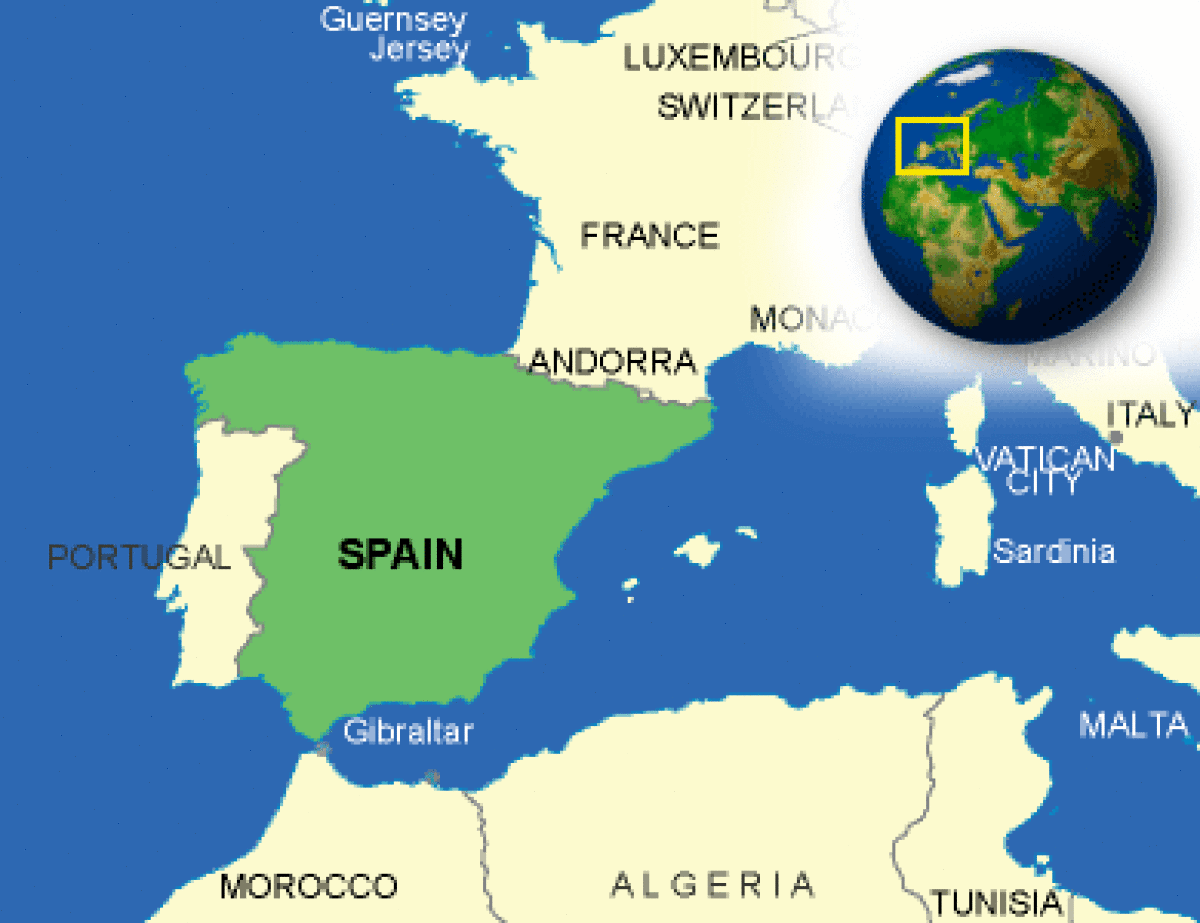
Where is Spain?
What countries border Spain?
Spain Weather
What is the current weather in Spain?
Spain Facts and Culture
What is Spain famous for?
- Cultural Attributes: The Spanish are generally friendlyhelpfuland individualistic. They enjoy conversation and giving advice. The Spanish often consider it their... More
- Family: The average Spanish family today has 0.7 children.the Spanish birth rate is one of the lowest in the European... More
- Personal Apperance: The Spanish are concerned with their public appearanceeven when just running errands. A person's social standing is often... More
- Recreation: Football (soccer) is the national sport in Spain. Nearly all children learn how to play the sportand watching important... More
- Diet: Typical Spanish food includes fresh vegetablesmeateggschickenand fish. Most fried foods are cooked in olive oil. Breakfast... More
- Food and Recipes: At a formal dinnerthe host or hostess indicates seating arrangements for guests. For exampleladiesolder peopleand guests... More
- Visiting: In former timesthere used to be some protocol rules in Spain which are not longer in application: e.g. the... More
- Dating: Dating often begins around age fourteen with group activities. Many young men and women begin dating at about age... More

Spain Facts
What is the capital of Spain?
| Capital | Madrid |
| Government Type | parliamentary constitutional monarchy |
| Currency | Euro (EUR) |
| Total Area |
195,123 Square Miles 505,370 Square Kilometers |
| Location | Southwestern Europebordering the Mediterranean SeaNorth Atlantic OceanBay of Biscayand Pyrenees Mountains; southwest of France |
| Language |
Castilian Spanish (official) 74%Catalan 17%Galician 7%and Basque 2% note: Catalan is official in Cataloniathe Balearic Islandsand the Valencian Community (where it is known as Valencian); in the northwest corner of Catalonia (Vall d'Aran)Aranese is official along with Catalan; Galician is official in Galicia; Basque is official in the Basque Country |
| GDP - real growth rate | 3.1% |
| GDP - per capita (PPP) | $35,200.00 (USD) |
Spain Demographics
What is the population of Spain?
| Ethnic Group - note | data represent population by country of birth |
| Ethnic Groups | Spanish 84.8%Moroccan 1.7%Romanian 1.2%other 12.3% |
| Languages | Castilian Spanish (official nationwide) 74%Catalan (official in Cataloniathe Balearic Islandsand the Valencian Community (where it is known as Valencian)) 17%Galician (official in Galicia) 7%Basque (official in the Basque Country and in the Basque-speaking area of Navarre) 2%Aranese (official in the northwest corner of Catalonia (Vall d'Aran) along with Catalan<5,000 speakers); note - AragoneseAranese AsturianBasqueCaloCatalanGalicianand Valencian are recognized as regional languages under the European Charter for Regional or Minority Languages |
| Nationality Noun |
noun: Spaniard(s) adjective: Spanish |
| Population | 47,280,433 |
| Population Growth Rate | 0.12% |
| Population in Major Urban Areas | 6.751 million MADRID (capital)5.687 million Barcelona838,000 Valencia |
| Urban Population |
urban population: 81.6% of total population rate of urbanization: 0.24% annual rate of change |
| Population: Male/Female |
male: 23,069,327 female: 24,211,106 |
Spain Government
What type of government does Spain have?
| Suffrage | 18 years of age; universal |
| Citizenship |
citizenship by birth: no citizenship by descent only: at least one parent must be a citizen of Spain dual citizenship recognized: only with select Latin American countries residency requirement for naturalization: 10 years for persons with no ties to Spain |
| National Holiday | National Day (Hispanic Day)12 October (1492); note - commemorates the arrival of COLUMBUS in the Americas |
| Constitution |
history: several previous; latest approved by the General Courts 31 October 1978passed by referendum 6 December 1978signed by the king 27 December 1978effective 29 December 1978 amendments: proposed by the governmentby the General Courts (the Congress or the Senate)or by the self-governing communities submitted through the government; passage requires three-fifths majority vote by both houses and passage by referendum if requested by one tenth of the members of either house; proposals disapproved by both houses are submitted to a joint committeewhich submits an agreed upon text for another vote; passage requires two-thirds majority vote in Congress and simple majority vote in the Senate; amended 19922011 |
| Independence | 1492; the Iberian peninsula was characterized by a variety of independent kingdoms prior to the Muslim occupation that began in the early 8th century A.D. and lasted nearly seven centuries; the small Christian redoubts of the north began the reconquest almost immediatelyculminating in the seizure of Granada in 1492; this event completed the unification of several kingdoms and is traditionally considered the forging of present-day Spain |
Spain Video
YouTube: Rick Steves' Europe Rick Steves' Andalucía: The Best of Southern Spain
CountryReports YouTube Channel:
Join CountryReports YouTube Channel (Click Here)Spain Geography
What environmental issues does Spain have?
| Overview | Spain is comprised of portions of the Iberian mainlandthe Balearic Islands and the Canary Islandsand the enclaves of Ceuta and Melilla on the North African coast. Spain’s most striking topographical features are its elevated central plateau and its internal division by mountain and river barriers. The peninsula rises sharply from the sea with only a narrow coastal plain except in the Andalusian lowlands. Most of the peninsula is a vast plateau broken by mountainsdeep gorgesand broadshallow depressions. Spain has few baysvirtually no coastal islandsand a scarcity of natural harbors. Knowledge of the geography of Spain is important to an understanding of the nation’s history. |
| Climate | Madrid's climate is predominantly drysunnyand agreeable. Because of its elevation (about 2,000 feet above sea level) and its proximity to mountainsMadrid often experiences wide variations in temperature between winter and high summer. In wintertemperatures drop slightly below freezing and many winter days can be uncomfortably cold. Summers are quite warm with average midday temperatures of 95°F to 100°F. Except at the height of summerevenings and nights are cool. Daily mean temperature ranges from 50°F to 68°F during 8 months of the year. Rainfall is scarceexcept during a brief rainy season in October and November and again in spring. Snowuncommon in Madridusually becomes rain and slush within hours. |
| Border Countries | Andorra 63.7 kmFrance 623 kmGibraltar 1.2 kmPortugal 1,214 kmMorocco (Ceuta) 6.3 kmMorocco (Melilla) 9.6 km |
| Environment - Current Issues | pollution of the Mediterranean Sea from raw sewage and effluents from the offshore production of oil and gas; water quality and quantity nationwide; air pollution; deforestation; desertification |
| Environment - International Agreements | party to: Air PollutionAir Pollution-Nitrogen OxidesAir Pollution-Sulfur 94Air Pollution-Volatile Organic CompoundsAntarctic-Environmental ProtocolAntarctic-Marine Living ResourcesAntarctic TreatyBiodiversityClimate ChangeClimate Change-Kyoto ProtocolDesertificationEndangered SpeciesEnvironmental ModificationHazardous WastesLaw of the SeaMarine DumpingMarine Life ConservationOzone Layer ProtectionShip PollutionTropical Timber 83Tropical Timber 94WetlandsWhaling signedbut not ratified: Air Pollution-Persistent Organic Pollutants |
| Terrain | largeflat to dissected plateau surrounded by rugged hills; Pyrenees Mountains in north |
Spain Economy
How big is the Spain economy?
| Economic Overview |
GDP and Growth: Spain is one of the largest economies in Europe and the world. Before the COVID-19 pandemicSpain had experienced several years of economic growth. Howeverthe pandemic had a significant impact on the country's economycausing a contraction in GDP in 2020. Recovery efforts were underway in 2021. Unemployment: Spain has historically struggled with high unemployment ratesparticularly among its youth. In 2020the pandemic worsened this issuebut the government introduced measures to support employment and job retention. Tourism: Tourism is a critical sector of the Spanish economy. Spain is a top tourist destination globallybut the pandemic severely affected this industry in 2020 and 2021. As international travel gradually resumesSpain's tourism sector is expected to recoveralthough the timing and pace may vary. Exports and Imports: Spain is a significant exporter of goods and serviceswith key exports including machineryvehiclesagricultural productsand chemicals. The European Union is a major trading partner. Imports consist of machineryequipmentfuelsand consumer goods. Government Debt: Spain's government debt had increased due to stimulus measures taken during the pandemic. The government has focused on fiscal consolidation and implementing structural reforms to improve economic resilience. Banking Sector: The Spanish banking sector underwent significant reforms after the 2008 financial crisis. It has become more stable and resilientwith stronger regulations in place. Foreign Investment: Spain has attracted foreign investment in various sectorsincluding renewable energyreal estateand technology. The country's locationinfrastructureand a skilled workforce make it appealing to foreign investors. Energy Transition: Spain has been investing in renewable energy sources like wind and solar power. The government aims to reduce greenhouse gas emissions and transition to a more sustainable energy system. Political Stability: Spain is a constitutional monarchy with a parliamentary system. While political stability has generally been maintainedregional issueslike the Catalonia independence movementhave occasionally caused tensions. COVID-19 Impact: Like many countriesSpain faced challenges due to the pandemicincluding economic disruptionjob lossesand increased government spending on healthcare and stimulus measures. Vaccination campaigns have been underway to mitigate the impact. EU Recovery Fund: Spain is a recipient of funds from the European Union's Recovery and Resilience Facilitywhich is intended to support post-pandemic economic recovery and long-term resilience. These funds are expected to be used for various projects and reforms. |
| Industries | textiles and apparel (including footwear)food and beveragesmetals and metal manufactureschemicalsshipbuildingautomobilesmachine toolstourismclay and refractory productsfootwearpharmaceuticalsmedical equipment |
| Currency Name and Code | Euro (EUR) |
| Export Partners | France 17.8%Germany 10.6%Portugal 8.3%Italy 8.3%UK 6.7% |
| Import Partners | Germany 13%France 11.8%Italy 6.7%China 5.8%Netherlands 5%UK 4.5% |
Spain News and Current Events
What current events are happening in Spain?
Source: Google News
Spain Travel Information
What makes Spain a unique country to travel to?
Country Description
Spain and Andorra are both advancedstable democracies with modern economies. Spain is a member of the North Atlantic Treaty Organization (NATO) and the European Union.
Crime
Andorra has a low rate of crime. While most of Spain has a moderate rate of crime and most of the estimated one million U.S. citizen tourists have trouble-free visits to Spain each yearstreet crimes against tourists occur in the principal tourist areas. Madrid and Barcelonain particularreport incidents of pick-pocketingmuggingand occasional violent attackssome of which require the victim to seek medical attention. Criminals tend to frequent tourist areas and major attractions such as museumsmonumentsrestaurantsoutdoor cafesInternet cafeshotel lobbiesbeach resortscity busessubwaystrainstrain stationsairportsand ATMs.In Madridincidents have been reported in all major tourist areasincluding the area near the Prado Museumnear Atocha train stationin Retiro Parkin areas of old Madrid including near the Royal Palaceand in Plaza Mayor. There have been a number of passport and bag thefts reported at Barajas Airportlocal hotelsas well as in El Rastro (Madrid’s flea market) and in the Metro.
In Barcelonathe largest number of incidents reported also occurred in major tourist areas--on Las RamblasEl Prat AirportSants train stationinside Metro stationsin the Sagrada Familia Areain the Gothic Quarterin Park Güellin Plaza Realand along Barcelona’s beaches. There have been a number of thefts reported at the Port Olimpic Area and nearby beaches.
Travelers should remain alert to their personal security and exercise caution. We suggest that travelers carry limited cashonly one credit cardand a copy of their passport; leaving extra cashextra credit cardspassports and personal documents in a safe location.
Be especially careful in crowds. Avoid placing passportscash or other valuables in the outer pockets of backpacks or purses. Pickpockets often use the cover of a crowd to rob unsuspecting tourists and visitors. Do not leave belongings unattended in public areas. Do not put purses on the floor or on the backs of chairs at restaurants. Keep valuable belongings within sight and within easy reach at all times in public areas to reduce the risk of theft.
Thieves often work in teams of two or more people using tactics limited only by their own creativity and imagination. In many casesone person distracts a victim while the accomplices perform the robbery. For examplesomeone might wave a map in your face and ask for directions”inadvertently” spill something on youor help you clean up bird droppings thrown on you by a third unseen accomplice. While your attention is divertedan accomplice makes off with your valuables. Thieves may drop coins or keys at your feet to distract you and try to take your belongings while you are trying to help. Physical assaults rarely happen. In the pastsuch attacks were initiated from behindwith the victim being grabbed around the neck and choked by one assailant while others rifle through or grab the belongings.
A group of assailants may surround the victim in a crowded popular tourist area or on public transportationand only after the group has departed does the person discover he/she has been robbed. Purse snatchers may grab purses or wallets and run awayor immediately pass the stolen item to an accomplice. A passenger on a passing motorcycle sometimes robs pedestrians. There have been reports of thieves posing as plainclothes police officersbeckoning to pedestrians from cars and sometimes confronting them on the street asking for documentsor to inspect their cash for counterfeit billswhich they ultimately confiscate as “evidence.” The U.S. Embassy in Madrid has received reports of cars on limited access motorways being pulled over by supposed unmarked police cars. The Spanish police do not operate in this fashion. We encourage U.S. citizens to ask for a uniformed law enforcement officer if approached.
Theft from vehicles is also common. “Good Samaritan" scams are unfortunately commonwhere a passing car or helpful stranger will attempt to divert the driver’s attention by indicating there is a flat tire or mechanical problem. When the driver stops to check the vehiclethe “Good Samaritan” will appear to help the driver and passengers while the accomplice steals from the unlocked car. Drivers should be cautious about accepting help from anyone other than a uniformed Spanish police officer or Civil Guard. Items high in value like luggagecameraslaptop computersor briefcases are often stolen from cars. We recommend that travelers not leave baggage in open view inside parked carsand keep doors lockedwindows rolled upand valuables out of sight when driving.
While the incidence of sexual assault is statistically very lowattacks do occur. We recommend that U.S. citizens remain aware of their surroundings at all timesand travel with a companion if possibleespecially at night. Spanish authorities warn of the availability of so-called "date-rape" drugs and other drugsincluding GBH and liquid ecstasy. U.S. citizens should not lower their personal security awareness because they are on vacation. Be cautious in bars and clubs where alcohol is servednever leave your drink unattended and never accept an open drink from a stranger. Incidents have been reported of people falling victim to serious crime after having drugs slipped into their drinks.
A number of U.S. citizens have been victims of various scams in Spain. One scheme involves a U.S. citizen receiving an email or telephone call requesting money to assist a relative or acquaintance who has allegedly been arresteddetainedrobbedor injured in Spain. Oftenit starts with a call impersonating a grandchild supposedly arrested in Spainasking the grandparents not to inform the parents. If you receive such an emailwe recommend that you not send money. Other scams include lottery or advance-fee scams in which a person is lured to Spain to finalize a financial transaction. Often the victims are initially contacted via Internet or fax and informed they have won the Spanish Lottery (El Gordo)inherited money from a distant relativeor are needed to assist in a major financial transaction from one country to another.
Don’t buy counterfeit and pirated goodseven if they are widely available. Not only are the bootlegs illegal to bring back into the United Statesif you purchase them you are also breaking local law.
Criminal Penalties
While you are traveling in Spain and Andorrayou are subject to its laws even if you are a U.S. citizen. Foreign laws and legal systems can be vastly different from our own and criminal penalties will vary from country to country. In Spaindriving under the influence could land you immediately in jail. There are also some things that might be legal in the country you visitbut still illegal in the United States. You can be prosecuted under U.S. law if you buy pirated goods. Engaging in sexual conduct with children or using or disseminating child pornography in a foreign country is a crime prosecutable in the United States. If you break local laws in Spain and Andorrayour U.S. passport or citizenship won’t help you avoid arrest or prosecution. It’s very important to know what’s legal and what’s not wherever you go.Persons violating the laws of Spain and Andorraeven unknowinglymay be expelledarrestedor imprisoned. Penalties for possessingusingor trafficking in illegal drugs in Spain and Andorra are severeand convicted offenders can expect long jail sentences and heavy fines. The cities of Madrid and Barcelona and the Balearic Islands regional government have banned the consumption of alcohol in the streetother than in registered street cafes and bars. Visitors to MadridBarcelonaMallorcaIbizaand Menorca should be aware that failure to respect this law might result in the imposition of fines. Throughout Spain and Andorradriving under the influence could land you immediately in jail.
Spain takes illegal immigration seriously and police may stop people to ask for identification and proof of legal status. We recommend that you carry a copy of your U.S. passport at all times.
While some countries will automatically notify the nearest U.S. embassy or consulate if a U.S. citizen is detained or arrested in a foreign countrythat might not always be the case here. To ensure that the United States Government is aware of your circumstancesrequest that the police and prison officials notify the nearest U.S. embassy or consulate as soon as you are arrested or detained overseas.
Languages
Castilian Spanish (official nationwide) 74%Catalan (official in Cataloniathe Balearic Islandsand the Valencian Community (where it is known as Valencian)) 17%Galician (official in Galicia) 7%Basque (official in the Basque Country and in the Basque-speaking area of Navarre) 2%Aranese (official in the northwest corner of Catalonia (Vall d'Aran) along with Catalan<5,000 speakers); note - AragoneseAranese AsturianBasqueCaloCatalanGalicianand Valencian are recognized as regional languages under the European Charter for Regional or Minority Languages
Medical Facilities and Health Information
Good medical care is available in both Spain and Andorra. Regulations regarding medications may vary from those in the United States. Spanish regulations do not permit the international shipment of medicationso please do not ship medication from the United States to Spain. U.S. citizens who plan a lengthy trip to Spain should bring their medication or obtain a prescription for that medication from a Spanish physician.
Safety and Security
Spain and Andorra share with the rest of the world an increased threat of international terrorist incidents. Like other countries in the Schengen areaSpain's open borders with its Western European neighbors allow the possibility of terrorist groups entering and exiting the country with anonymity. Spain’s proximity to North Africa makes it vulnerable to attack from al-Qa’ida terrorists in the Maghreb region. We remind U.S. citizens to remain vigilant with regard to their personal security and to exercise caution at all times.In March 2004Islamist extremists bombed four commuter trains entering Madridcausing 191 deaths and over 1,400 injuries. Spanish authorities tried the suspected terrorists and their co-conspirators in February 2007 and they were convicted in October 2007.
In 2011the Basque Fatherland and Liberty (ETA) terrorist organization publicly announced a “definitive cessation of armed activity.” While recent arrests have seriously weakened the organizationand despite the announcementETA remains a threat and has not disarmed or disbanded. ETA has historically avoided targeting foreignersinstead directing their attacks against the policemilitarylocal politiciansand Spanish government targets as well as towards disrupting transportation and daily life. Howeverforeigners have been killed or injured collaterally in ETA attacksand the risk of being in the wrong place at the wrong time in event of an ETA action is a concern for foreign visitors and tourists. Two Ecuadorian nationals were killed in a bombing at the Barajas Airport in Madrid in 2006and 17 students were injuredincluding one U.S. citizenin a bombing at the University of Navarre in 2008. U.S. citizen tourists traveling to Spain should remain vigilantexercise cautionmonitor local developmentsand avoid demonstrations and other potentially violent situations. Bombings outside the Basque Country in Burgos and Palma de Mallorca in July 2009 underscore the importance of being vigilant. Though extortion threats have recently ceased in the Basque regionbombs have been used as part of criminal extortion of businesses in the past.
Prior police approval is required for all public demonstrations in Spainand police are present to ensure adequate security for participants and passers-by. Nonethelessspontaneous demonstrations do take place in Spain from time to time in response to world events or local developments. Even demonstrations that are meant to be peaceful can become unpredictable and even violent; you should avoid them if at all possible. Be alert and aware of your surroundingsand pay attention to what the local news media have to say. In generallarger public demonstrations are announced on the Demonstrations page on the U.S. Embassy Madrid website.
Traffic Safety and Road Conditions
While in Spain and Andorrayou may encounter road conditions that differ significantly from those in the United States.Traffic in Madrid and Barcelona is faster paced than in U.S. cities and can be unnerving because of unfamiliar signs or motorbikes weaving between traffic lanes. Drivers should always obey the traffic light located at their stop lineas there are separate traffic lights for each side of the intersection. For examplethe traffic light at the stop line of an intersection may be redbut across the intersection the light may be greenallowing for right/left hand turns only. An amber flashing light indicates that drivers must yield to pedestrians. Drivers should be alert when driving at night in urban areas because of the possibility of encountering drivers or pedestrians under the influence of alcohol. Night driving in isolated rural areas can be dangerous because of farm animals and poorly marked roads. Rural traffic is generally heavier in July and August as well as during the Christmas and Easter seasons.
Traffic regulations in effect in Spain include the prohibition on the use of a mobile phone without a hands-free device while driving a car. There is a fine of 300 euros for violation of this regulation and loss of driving privileges. In additionall drivers and passengers are required to carry a reflective vest and put it on if they need to stop on the roadside. A reflective triangle warning sign for a vehicle stopped on the side of the road is also mandatory. Liability insuranceat a minimumis also required to legally operate any car or motorcycle. Those renting vehicles are encouraged to check with the rental company about traffic regulations and safety equipment. U.S. citizen tourists must obtain International Driving Permits prior to their arrival if they plan to drive in Spain. Those Permits are only valid for one year. You are not allowed to drive on your U.S. license. While rental car companies may rent a vehicle to you without the International Driving Permitthis is illegal andif pulled over for a traffic violationyour rental car may be detained and towed to the nearest impound lot. Pedestrians should use designated crossing areas when crossing streets and obey traffic lights.
One of the facets of Spanish traffic laws that many U.S. citizens find troublesome is traffic stops by the Spanish National Police or the Guardia Civil. Unlike in the United Stateswhere drivers receive traffic tickets and then pay the court via mail or in personSpanish police authorities may levy fines on the spot and issue a receipt for the payment. This is done to ensure the traffic fine is paid by foreigners who rarely come back to Spain to pay the fine.
Public transportation in large Spanish cities is generally excellent. All major cities have metered taxisin which extra charges must be posted in the vehicle. We advise travelers to use only clearly identified cabs and to ensure that taxi drivers always switch on the meter. A green light on the roof indicates that the taxi is available. If you have a problem or suspect you are being over chargedask for an official receipt. The license number for the taxi should be located in a metal plaque by the passenger window. This number identifies a specific taxi and can prove useful in the event of forgotten property or if you decide to file a complaint. Rail service is comfortable and reliablebut varies in quality and speed. Intercity buses are usually comfortable and inexpensive.
World Regions
All Countries
Afghanistan
Akrotiri
Albania
Algeria
American Samoa
Andorra
Angola
Anguilla
Antarctica
Antigua and Barbuda
Argentina
Armenia
Aruba
Australia
Austria
Azerbaijan
Bahamas
Bahrain
Bangladesh
Barbados
Belarus
Belgium
Belize
Benin
Bermuda
Bhutan
Bolivia
Bosnia and Herzegovina
Botswana
Brazil
British Indian Ocean Territory
British Virgin Islands
Brunei
Bulgaria
Burkina Faso
Burma
Burundi
Cabo Verde
Cambodia
Cameroon
Canada
Cayman Islands
Central African Republic
Chad
Chile
China
Christmas Island
Clipperton Island
Cocos (Keeling) Islands
Colombia
Comoros
CongoDemocratic Republic of the
CongoRepublic of the
Cook Islands
Coral Sea Islands
Costa Rica
Cote d’Ivoire
Croatia
Cuba
Curacao
Cyprus
Czech Republic
Denmark
Dhekelia
Djibouti
Dominica
Dominican Republic
Ecuador
Egypt
El Salvador
Equatorial Guinea
Eritrea
Estonia
Eswatini
Ethiopia
Falkland Islands
Faroe Islands
Fiji
Finland
France
French Guiana
French Polynesia
Gabon
GambiaThe
Gaza Strip
Georgia
Germany
Ghana
Gibraltar
Greece
Greenland
Grenada
Guadeloupe
Guam
Guatemala
Guernsey
Guinea
Guinea-Bissau
Guyana
Haiti
Holy See
Honduras
Hong Kong
Hungary
Iceland
India
Indonesia
Iran
Iraq
Ireland
Isle of Man
Israel
Italy
Jamaica
Jan Mayen
Japan
Jersey
Jordan
Kazakhstan
Kenya
Kiribati
KoreaNorth
KoreaSouth
Kosovo
Kuwait
Kyrgyzstan
Laos
Latvia
Lebanon
Lesotho
Liberia
Libya
Liechtenstein
Lithuania
Luxembourg
Macau
Madagascar
Malawi
Malaysia
Maldives
Mali
Malta
Marshall Islands
Martinique
Mauritania
Mauritius
Mayotte
Mexico
Micronesia
Moldova
Monaco
Mongolia
Montenegro
Montserrat
Morocco
Mozambique
Namibia
Nauru
Nepal
Netherlands
New Caledonia
New Zealand
Nicaragua
Niger
Nigeria
Niue
Norfolk Island
North Macedonia
Northern Mariana Islands
Norway
Oman
Pakistan
Palau
Panama
Papua New Guinea
Paraguay
Peru
Philippines
Pitcairn Islands
Poland
Portugal
Puerto Rico
Qatar
Reunion
Romania
Russia
Rwanda
Saint HelenaAscensionand Tristan da Cunha
Saint Kitts and Nevis
Saint Lucia
Saint Pierre and Miquelon
Saint Vincent and the Grenadines
Samoa
San Marino
Sao Tome and Principe
Saudi Arabia
Senegal
Serbia
Seychelles
Sierra Leone
Singapore
Slovakia
Slovenia
Solomon Islands
Somalia
South Africa
Spain
Sri Lanka
Sudan
SudanSouth
Suriname
Svalbard
Sweden
Switzerland
Syria
Taiwan
Tajikistan
Tanzania
Thailand
Timor-Leste
Togo
Tokelau
Tonga
Trinidad and Tobago
Tunisia
Turkey
Turkmenistan
Turks and Caicos Islands
Tuvalu
Uganda
Ukraine
United Arab Emirates
United Kingdom
United States (US)
Uruguay
Uzbekistan
Vanuatu
Venezuela
Vietnam
Virgin Islands
Wake Island
Wallis and Futuna
West Bank
Western Sahara
World
Yemen
Zambia
Zimbabwe