
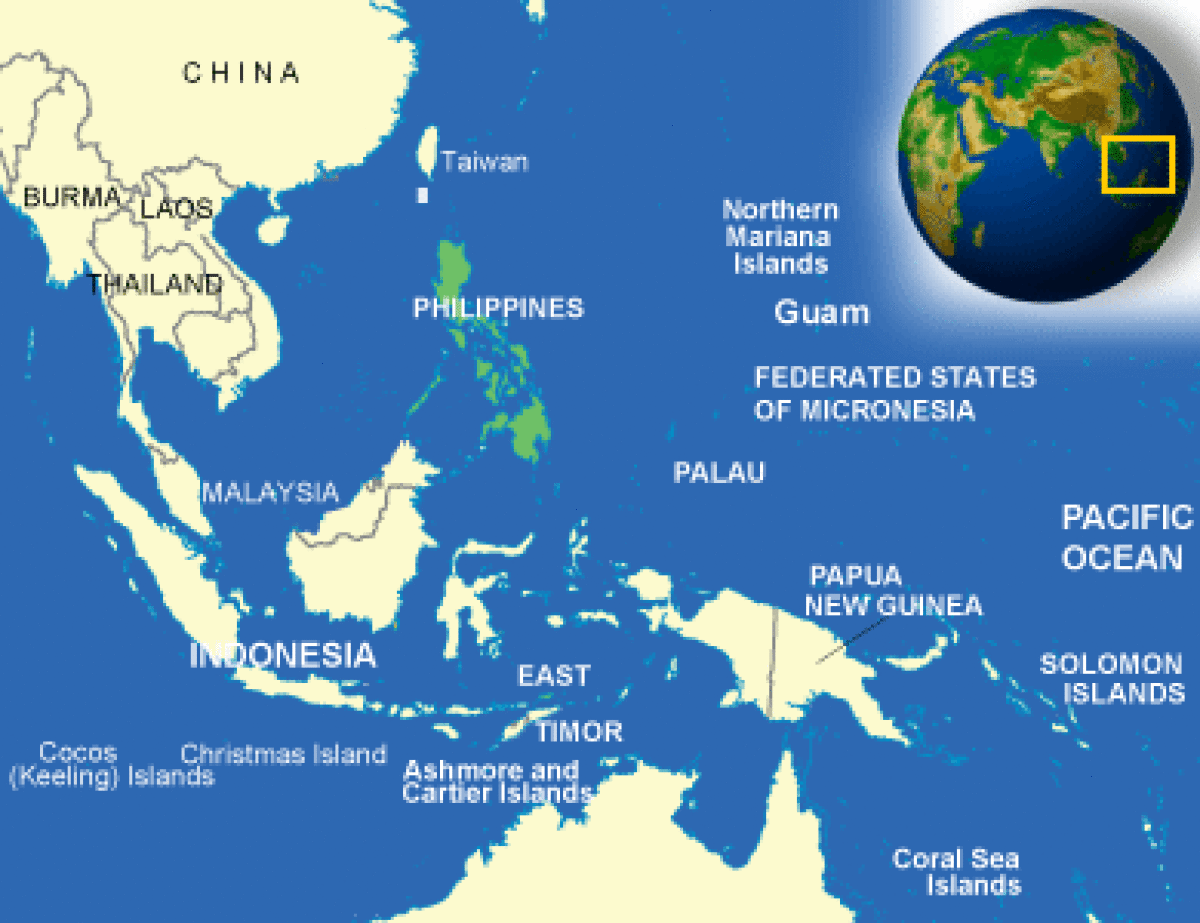
Where is Philippines located?
What countries border Philippines?
Philippines Weather
What is the current weather in Philippines?
Philippines Facts and Culture
What is Philippines famous for?
- Cultural Attributes: Filipinos are sensitive people. Insincerity is easily detected and can ruin a relationship. Individualism is less important than the family.... More
- Family: The average Filipino family is largeoften with four or more children. Professionally and otherwiseFilipino women generally enjoy equality... More
- Personal Apperance: As elsewhere in the worldclothing trends in the Philippines have somewhat conformed to Western standardswith a few exceptions.... More
- Recreation: Teenagers form peer groups called barkadasa kind of friendship club that is essential to their lives. Each barkada is... More
- Diet: Rice is the staple food in the Filipino diet. It is prepared in various tasty ways and is often included... More
- Food and Recipes: The conversation is casual during meals. The best way for a guest to compliment a meal is to eat heartily.... More
- Visiting: Hospitality is important to Filipinos. Guests are made to feel at ease and shouldin turnbe tactful and sincere.... More
- Dating: In urban areasdating habits are similar to Western s. Group dating begins in the early teens. The groom and... More
Philippines Facts
What is the capital of Philippines?
| Capital | Manila |
| Government Type | presidential republic |
| Currency | Philippines Peso (PHP) |
| Total Area |
115,830 Square Miles 300,000 Square Kilometers |
| Location | Southeastern Asiaarchipelago between the Philippine Sea and the South China Seaeast of Vietnam |
| Language | two official languages - Filipino (based on Tagalog) and English; eight major dialects - TagalogCebuanoIlocanoHiligaynon or IlonggoBicolWarayPampangoand Pangasinense |
| GDP - real growth rate | 6% |
| GDP - per capita (PPP) | $7,500.00 (USD) |
Philippines Demographics
What is the population of Philippines?
| Ethnic Groups | Christian Malay 91.5%Muslim Malay 4%Chinese 1.5%other 3% |
| Languages | There are two official languages in the PhilippinesPilipino and English. English is used for businessgovernmentand education from the fourth grade through college. Pilipinowhich is based mostly on Tagalogwhich is the language spoken in central Luzon. Pilipino is referred to as Tagalog by most people. |
| Nationality Noun | Filipino(s) |
| Population | 109,180,815 |
| Population Growth Rate | 1.84% |
| Population in Major Urban Areas | MANILA (capital) 11.862 million; Davao 1.565 million; Cebu City 855,000; Zamboanga 884,000 |
| Urban Population | 48.800000 |
Philippines Government
What type of government does Philippines have?
| Executive Branch |
chief of state: President Ferdinand "BongBong" MARCOSJr. (since 30 June 2022); Vice President Sara DUTERTE-Carpio (since 30 June 2022); note - the president is both chief of state and head of government head of government: President Ferdinand "BongBong" MARCOSJr. (since 30 June 2022); Vice President Sara DUTERTE-Carpio (since 30 June 2022) cabinet: Cabinet appointed by the president with the consent of the Commission of Appointmentsan independent body of 25 Congressional members including the Senate president (ex officio chairman)appointed by the president elections/appointments: president and vice president directly elected on separate ballots by simple majority popular vote for a single 6-year term; election last held on 9 May 2022 (next to be held on 9 May 2028) election results: 2022: Ferdinand MARCOSJr. elected president; percent of vote - Ferdinand MARCOSJr. (PFP) 58.7%Leni ROBREDO (independent) 27.9%Manny PACQUIAO (PROMDI) 6.8%other 6.6%; Sara DUTERTE-Carpio elected vice president; percent of vote Sara DUTERTE-Carpio (Lakas-CMD) 61.5%Francis PANGILINAN (LP) 17.8%Tito SOTTO 15.8%other 4.9% 2016: Rodrigo DUTERTE elected president; percent of vote - Rodrigo DUTERTE (PDP-Laban) 39%Manuel "Mar" ROXAS (LP) 23.5%Grace POE (independent) 21.4%Jejomar BINAY (UNA) 12.7%Miriam Defensor SANTIAGO (PRP) 3.4%; Leni ROBREDO elected vice president; percent of vote Leni ROBREDO (LP) 35.1%Bongbong MARCOS (independent) 34.5%Alan CAYETANO 14.4%Francis ESCUDERO (independent) 12%other 4% |
| Suffrage | 18 years of age; universal |
| Citizenship |
citizenship by birth: no citizenship by descent only: at least one parent must be a citizen of the Philippines dual citizenship recognized: no residency requirement for naturalization: 10 years |
| National Holiday | Independence Day12 June (1898); note - 12 June 1898 was date of declaration of independence from Spain; 4 July 1946 was date of independence from the US |
| Constitution |
history: several previous; latest ratified 2 February 1987effective 11 February 1987 amendments: proposed by Congress if supported by three fourths of the membershipby a constitutional convention called by Congressor by public petition; passage by either of the three proposal methods requires a majority vote in a national referendum; note - the constitution has not been amended since its enactment in 1987 |
| Independence | 4 July 1946 (from the US) |
Philippines Video
YouTube: ClubTravelie Manilathe Pearl of the Orient
CountryReports YouTube Channel:
Join CountryReports YouTube Channel (Click Here)Philippines Geography
What environmental issues does Philippines have?
| Overview |
The Philippines is composed of 7,107 separate islands (7,106 during high tide)only 880 of which are inhabited. The three major geographical areas in the Philippines are the large island of Luzon in the northwhich includes Manila; the large island of Mindanao in the south; and the group of islands lying between themknown as the Visayas. The three stars on the Philippine flag symbolize these three areas. The island geography of the Philippines includes about 21,000 miles of natural coastline. Much of the coastal area is rugged and irregularpunctuated by numerous natural harbors and picturesque coves. The Philippines also has some of the most spectacular beaches to be found in the South Pacific. Sites that would live up to anyone's fantasy of a pristine South Pacific paradise of white sand beaches and crystal blue watersthey are a popular destination for tourists from around the world. Unfortunatelythe heavy pollution and rocky coastline of Manila Bay render the metro Manila area itself unsuited for leisurely Sundays at the beach. The interior of the country is generally mountainouswith several mountain peaks reaching almost 10,000 feet. In additionthe Philippines has extensive fertile plains along the coast and in the center of the country. It also features lush and scenic rolling hillswith rich valleys crossed by rivers. There are numerous volcanoes in the countryand some are frequently active. The most recent and infamous example was the eruption of Mt. Pinatubo on June 121991which was the largest volcanic eruption of the century. The Mt. Pinatubo eruption permanently altered the topography of northern Luzon and continues to cause flood control problems. Minor earth tremors occur frequently. In 1969 and 1970major earthquakes hit Manilaresulting in moderate damage and some loss of life. In January 1982an earthquake measuring 6.8 on the Richter scale hit Northern Bicol. In August 1983an earthquake measuring 5.7 occurred in Ilocos Norte. Both caused extensive property damage and loss of life. On July 161990one of the largest and most destructive earthquakes ever to hit the Philippines struck in Central Luzon. At its epicenter near Cabanatuanit measured 8.0 on the Richter scale. This "killer earthquake" caused great destruction and loss of life in Baguio and some other cities of Central Luzon but did not seriously damage Manila. The Philippines is a country rich with unique tropical rain forests and coral reefs. It has been referred to as the Galapagos Islands times ten. It hosts more than 510 species of mammalsbirdsreptilesand amphibians that exist nowhere else on earth. The country is also on the East Asian Migratory Flyway for birds that travel from the south pole to the north pole and back again each year. The Olango Island Wildlife Sanctuaryjust minutes from Cebu Cityhas won international ecotourism awards for its educational tours and conservation efforts. Scuba diving and snorkeling on the biologically diverse coral reefs are also popular activitieswith good resorts and coral reefs within driving distance from Manila. Less than 18% of the land area remains covered by forests-only about 5 million hectares. And only 800,000 hectares of this forest is considered old growth forest. These natural resources provide the basis for food security and employment for millions of Filipinos. |
| Climate |
The Philippines has a tropical climatebut it is marginally less hot and humid than many tropical countries for most of the year. Although the sun shines almost year roundthere are slight seasonal variations in the weather. The dry summer seasonwhich runs from about late April to early June is hot and humid and with little rainfall. The typhoon season runs from June to Septemberwith frequent drenching rains that can temper the heat somewhat but also preclude any outdoor activities. The downpours are often limited in durationbut the resulting flash floods can create chaos by blocking streetsstranding motoristsand bringing the already congested traffic of Manila to a virtual standstill. The most pleasant season follows the rainy seasonfrom November until March. During this time of yearmornings can be freshand even the midday temperatures remain bearablewith frequent breezes that temper the heat. The temperature range in Manila is relatively narrowwith minimum temperatures in the mid-70s and highs in the mid-90sand an annual mean of about 80°F. Average relative humidity ranges from 69% in April to 84% in August or September. Baguiothe original summer capital of the Philippinesis located 155 miles north of Manila at an altitude of about 5,000 feet. The climate varies between the dry and the very wet seasoneach lasting about six months. The dry season runs from December to Maywith temperatures ranging from the 50s and 60s at night to highs in the mid-80s during the day. Baguio averages 176 inches of rainfall a yearabout half of which falls in July and August alone. The rains begin tapering off in September and are light in October and November. |
| Environment - Current Issues | uncontrolled deforestation especially in watershed areas; soil erosion; air and water pollution in major urban centers; coral reef degradation; increasing pollution of coastal mangrove swamps that are important fish breeding grounds |
| Environment - International Agreements | party to: BiodiversityClimate ChangeClimate Change-Kyoto ProtocolDesertificationEndangered SpeciesHazardous WastesLaw of the SeaMarine DumpingOzone Layer ProtectionShip PollutionTropical Timber 83Tropical Timber 94WetlandsWhaling signedbut not ratified: Air Pollution-Persistent Organic Pollutants |
| Terrain | mostly mountains with narrow to extensive coastal lowlands |
Philippines Economy
How big is the Philippines economy?
| Economic Overview |
The Philippine economy is characterized by a diverse range of sectors contributing to its growthincluding agriculturemanufacturingservicesand increasinglyinformation technology and business process outsourcing (IT-BPO). GDP Growth: The Philippine economy has been experiencing steady growth over the past few yearsalthough it faced challenges due to the COVID-19 pandemic. Prior to the pandemicthe Philippines consistently posted GDP growth rates averaging around 6%making it one of the fastest-growing economies in Asia. Services Sector: The services sector is a significant driver of the Philippine economycontributing the largest share to GDP. This includes IT-BPOtourismretailand financial services. The IT-BPO industryin particularhas been a major contributor to economic growthleveraging the country's skilled English-speaking workforce. Remittances: The Philippines receives a substantial amount of remittances from overseas Filipino workers (OFWs)particularly from countries like the United StatesSaudi Arabiaand the United Arab Emirates. These remittances play a crucial role in supporting household consumption and driving domestic demand. Manufacturing: The manufacturing sector is another important contributor to the Philippine economyencompassing industries such as electronicsautomotiveand food processing. The government has been implementing initiatives to attract more investment in manufacturing and improve competitiveness. Agriculture: Agriculture remains a significant sectoremploying a large portion of the populationparticularly in rural areas. Howeverit has faced challenges such as land reform issuesnatural disastersand low productivity. Efforts to modernize the sector and improve productivity are ongoing. Infrastructure Development: Infrastructure development has been a priority for the Philippine governmentwith ambitious plans aimed at improving connectivitytransportationand logistics across the archipelago. Projects such as roadsbridgesairportsand seaports are underway to support economic growth and development. Challenges: Despite its growth potentialthe Philippine economy faces various challengesincluding income inequalitypovertycorruptionand bureaucratic red tape. Addressing these challenges is crucial for sustaining inclusive growth and development. Government Policies: The government has been implementing various policies and reforms to promote investmentimprove the business climateand boost economic competitiveness. These include tax reformsease of doing business initiativesand initiatives to attract foreign direct investment. Regional Disparities: There are significant regional disparities in the Philippine economywith the capital region of Metro Manila and surrounding areas experiencing faster growth compared to rural and less developed regions. Efforts to promote more inclusive growth and development are needed to address these disparities. |
| Industries | electronics assemblytextilespharmaceuticalschemicalswood productsfood processingpetroleum refiningfishing |
| Currency Name and Code | Philippines Peso (PHP) |
| Export Partners | US 24.7%Japan 15%Netherlands 8.7%Taiwan 7.1%Singapore 7%Hong Kong 6.7%Malaysia 4.7% |
| Import Partners | US 20.6%Japan 20.4%South Korea 7.8%Singapore 6.5%Taiwan 5%Hong Kong 4.5% |
Philippines News and Current Events
What current events are happening in Philippines?
Source: Google News
Philippines Travel Information
What makes Philippines a unique country to travel to?
Country Description
The Philippines is an emerging economy with a democratic system of government. Located in Southeast Asiathe country is an archipelago consisting of more than 7,100 islandsof which more than 800 are inhabited. The major island groupings are Luzon in the northwhere the capitalManilais located; the Visayas in the center; and Mindanao in the south. Tourist facilities are available within population centers and the main tourist areas. English is widely spoken in the Philippinesand most signs are in English.
Crime
Crime is a significant concern in Manila. As a rule of thumbU.S. citizens should exercise good judgment and remain aware of their surroundings. Reports of confidence games (con games)pick pocketingInternet scamsand credit/ATM card fraud are common. U.S. citizens should be wary of unknown individuals who attempt to befriend themespecially just after their arrival in the country. It is best not to accept fooddrinkor rides in private vehicles from strangerseven if they appear to be legitimate. There have been several cases of solo travelers meeting people on Roxas Boulevard in downtown Manilastriking up a conversationdeveloping a relationshipand then being invited to a tourist destination outside of Manila under the guise of meeting their Philippine family. The travelers are taken to the area andtypicallyduring a meal are given a substance that knocks them unconscious. They are then robbed of valuablesincluding their ATM cardswhich are then used to drain their bank accounts. While U.S. citizens are not typically targetedkidnappings and violent assaults do occur in the Manila area.Taxis are the recommended form of public transportation. The following safeguards are important: do not enter a taxi if it has already accepted another passenger and always request that the driver use the meter to record your fare. If the driver is unwilling to comply with these requestswait for another cab. It is also a good idea to make a mental note of the license plate number of the cabor text it to someoneshould there be a problem. There have been several instances of travelers arriving at the Manila international airport andshortly after they leave the airport area in a taxi or private vehicletheir vehicle is stoppedtypically by an intentional rear-end collisionand the travelers are robbed. When driving in the citymake certain that vehicle doors are locked and the windows are rolled up. For both safety and security reasonsavoid all other forms of public transportationsuch as the light rail systembusesand “jeepneys.”
You should also be vigilant when using credit and debit cards. One common form of credit/ATM card fraud involves an illicit electronic device attached to ATM card readers that retrieves and records informationincluding the PINfrom a card's magnetic strip. The information is then used to make unauthorized purchases. To limit your vulnerability to this scamnever let your card out of your sight. Avoid ATMs with unusual coverings attached to the card receiver. When using an ATMbe aware of your surroundings. Avoid ATM locations in dimly lit areas. Be careful to prevent observation by others when entering your PIN code. A continuing problem is the commercial scam or sting that attempts to sell or to seek negotiation of fraudulent U.S. securities. Visitors and residents should be wary when presented with supposed Federal Reserve Notes or U.S. securities for sale or negotiation.
Don’t buy counterfeit and pirated goodseven if they are widely available. Not only are the bootlegs illegal in the United Statesif you purchase them you may also be breaking local law.
Criminal Penalties
While you are traveling in the Philippinesyou are subject to its laws even if you are a U.S. citizen. Foreign laws and legal systems can be vastly different than our own. Criminal penalties will vary from country to country. There are also some things that might be legal in the country you visitbut still illegal in the United States. Engaging in sexual conduct with children or using or disseminating child pornography in a foreign country is a crime prosecutable in the United States. If you break local laws in the Philippinesyour U.S. passport won’t help you avoid arrest or prosecution. It’s very important to know what’s legal and what’s not where you are going.U.S. citizens should also be aware of a recent statement by the Bureau of Immigration (BI) regarding the participation of foreigners in demonstrations in the Philippines. In the statementthe BI advised foreigners against participating in public protests or political rallies since this activity may be considered a violation of the terms of admission to the Philippines. Foreign nationals who participate in these activities may be detained and deported for violating Philippine immigration laws.
Persons violating the Philippines’ lawseven unknowinglymay be expelledarrestedor imprisoned. Penalties for possession ofuse ofor trafficking in illegal drugs in the Philippines are severeand convicted offenders can expect long jail sentences and heavy fines. If a traveler is found to have any amount of drugs on his or her personor nearbywhen arriving at or departing from the Philippineshe or she will be charged with trafficking. This offense is non-bailableand the maximum penalty is life imprisonment. There have been instances where persons carrying controlled substances (e.g.medical marijuana or morphine) as well as a doctor’s prescription for the substance were charged with drug possession because they did not possess the proper prior clearance from the Philippine government before entry.
If you are arrested in the Philippinesauthorities of the Philippines are required to notify the U.S. Embassy of your arrest. If you are concerned the Department of State may not be aware of your situationyou should request that the police or prison officials notify the U.S. Embassy of your arrest.
Languages
There are two official languages in the PhilippinesPilipino and English. English is used for businessgovernmentand education from the fourth grade through college. Pilipinowhich is based mostly on Tagalogwhich is the language spoken in central Luzon. Pilipino is referred to as Tagalog by most people.
Medical Facilities and Health Information
Adequate medical care is available in major cities in the Philippinesbut even the best hospitals may not meet the standards of medical caresanitationand facilities provided by hospitals and doctors in the United States. Medical care is limited in rural and more remote areas.Serious medical problems requiring hospitalization and/or medical evacuation to the United States can cost several or even tens of thousands of dollars. Most hospitals will require a down payment of estimated fees in cash at the time of admission. In some casespublic and private hospitals have withheld lifesaving medicines and treatments for non-payment of bills. Hospitals also frequently refuse to discharge patients or release important medical documents until a bill has been paid in full. A list of doctors and medical facilities in the Philippines is available from the U.S. Embassy in Manila.
You can find good information on vaccinations and other health precautions on the Centers for Disease Control and Prevention (CDC) website. For information about outbreaks of infectious diseases abroadconsult the World Health Organization (WHO) website. The WHO website also contains additional health information for travelersincluding detailed country-specific health information.
In the pastthe Philippines has seen outbreaks of dengue and schistosomiasis. The CDC website has additional information about both diseases.
Schistosomiasis is transmitted by waterborne larvae and is endemic in the Philippines. The disease presents a risk on MindanaoBoholand Samaras well as the provinces of Sorsogon (the southern tip of Luzon Island) and eastern Mindoro Island. Travelers should avoid freshwater exposure in these areas.
Safety and Security
U.S. citizens contemplating travel to the Philippines should carefully consider the risks to their safety and security while thereincluding the risk of terrorism. The southern island of Mindanao and the Sulu Archipelago are of particular security concern. Travelers should defer all travel to the Sulu Archipelago and should exercise extreme caution on the island of Mindanao. For further information regarding the continuing threats due to terrorist and insurgent activities in the Philippinessee the Travel Warning for the Philippines.Terrorist groupssuch as the Abu Sayyaf Group and Jema’ah Islamiyahas well as groups that have broken away from the more mainstream Moro Islamic Liberation Fronthave carried out bombings resulting in deathsinjuriesand property damage; they have also taken hostages. The city of Zamboanga suffered widespread devastation in September 2013 during a deadly confrontation between Philippine public security forces and rogue fighters of the Moro National Liberation Front. Separatelybombings in central and western areas of Mindanao have targeted bus terminalspublic buildingspublic marketsand local festivals. While those responsible do not appear to have targeted foreignerstravelers should remain vigilant and avoid congregating in public areas. Official U.S. government visitors and Embassy employees must seek special permission for travel to Mindanao or the Sulu Archipelago. When traveling in MindanaoU.S. official travelers attempt to lower their profilelimit their length of stayand exercise extreme caution. Some foreigners who reside in or visit western and central Mindanao hire their own private security personnel.
Kidnap-for-ransom gangs operate in the Philippines and have targeted foreignersincluding Filipino-Americans. Such gangs are especially active in the Sulu Archipelagoand a number of foreigners have been kidnapped there in recent years.
Occasionallythe U.S. Embassy is the target of planned and/or spontaneous demonstrations. While Philippine security forces generally prevent such demonstrators from reaching the Embassyin rare instances protestors have made their way successfully to the Embassy perimeter. In such instancesEmbassy security authorities may take appropriate measures to safeguard personnel and visitorsincluding restricting access to the compound. U.S. citizens or other individuals having business at the Embassy should keep this in mind and be prepared to defer their business until any such situation is resolved.
U.S. citizens in the Philippines are advised to monitor local news broadcasts and consider the level of preventive security when visiting public placesespecially when choosing hotelsrestaurantsbeachesentertainment venuesand recreation sites.
Traffic Safety and Road Conditions
While in the Philippinesyou may encounter road conditions that differ significantly from those in the United States. The information below concerning the Philippines is provided for general reference only and may not be totally accurate in a particular location or circumstance.Travel within the Philippine archipelago is possible by boatplanebusor car. Few U.S. citizens rent cars to driveas the roads are more crowded and drivers are less disciplined than those in the United States. It is particularly dangerous to drive off the national highways and paved roadsespecially at nightand you should avoid doing so. There have been five major inter-island ferryboat accidents in the last two yearsone with significant loss of life. The safety record is such that U.S. government employees are advised not to take inter-island ferry boat services unless they are the only means of transportation available. There have also been a series of bus accidents as a result of poor bus maintenance. U.S. citizens are advised to avoid overcrowded or unsafe transport and to exercise caution in planning travel by inter-island ferryboats or other public conveyances.
For specific information concerning Philippine driver's permitsvehicle inspectionroad taxand mandatory insuranceplease contact the Philippine Embassy in WashingtonDCat tel. (202) 467-9300 or one of the Philippine consulates in the United States (ChicagoHonoluluLos AngelesNew Yorkand San Francisco).