

















Use the
Planning a Trip to Japan?
Share your travel photos with us by hashtagging your images with #visitjapanjp
From samurai to shinkansen and everything in between
Japan has a rich and complex history that is reflected in many of its cultural landmarks. Knowing some of the pivotal moments that shaped the nation can provide important context to better enjoy not only historical sites but Japanese culture as well. This overview of Japan’s long history split into six periodscovers everything from the Japanese archipelago’s prehistoric peoples to the evolution of modern Japan in the twentieth century. It introduces some of the most significant events and influential figuresincluding the arrival of Buddhism to Japan in the sixth century and the emergence of ukiyo-e woodblock printing in the seventeenth centurymade world-famous by artist Hokusai (1760–1849).
Many of Japan’s historic sites are found outside the typical tourist destinations. The Tohoku regionfor instancefeatures numerous Jomon-period (ca. 14,500 BCE–900 BCE) archaeological sites. The island of Shikoku has four of the twelve remaining original Edo-period castles (1603–1867)while the Chugoku region in southwestern Honshu is rich with sites related to the Meiji Restoration (1868). Discover more of Japan’s rich heritage away from the crowds here.
Prehistoric Period (ca. 130,000 BCE–ca. 300 CE)
People have lived in Japan since at least 130,000 years agoduring the last glacial period. During this time of recurrent glaciations and melt offsthe archipelago was intermittently connected to the Asian continent by land bridges that facilitated migration to its islands. The first known settlers were hunter-gatherers who roamed the archipelagofishingforagingand hunting. Many millennia laterfarmers from the continent introduced agriculture to the islands. As rice cultivation spreadcomplex agricultural societies developedled by chieftains or shamans.
From hunting and foraging to farming
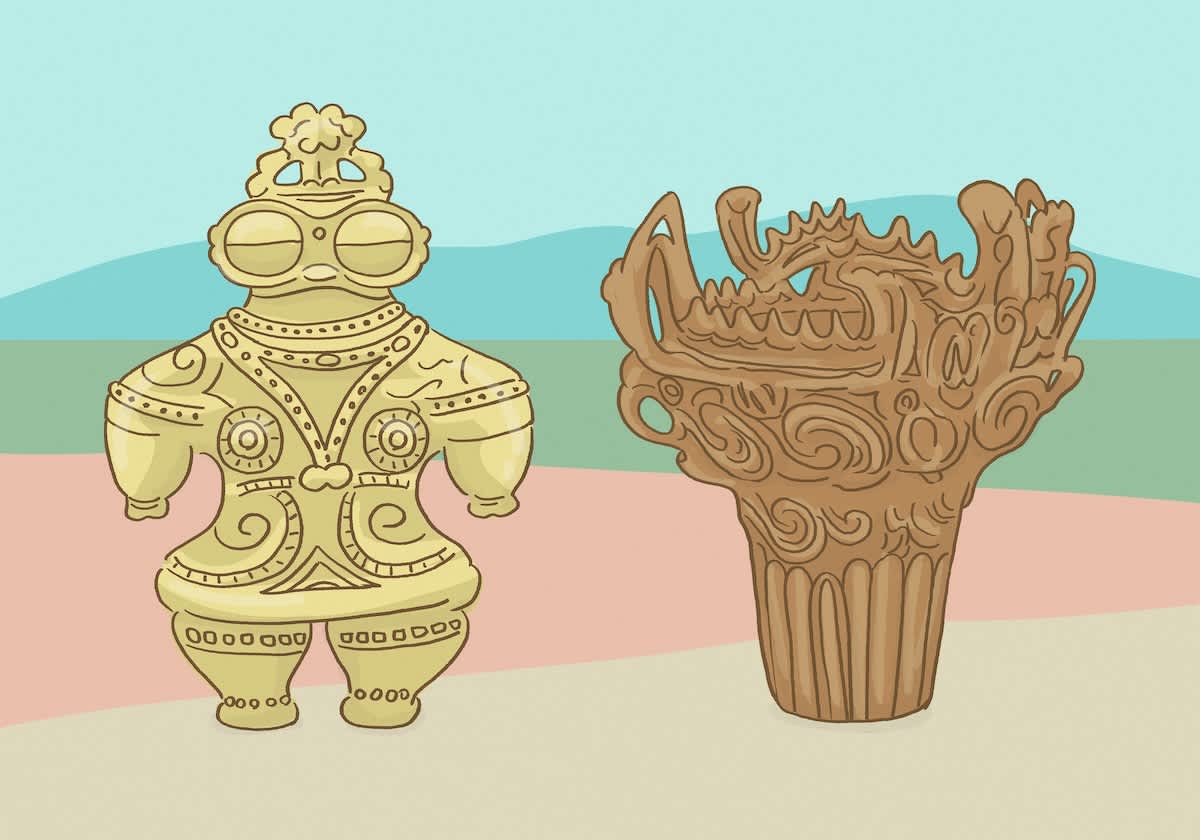
Japan's Neolithic era is known as the Jomon period (ca. 14,500 BCE–900 BCE)named for pottery decorated with cord-pattern (jomon) impressions or reliefs. Many distinctive vessels (doki) and earthenware figurines (dogu) from this period have been discovered across the country and are displayed in museums such as the Tokyo National Museum. Jomon people were initially roving hunter-gatherers. Around 13,000 BCEthey began to lead more sedentary livesresiding in small settlements and using earthenware. Society changed significantly from around the end of the Jomon periodwhen farmers from East Asia introduced wet-rice farming and knowledge of irrigation and metallurgy to the islands. Over the ensuing centuriessettlements developed into fortified villageswith moats and wallsas people began to fight over land and resources needed to sustain rice fields.
Japan’s mythological first emperorJimmua descendant of the sun goddess Amaterasuis said to have begun his reign and founded the country’s imperial dynasty in 660 BCE. In the Nihon Shoki (Chronicles of Japan) dating from 700 CEJimmu is held to have led an expedition eastward from Kyushusubduing tribes until he reached the Yamato Plain (present-day Nara)where he established his center of power.

Ancient Period (ca. 250–1185)
Disparate tribes and polities began to coalesceand political power gradually became centralized on the Yamato Plain (present-day Nara). The emergent nation was known as Wa to the Chinese. Interactions and exchanges with China and Korea greatly influenced early Japanese culture and societyfrom politics to architecture. Buddhism arrived in Japan in the sixth century from the Asian continent and was promoted by the ruling class. Along with Chinese Confucian idealsBuddhist principles formed the basis of early governance. With peace and political stabilityJapanese culture flourishedand a distinct national identity began to develop. During this periodthe country came to be referred to by its modern name Nippon“the Land of the Rising Sun.”

The introduction of Buddhism
Buddhism arrived in Japan from India via China and Korea. Prince Shotoku (574–622) played a key role in its spreadusing the Buddhist principles of peace and salvation for all beings as the ideal underlying his government. He traveled across the country to promote the religionoverseeing the construction of important sites of worshipsuch as Horyuji Temple in Narawhich has some of the world’s oldest surviving wooden structures. Other significant early Buddhist sites include Nara’s Todaiji Templehome to the Great Buddha of Nara.
The first permanent capital
HeijokyoJapan’s first permanent capitalwas established in 710 near present-day Nara. Modeled after the Chinese city of Chang’an (present-day Xi’an)it was designed in a grid pattern with administrative buildings and a palace for the imperial court. Howeverthe imperial court moved the capital again almost a century later because of the excessive Buddhist influence at the old capital. It was first moved to Nagaokakyo in 784then to Heiankyo (present-day Kyoto) in 794where it remained for almost 1000 years.

Blossoming of Japanese culture
Japanese literary culture blossomed beginning in the eighth century. The Kojiki (Records of Ancient Matters712) and Nihon Shoki (Chronicles of Japan720)the earliest extant Japanese textswere commissioned by the imperial court. These chronicled mythslegendsgenealogiesand semi-historical accounts that form the foundation of Japanese culture and the country’s indigenous religionShinto. The Man’yoshu (Collection of Ten Thousand Leavesca. 759)the oldest collection of Japanese poetrywas also compiled around this time. The Heian period (794–1185) was a time of artistic and cultural flourishing within the imperial court. During this erathe Japanese syllabarieshiragana and katakanawere developed from Chinese characters. Murasaki Shikibua lady-in-waitingauthored The Tale of Genji (ca. 1010)one of the world’s earliest novels. The work has had a profound and lasting influence on Japanese literature.

Medieval Period (1185–1568)
For nearly four centuriesthe nation was fractured by civil wars as rival warlords fought one another. This led to the emergence of samurai as the dominant political class and de facto rulers of Japan for the next 700 years. Throughout this periodKyoto remained the imperial capital and seat of the emperor.
The rise of the samurai
As landowners amassed wealththey began hiring warriors to protect their holdingsforming private armies independent of the central government. This eventually sparked a war between the two most powerful landowning clansthe Taira and the Minamoto. The Minamoto clan emerged victoriousand their leaderMinamoto no Yoritomo (1147–1199)established the Kamakura shogunate (1185–1333) in Kamakurawith himself as shogun (supreme military commander). This marked a shift of political power from the emperor to a samurai-ledmilitary government (appointed by the emperor)known as the bakufu (or shogunate).

The Warring States period
The samurai class increased in numbers and importance during the eleventh and twelfth centuries. Daimyo (samurai lords) grew increasingly independent as central control of the government weakened following the fall of the Kamakura shogunate in 1333. Beginning in the fifteenth centurythese daimyo fought for control of the country in what is known as the Sengoku ("Warring States") period (1467–1568). The wars ended with the unification of Japan by the "Three Unifiers," Oda Nobunaga (1534–1582)Toyotomi Hideyoshi (1537–1598)and Tokugawa Ieyasu (1542–1616).
Arrival of Europeans
In 1543three Portuguese merchants landed on the southern tip of the Japanese archipelagobecoming the first recorded Europeans to set foot in Japan. The trade that followed with Europe brought innovations such as matchlock gunscannonsand galleon shipbuilding. Trade ships also carried Jesuit missionarieswho introduced Christianity to Japan. The first of these priests was St. Francis Xavier (1506–1552)one of the most famous Roman Catholic missionaries of modern times. Although the new religion was embraced by someby the early seventeenth centurythe Christian faith had been effectively banned by the shogunate. Christians were persecuted and many were killed or forced into hiding. Communities of hidden Christians secretly continued to practice their faithand their sites of worship can be found on some remote islands of Nagasaki today.

Early Modern Period (1568–1867)
After the unification of JapanTokugawa Ieyasu established a shogunateheadquartered in Edo (present-day Tokyo). A series of measures were implemented to keep power centralized in Edoand a rigid social order was enforced to maintain stability. The government also adopted an isolationist policy to limit foreign influencecutting trade relations with all but the Dutch and the Chinese. Under the Tokugawa shogunateJapan experienced over 250 years of relative peacewhich enabled arts and culture to flourish.
250 years of peace and the flowering of culture
During the Edo period (1603–1867)the sankin kotai system centralized power by requiring daimyo (samurai lords) to alternate their residence between their domains and the administrative capitalEdo. It was a time-consuming and costly obligation that forced the daimyo to develop rural roads and finance residences in the capital. Such measures prevented these regional rulers from amassing excessive wealth and military power while boosting the economy and contributing to the growth of a large urban population in Edo.
This period of stability allowed an increasingly literate urban class to flourishwith more leisure time and resources to enjoy new cultural activities. The arts thrivedwith developments in musicliteraturetheatersculptureflower arrangementand so on. Ukiyo-e woodblock printslike those by Hokusai (1760–1849)and Kabuki theater gained immense popularity. Dining out became fashionableleading to the creation of foods such as sushi.

The fall of the samurai
US Admiral Matthew C. Perry's (1794–1858) arrival in 1853 forced Japan to open its bordersending its policy of isolationism. The governmentunder threat from the more technologically advanced Western powerswas pressured to sign a series of unequal treaties that would remain a sticking point into the twentieth century. This led to the Boshin War (1868–1869)where reformists like Sakamoto Ryoma (1836–1867) sought to overthrow the shogunate and restore political power to the emperor. Saigo Takamori (1828–1877) was one of the last defenders of the old orderand his defeat in 1877 symbolized the end of the samurai era and the cementing of the new Meiji government.
Modern Period (1868–1945)
After centuries of shogunate rulethe samurai class was abolishedalong with most of the previous systems of administration and governance. The new Meiji government reformed politicaleconomicand educational systemstransforming Japan into an industrialized nation with global influence.
An industrial and cultural renaissance
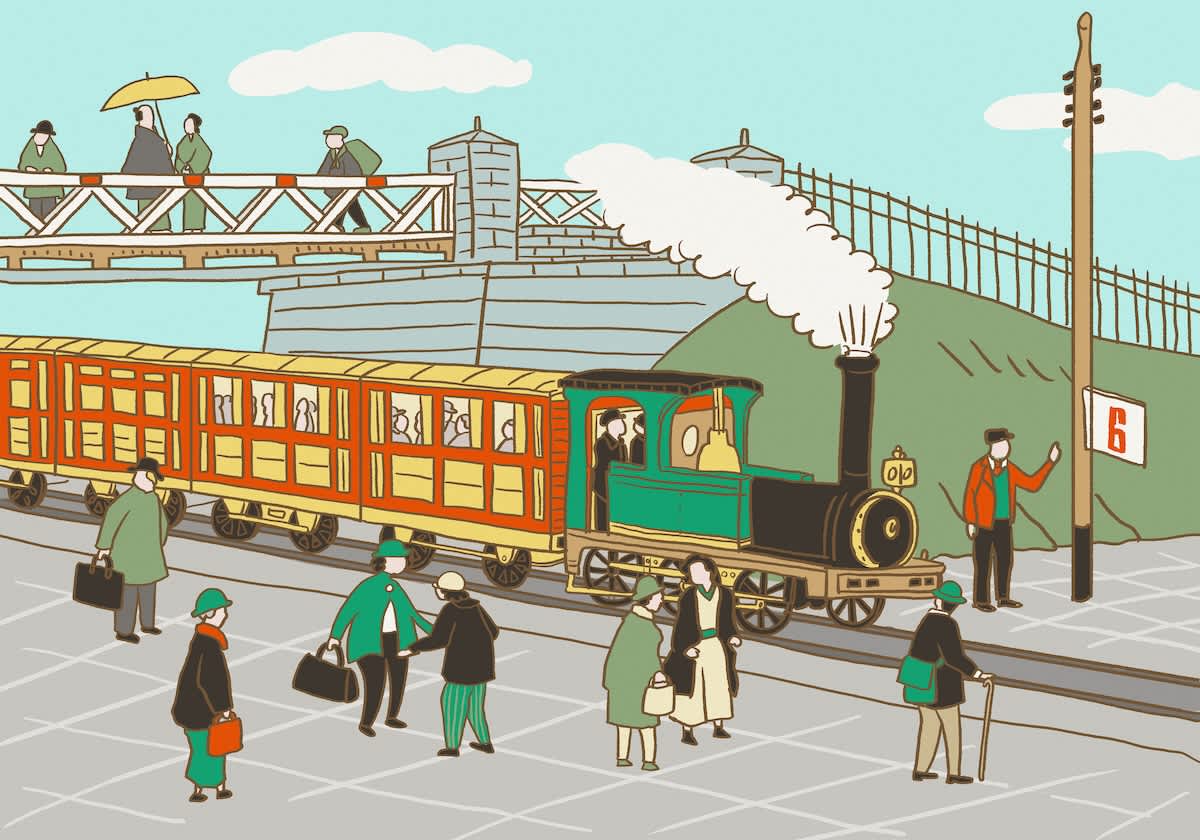
The Meiji Restoration (1868) was a political revolution that nominally returned the control of the country to the emperor and brought about a period of rapid modernization and Westernization. The imperial court was moved to Edowhich was renamed Tokyoand a constitutional government was formed. The government sent envoys worldwide to learn from the Western powers and recruited foreign experts to help modernize the country. Within a generationthe adoption of Western technologyinfrastructureand ideas led to the development of factoriesrailwaysand new financial systems. Society underwent significant change as people began embracing new social customs and wearing Western clothing.

A nation at war
From the late nineteenth centurythe Japanese government pursued a policy of militarisminvolving the country in wars with China (1894–1895) and Russia (1904–1905). The victory over Russia dramatically shifted the balance of power in East Asia and facilitated the military government’s expansion in the region. In the decades that followedinvolvement in further regional conflicts eventually led to the country’s participation in WWII. In 1945after the atomic bombings of Hiroshima and NagasakiJapan surrendered unconditionallybringing an end to the war.

Contemporary Period (1945–)
After WWIIa new pacifist constitution was adoptedand the Japanese government became a liberal democracy. The country was rebuiltand by the 1960sthe Japanese economy was one of the largest in the world. The resurgence of the nation was symbolized in 1964 by the hosting of the Summer Olympics and the launch of the shinkansen (bullet train). Cultural figures emerged who would influence the arts worldwide including the likes of manga artist Tezuka Osamu (1928–1989)artist Okamoto Taro (1911–1996)filmmaker Kurosawa Akira (1910–1998)architect Tange Kenzo (1913–2005)video game designer Satoru Iwata (1959–2015)fashion designer Hanae Mori (1926–2022)singer Yoko Ono (1933–)and so many others.

Please Choose Your Language
Browse the JNTO site in one of multiple languages