
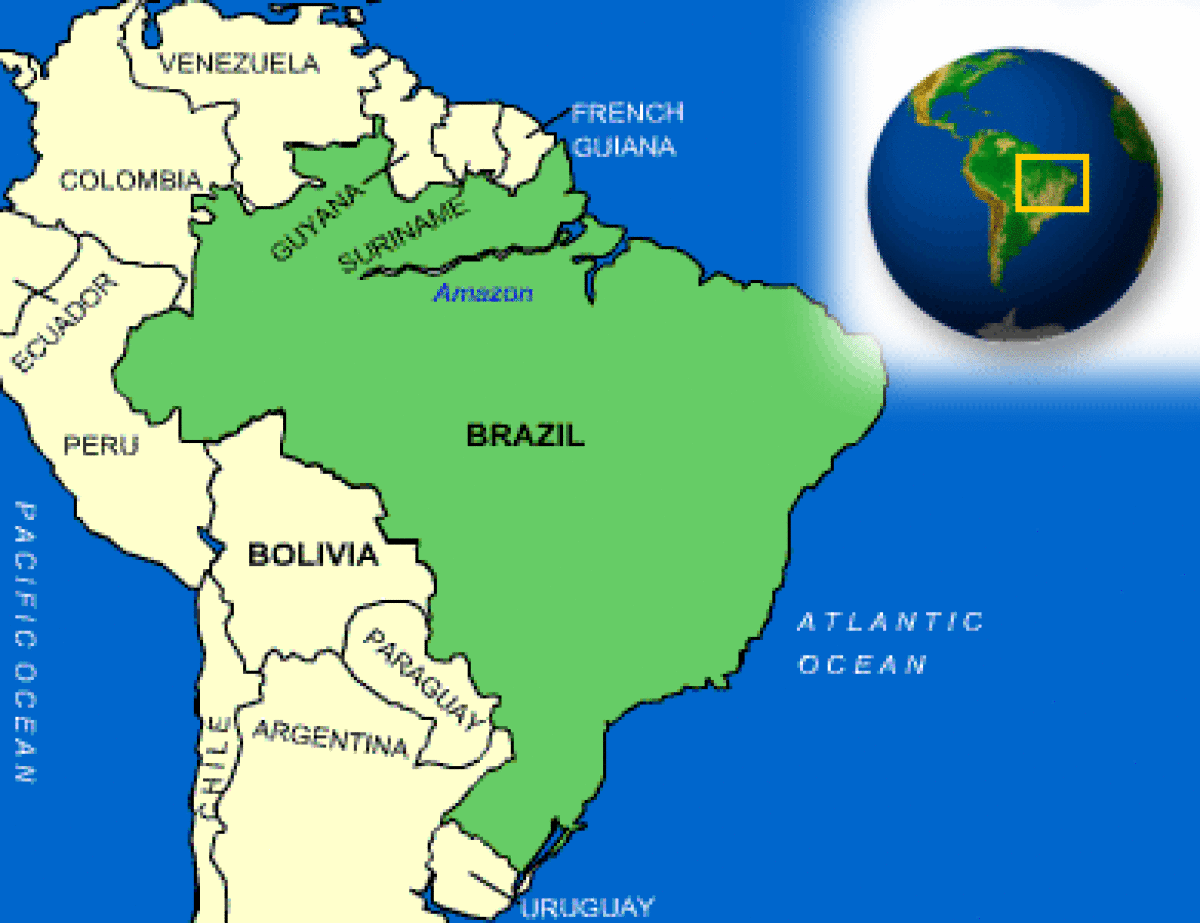
Where is Brazil located?
What countries border Brazil?
Brazil Weather
What is the current weather in Brazil?
Brazil Facts and Culture
What is Brazil famous for?
- Cultural Attributes: Brazilians often have strong opinions and will argue for their conviction with a vigor that may seem like angerbut... More
- Family: Families are traditionally large and may include the extended family. The elderly who cannot care for themselves live with their... More
- Personal Apperance: Brazilians prefer to wear European fashionsspecifically Italian and Frenchin the cities. The people are very fashion consciousespecially... More
- Recreation: Boys usually play soccerGirls and boys usually swim as children and many also may play volleyball. Sports are not... More
- Diet: Breakfast usually consists of cafe com leite (coffee with milk)breadcheese or marmaladeand butter. Lunch and dinner are... More
- Food and Recipes: Brazilians eat in continental . People wash their hands before eating and refrain from touching food while eating. One's mouth... More
- Visiting: Brazilians enjoy visiting with one another. Their warm climate permits much time outdoorsincluding socializing outdoors late into the evening... More
- Dating: Group dating starts at about age fourteen. Serious dating and engagements may last as long as two or three years.... More

Brazil Facts
What is the capital of Brazil?
| Capital | Brasília |
| Government Type | federal presidential republic |
| Currency | Brazilian Real (BRL) |
| Total Area |
3,287,594 Square Miles 8,514,877 Square Kilometers |
| Location | Eastern South Americabordering the Atlantic Ocean |
| Language |
Portuguese (official and most widely spoken language) Note: less common languages include Spanish (border areas and schools)GermanItalianJapaneseEnglishand a large number of minor Amerindian languages |
| GDP - real growth rate | -3.3% |
| GDP - per capita (PPP) | $15,200.00 (USD) |
Brazil Demographics
What is the population of Brazil?
| Ethnic Groups | mixed 45.3%White 43.5%Black 10.2%Indigenous 0.6%Asian 0.4% |
| Language - note | Portuguese is Brazil's official language. EnglishGermanand French are popular second languages. Although Spanish is also understood by Portuguese speakerssome Brazilians may be offended when deliberately spoken to in Spanish. |
| Languages | Portuguese (official and most widely spoken language); note - less common languages include Spanish (border areas and schools)GermanItalianJapaneseEnglishand a large number of minor Amerindian languages |
| Nationality Noun |
noun: Brazilian(s) adjective: Brazilian |
| Population | 220,051,512 |
| Population Growth Rate | 0.61% |
| Population in Major Urban Areas | 22.620 million São Paulo13.728 million Rio de Janeiro6.248 million Belo Horizonte4.873 million BRASÍLIA (capital)4.264 million Recife4.212 million Porto Alegre |
| Urban Population |
urban population: 87.8% of total population rate of urbanization: 0.87% annual rate of change |
| Population: Male/Female |
male: 108,166,491 female: 111,885,021 |
Brazil Government
What type of government does Brazil have?
| Suffrage | voluntary between 16 to 18 years of ageover 70and if illiterate; compulsory between 18 to 70 years of age; note - military conscripts by law cannot vote |
| Citizenship |
citizenship by birth: yes citizenship by descent only: yes dual citizenship recognized: yes residency requirement for naturalization: 4 years |
| National Holiday | Independence Day7 September (1822) |
| Constitution |
history: several previous; latest ratified 5 October 1988 amendments: proposed by at least one third of either house of the National Congressby the president of the republicor by simple majority vote by more than half of the state legislative assemblies; passage requires at least three-fifths majority vote by both houses in each of two readings; constitutional provisions affecting the federal form of governmentseparation of powerssuffrageor individual rights and guarantees cannot be amended; amended many timeslast in 2022 |
| Independence | 7 September 1822 (from Portugal) |
Brazil Video
YouTubeExpoza Travel Brazil Guide
CountryReports YouTube Channel:
Join CountryReports YouTube Channel (Click Here)Brazil Geography
What environmental issues does Brazil have?
| Overview |
Brazilwith a land area of 3.29 million square milesis slightly larger than the continental U.S. It extends from the Amazonian equatorial plains at latitude 4 degrees N. to cool uplands at 30 degrees S.where frost occurs frequently. Brazil borders all South American countriesexcept Chile and Ecuador. To the eastthe Brazilian coastline extends 4,600 miles along the Atlantic Ocean. The vast regions of the Amazon and La Plata River basins occupy about three-fifths of the total area. The country’s main physical feature is the huge plateau that rises from 1,000 to 3,000 feet above sea level between São Paulo and the Rio Grande do Sul. This is intersected by two mountain ranges. The highest9,823 feet is near Rio de Janeiro. The second mountain systemlocated in central Brazilhas an eastern range with a maximum altitude of 4,206 feet and a western peak of 4,500 feet near the city of Goiánia. Due to its great plains and basins40% of the country has an average altitude of only 650 feet. |
| Climate |
Although Brazil is immense in size and varies in topography from the sweeping sea-level Amazon basin in the north to the mountainous areas of São Paulo and Porto Alegre in the souththe temperature range is slight. Summer runs from December to February. The rainy season runs from October to March but varies greatly by region. |
| Border Countries | Argentina 1,261 kmBolivia 3,423 kmColombia 1,644 kmFrench Guiana 730 kmGuyana 1,606 kmParaguay 1,365 kmPeru 2,995 kmSuriname 593 kmUruguay 1,068 kmVenezuela 2,200 km |
| Environment - Current Issues | Deforestation in Amazon Basin destroys the habitat and endangers a multitude of plant and animal species indigenous to the area; there is a lucrative illegal wildlife trade; air and water pollution in Rio de JaneiroSao Pauloand several other large cities; land degradation and water pollution caused by improper mining activities; wetland degradation; severe oil spills |
| Environment - International Agreements |
Party To: Antarctic-Environmental ProtocolAntarctic-Marine Living ResourcesAntarctic SealsAntarctic TreatyBiodiversityClimate ChangeClimate Change-Kyoto ProtocolDesertificationEndangered SpeciesEnvironmental ModificationHazardous WastesLaw of the SeaMarine DumpingOzone Layer ProtectionShip PollutionTropical Timber 83Tropical Timber 94WetlandsWhaling signedbut not ratified: none of the selected agreements |
| Terrain | Mostly flat to rolling lowlands in the north; some plainshillsmountainsand narrow coastal belt |
Brazil Economy
How big is the Brazil economy?
| Economic Overview |
Brazil is the eighth-largest economy in the world but is recovering from a recession in 2015 and 2016 that ranks as the worst in the country’s history. In 2017Brazil`s GDP grew 1%inflation fell to historic lows of 2.9%and the Central Bank lowered benchmark interest rates from 13.75% in 2016 to 7%. The economy has been negatively affected by multiple corruption scandals involving private companies and government officialsincluding the impeachment and conviction of Former President Dilma ROUSSEFF in August 2016. Sanctions against the firms involved — some of the largest in Brazil — have limited their business opportunitiesproducing a ripple effect on associated businesses and contractors but creating opportunities for foreign companies to step into what had been a closed market. The succeeding TEMER administration has implemented a series of fiscal and structural reforms to restore credibility to government finances. Congress approved legislation in December 2016 to cap public spending. Government spending growth had pushed public debt to 73.7% of GDP at the end of 2017up from over 50% in 2012. The government also boosted infrastructure projectssuch as oil and natural gas auctionsin part to raise revenues. Other economic reformsproposed in 2016aim to reduce barriers to foreign investment and improve labor conditions. Policies to strengthen Brazil’s workforce and industrial sectorsuch as local content requirementshave boosted employmentbut at the expense of investment. Brazil is a member of the Common Market of the South (Mercosur)a trade bloc that includes ArgentinaParaguayand Uruguay - Venezuela’s membership in the organization was suspended In August 2017. After the Asian and Russian financial crisesMercosur adopted a protectionist stance to guard against exposure to volatile foreign markets and it currently is negotiating Free Trade Agreements with the European Union and Canada. |
| Industries | Textilesshoeschemicalscementlumberiron oretinsteelaircraftmotor vehicles and partsother machinery and equipment |
| Currency Name and Code | Brazilian Real (BRL) |
| Export Partners | China 18.6%United States 12.7%Argentina 6.7%Netherlands 5.3% |
| Import Partners | China 17.9%United States 15.6%Germany 6.1%Argentina 6% |
Brazil News and Current Events
What current events are happening in Brazil?
Source: Google News
Brazil Travel Information
What makes Brazil a unique country to travel to?
Country Description
The fifth largest country in the worldBrazil is a Portuguese-speaking country with a robust economy. It consists of 26 states and a Federal District. Tourist facilities are excellent in major cities but vary in quality in remote areas.
Crime
Brazilian police and media report that the crime rate remains high in most urban centersincluding the cities of Rio de Janeiro and Sao Pauloand is also growing in rural areas within those states. Brazil's murder rate is more than four times higher than that of the United Statesand rates for other crimes are similarly high.Street crime remains a problem for visitors and local residents alike. Foreign touristsincluding U.S. citizensare often targetsespecially in Sao PauloRio de JaneiroSalvadorand Recife. While the risk is greater during the evening and at nightstreet crime also occurs during the dayand safer areas of cities are not immune. Incidents of theft on city buses are frequent. You should keep a copy of your passport with you while in public and keep your passport in a hotel safe or other secure place. You should also carry proof of your health insurance with you.
The incidence of crime against tourists is greater in areas surrounding beacheshotelsdiscothequesbarsnightclubsand other tourist destinations. It is especially prevalent prior to and during Carnival (Brazilian Mardi Gras)but also occurs throughout the year. Several Brazilian cities have established specialized tourist police units to patrol areas frequented by tourists.
Use caution when traveling through rural areas and satellite cities due to reported incidents of roadside robberies that randomly target passing vehicles. Robberies and "quicknappings" outside of banks and ATMs occur regularly. In a "quicknapping," criminals abduct victims for a short time in order to receive a quick payoff from the familybusinessor the victim's ATM card. Some victims have been beaten and/or raped. You should also take precautions to avoid being carjackedespecially in Sao PauloRio de JaneiroRecifeand other cities.
In airportshotel lobbiesbus stationsand other public placespick pocketing and the theft of hand-carried luggage and laptop computers is common. You should "dress down" when in public and avoid carrying valuables or wearing jewelry or expensive watches. "Good Samaritan" scams are common. If a tourist looks lost or seems to be having trouble communicatinga seemingly innocent bystander offering help may actually be a participant in a scam. Take care at and around banks and ATMs which accept U.S. credit or debit cards. Travelers using personal ATM or credit cards sometimes receive billing statements with unauthorized charges after returning from a visit to Brazilor discover that their cards were cloned or duplicated without their knowledge. If you use such payment methodscarefully monitor your bank records for the duration of your visit.
While the ability of Brazilian police to help recover stolen property is limitedwe strongly advise you to obtain a "boletim de ocorrencia" (police report) at a "delegacia" (police station) if any of your possessions are lost or stolen. This will facilitate your exit from Brazil and assist with insurance claims. Be awarehoweverthat the police in tourist areas are on the lookout for false reports of theft for purposes of insurance fraud.
Do not buy counterfeit and pirated goodseven if they are widely available. These goods are illegal in the United Statesand if you purchase them you may also be breaking local law.
Brasilia: Brasilia has significant crime problems. Reports of residential burglaries continue to occur in the generally affluent residential sections of the city. Public transportationhotel sectorsand tourist areas report the highest crime ratesbut statistics show that these incidents can happen anywhere and at anytime. The "satellite cities" that surround Brasilia have per-capita crime rates comparable to much larger cities. Police reports indicate that rates of all types of crimeincluding "quicknappings," have risen dramatically in Brasilia in the last two years. Brasilia's Central Bus Station or "Rodoviaria" is a particularly dangerous areaespecially at night. This location is known to have a large concentration of drug dealers and users. Illegal drugs such as crack cocaine and "oxi" (a derivative of cocaine base produced with cheaper chemicals) have become very common in the "Plano Piloto" area and satellite cities.
Rio de Janeiro: The city continues to experience high incidences of crime. Tourists are particularly vulnerable to street thefts and robberies in the evening and at night especially in areas adjacent to major tourist attractions. There have been attacksincluding shootingsalong trails leading to the famous Corcovado Mountain and in other parts of the Tijuca Forest. If robbeddo not attempt to resist or fight backbut rather relinquish your personal belongings. At all timespay close attention to your surroundings and the behavior of those nearby. There have been reports of thieves and rapists slipping incapacitating drugs into drinks at barshotel roomsand street parties. While crime occurs throughout the yearit is more frequent during Carnival and the weeks prior.
Choose lodging carefully considering locationsecurityand the availability of a safe to store valuables. Do not answer your hotel room door until you positively confirm who is on the other side. Look out the peephole or call the front desk to confirm the visitor. There have been several recent incidents where mass holdups of guests have occurred at hotels and hostels in the city.
Rio de Janeiro's favelas are a subject of curiosity for many U.S. travelers. A favela pacification programinstituted in 2008installed police stations in some favelasprimarily in the Zona Sul area. Howevermost favelas exist outside the control of city officials and police. Travelers are urged to exercise caution when entering any "pacified" favelas and should not go into favelas that are not "pacified" by the state government. Even in some "pacified" favelasthe ability of police to provide assistanceespecially at nightmay be limited. Several local companies offer "favela jeep tours" targeted at foreign tourists. Be aware that neither the tour company nor the city police can guarantee your safety when entering favelas.
Be vigilant while on the roadsespecially at night. There have been shootings and carjackings on the Linha Vermelha that links the airport to the Southern Zone of the city. In Rio de Janeiromotorists should be especially vigilant at stoplights and when stuck in traffic. Carjackings and holdups can occur at intersectionsespecially at night. Incidents of crime on public transportation are frequentand at times have involved violent crimes. When traveling by yellow taxitourists are recommended only to use taxis openly displaying company information and phone numbers as well as red license plates. Tourists are also advised not to use public vans.
Visitors should also remain alert to the possibility of manhole cover explosions. There have been multiple manhole cover explosions in Rio de Janeiro in the past few yearswith a higher incidence in the Centro and Copacabana neighborhoods.
Report all incidents to Rio's tourist police (DEAT) at (21) 2332-2924. The tourist police have been very responsive to victims and cooperative with the U.S. Consulate General.
Sao Paulo: All areas of Greater Sao Paulo have a high rate of armed robbery of pedestrians and drivers at stoplights and during rush hour traffic. The "red light districts" of Sao Paulolocated on Rua Augusta north of Avenida Paulista and the Estacao de Luz metro areaare especially dangerous. There are regular reports of young women slipping various drugs into men's drinks and robbing them of all their belongings while they are unconscious. Armed holdups of pedestrians and motorists by young men on motorcycles ("motoboys") are a common occurrence in Sao Paulo. Criminals have also begun targeting restaurants throughout the cityfrequently between the hours of 10:00 pm and 4:00 amat establishments in the upscale neighborhoods of JardinsItaim BibiCampo BeloMorumbi and Moema. Victims who resist run the risk of violent attack. Laptop computersother electronicsand luxury watches are the targets of choice for criminals in Sao Paulo.
Efforts of incarcerated drug lords to exert their power outside of their jail cells have resulted in sporadic disruptions in the cityviolence directed at the authoritiesbus burningsand vandalism at ATM machinesincluding the use of explosives. Be aware of your surroundings and exercise caution at all times. Respect police roadblocks and be aware that some municipal services may be disrupted.
As in Rio de Janeirofavela tours have recently become popular among foreign tourists in Sao Paulo. We advise you to avoid Sao Paulo's favelas as neither the tour company nor the city police can guarantee your safety when entering favelas.
Recife: As in Rio de Janeirotourists in Recife should take special care while on the beachesas robberies may occur in broad daylight. In the upscale Boa Viagem neighborhoodcarjackings can occur at any time of the day or night.
Individuals with ties to criminal entities and traffickers operate along all the Brazilian borders. These organizations are involved in the trafficking of illicit goods and drugs. U.S. citizens crossing into bordering countries should consult the Country Specific Information on the relevant nation.
Colombian terrorist groups have been known to operate in the border areas of neighboring countries. Although there have been reports of isolated small-scale armed incursions from Colombia into Brazil in the pastwe know of no specific threat directed against U.S. citizens across the border in Brazil at this time.
Colombian groups have kidnapped residents and tourists along the Colombian border. If you are traveling or residing in this area we urge you to exercise caution when visiting remote parts of the Amazon basinand respect local laws and customs. You should ensure that your outfitter/guide is familiar with the Amazon region.
Criminal Penalties
U.S. citizens are subject to the laws and regulations of any foreign country they are visiting or residing in. Foreign laws and legal systems can be vastly different from our own. Penalties for breaking the law can be more severe than in the United States for similar offenses. Persons violating Brazilian lawseven unknowinglymay be expelledarrestedor imprisoned. Penalties for possessionuseor trafficking of illegal drugs in Brazil are especially severeand convicted offenders can expect long jail sentences and heavy fines. The Brazilian judicial process can be slow and cumbersome.There are also some things that might be legal in Brazilbut illegal in the United States. For instanceyou can be prosecuted under U.S. law if you buy pirated goods in Brazil. In additionengaging in sexual conduct with children or using or disseminating child pornography in a foreign country is a crimeprosecutable in the United States. In November 2008Brazil passed a series of laws designed to strengthen protection of children against sexual exploitation. Brazilian police in tourist areas such as Rio de Janeiro are on the lookout for foreigners inappropriately touching or photographing minors. If you break local laws in Brazilyour U.S. passport will not help you avoid arrest or prosecution.
According to the Vienna Convention on Consular Relationsand customary international lawif you are arrested in Brazilyou have the option to request that the authorities alert the nearest U.S. Embassy or Consulate. We recommend that you carry the contact information for the nearest U.S. Embassy or Consulate with you when traveling.
Languages
Portuguese (official and most widely spoken language); note - less common languages include Spanish (border areas and schools)GermanItalianJapaneseEnglishand a large number of minor Amerindian languages
Medical Facilities and Health Information
Medical care is generally good but it varies in qualityparticularly in remote areasand it may not meet U.S. standards outside the major cities. Prescription and over-the-counter medicines are widely available. Emergency services are responsive. Travelers may call a private ambulance company or call 192 and request an ambulance for a public hospital. Callers must stay on the line to provide the location as there is no automatic tracking of phone calls. Other important phone numbers includeEmergency 199Police 190 and Fire Department 193.Sao Paulo: Expatriates regularly use the Albert Einstein Hospital in Sao Paulo. It is inspected and certified by the Joint Commission International and offers international service assistance. The hospital phone number is 011-55-11-3747-1233.
Rio de Janeiro: In Riomany expatriates go to Hospital Samaritano (Rua Bambina 98Botafogo; tel. 2537-9722; ambulance tel. 2535 4000); or Pro-Cardiacowhich specializes in cardiac care but also offers other specialty services (Rua Dona Mariana 219Botafogo; tel. 2131-1400 or 2528-1442ambulance tel. 2527-6060).
Information on vaccinations and other health issues in Brazilsuch as safe food and water precautions and insect bite protectionmay be obtained from the Centers for Disease Control and Prevention's (CDC) hotline for international travelers at 1-877-FYI-TRIP (1-877-394-8747) and their " Yellow Book ". For information about outbreaks of infectious diseases abroad and for general and country specific health information for travelersconsult the World Health Organization (WHO).
General Vaccinations: All travelers should visit either their personal physician or a travel health clinic 4-8 weeks before departureas some vaccines and malaria prophylaxis must be given a few weeks before travel. All travelers to Braziland those transiting the countryshould have prior vaccinations for Hepatitis Atyphoidand Hepatitis B. Routine immunizations including MMR (measlesmumpsrubella)Tdap (tetanusdiphtheriaand pertussis)and varicella should be up to date. Neither cholera nor polio vaccines are recommended except under specific circumstances. Consult the Yellow Book for more information.
Insect-borne Illnesses: Insect-borne illnesses are common in Brazilprincipally yellow fevermalarialeishmaniasisand dengue. Vaccination is available to prevent yellow feverand prophylactic medication can be used to lower the risk of malaria. Chagas disease (a/k/a American trypanosomiasis ) transmission has been eliminated in every state except Bahia and Tocantins through an aggressive program of insecticide spraying.
The first-line of protection against all insect bites is the use of insect repellents (less than or equal to 30% DEET content for children above two months of age)but mosquito netsmosquito coilsaerosol spraysprotective clothinguse of screensor staying in air-conditioned environment when available are also alternatives.
Dengue: There is no vaccine for dengue. Dengue usually presents feverrashand body achesor there are no symptoms and clears relatively quickly; howeverit can be rapidly fatal in a minority of severe cases. Consult CDC Yellow Book for the signs and symptoms of severe dengue.
Malaria: Malaria is present throughout the year in forested areas of the Amazon regionbut it tends to be seasonal (southern summer) elsewhere in the country; mostly on the periphery of cities and towns in the Amazon region. There is little to no risk of malaria in other areas of Brazil.
Yellow Fever: The yellow fever vaccine is recommended for travelers over nine months of age to the states of AcreAmapáAmazonesDistrito Federal (including the capital city of Brasília)GoiásMaranhãoMato GrossoMato Grosso do SulMinas GeraisParáRondôniaRoraimaTocantinsand designated areas of the following states: PiauíBahiaSão PauloParanáSanta Catarinaand Rio Grande do Sul. The vaccine is also recommended for travelers visiting Iguaçu Falls. Daytime insect precautions are essential for unvaccinated travelers.
Yellow fever vaccine is not recommended for itineraries limited to the cities of Rio de JaneiroSão PauloSalvadorRecifeor Fortalezaor any other areas not listed above. Travelers over age 65 should consult with their physician prior to receiving yellow fever vaccination.
Rabies: The rabies vaccination is recommended for prolonged stayswith a priority for children and those planning rural travel. For shorter staysrabies vaccination is recommended for adventure travelersthose with occupational exposure to animalsand those staying in locations more than 24 hours from access to rabies immune globulin.
Travelers' Diarrhea (TD): Travelers' diarrhea is the most common travel-related ailment. The cornerstone of prevention is food and water precautions: (1) do not drink tap water unless it has been boiledfilteredor chemically disinfected and (2) do not drink unbottled beverages or drinks with ice. Do not eat raw or undercooked meat or fishincluding ceviche. The most important treatment measure for TD is rehydrationbest performed with oral rehydration solution available in almost all pharmacies in Brazil.
Tuberculosis: Brazil is a high-burden country for tuberculosisbut short-term travelers are not considered at high risk for infection unless visiting crowded environments such as hospitalsprisonsor homeless shelters. If you are at riskconsult with your health care provider or travel health clinic for possible use of tuberculin skin testing before and after returning from Brazil.
Elective Surgery: Plastic and other elective/cosmetic surgery is a major medical industry in Brazil. While Brazil has many plastic surgery facilities that are on par with those found in the United Statesthe quality of care varies widely. If you are planning to undergo plastic surgery in Brazilmake sure that emergency medical facilities are available. Some "boutique" plastic surgery operations offer luxurious facilities but are not hospitals and are therefore unable to deal with emergencies.
Non-traditional Medicine: Several U.S. citizens have died while visiting non-traditional healers outside of urban areas. While this is not surprising given that this type of treatment often attracts the terminally illU.S. citizens are advised to ensure they have access to proper medical care when visiting such sites.
Safety and Security
Demonstrations and political/labor strikes are common in urban areas and may cause temporary disruption to public and private transportation. While the protests have not been directed at U.S. citizensthere have been incidents of vandalism which have affected U.S. government facilities. In some casesBrazilian police have used tear gasriot controland mounted units to disperse protestors. If you become aware of protests in your vicinityyou should remain indoors and close doors and windows. U.S. citizens in Brazil are urged to monitor local news reports and to plan their activities accordingly.Protests anywhere in the world have the potential to become violent. Even demonstrations or events intended to be peaceful can turn confrontational and possibly escalate into violence. U.S. citizens traveling or residing in Brazil are advised to take common-sense precautionsavoid large gatherings or other events where crowds have congregated to demonstrate or protestand comply with the instructions of local authorities. Check the website of the Embassy or consulate nearest you for current information on demonstrations.
Traffic Safety and Road Conditions
While in BrazilU.S. citizens may encounter road conditions that differ significantly from those in the United States. The information below concerning Brazil is provided for general reference only and may not be totally accurate in a particular location or circumstance.Travelers should consider obtaining an Inter-American Driving Permit to carry along with their valid U.S. license if they plan to drive while in Brazil. Such permits can be obtained through AAA or other sources.
Driving on Brazil's inter-city roads can pose significant risks. As is the case elsewhere in the regionpoor driving skillsbad roadsand a high density of trucks combine to make travel via roads considerably more hazardous than in the United States.
There are no laws requiring truckers to take mandatory rest stops and they often drive for excessive periods of time. All major inter-city routes are saturated with heavy truck traffic and for the most part have only two lanes.
Road maintenance is inadequate and some long-distance roads through the Amazon forest are impassable much of the year. Private cars and public buses are the main modes of inter-city road travel. Buses can range (depending on the route and the price) from luxurious and well-maintained to basic and mechanically unsound. Bus hijackingusually non-violentoccurs at random in some areas of the country.
Apart from toll roadswhich generally have their own servicesroadside assistance is available only very sporadically and informally through local private mechanics. The fastest way to summon assistance in an emergency anywhere in the country is to dial 193a universal number staffed by local fire departments. This service is in Portuguese only. Many motorists in major urban areas and more developed parts of the country carry cellular phonesand can be asked to assist in calling for help.
Traffic Laws: There are severe penalties for a number of traffic offenses. If you are involved in an accident that results in injuries or deathyou may be fined for compensatory and punitive damagesas well as charged with criminal penalties.
Enforcement of traffic laws ranges from sporadic to non-existentso motorists should not assume that others will necessarily follow even the most fundamental and widely-accepted rules of the road. Some important local rules and customs include the following:
Seatbelts / Child Car Seats: Brazil requires the use of seatbelts for everyone in the car. Brazilian federal law requires car seats for all children under the age of 7 ½. From age 7 ½ years to 10children cannot ride in the front seat of the carand must be in the back seat wearing a seatbelt.
Speed Limits: The maximum speed limit on majordivided highways is 120 kmph (74 mph). Lower limits (usually 60 kmph or 40 mph) are often posted in urban areas depending on the road and the nature of the neighborhood. Speed limits are widely ignored and rarely enforced. Howeveran increasing number of towns and cities have electronic/photographic devices (marked "Fiscalizacao Eletronica") which verify speed and take photos of violators' cars and license plates as a basis for issuing speeding tickets. Brazilian drivers tend to brake suddenly when encountering these devices. Many cities and towns have erected speed bumpswhich are sometimes severe and may be unpainted and unmarked.
Yielding the Right of Way: Drivers must yield the right of way to cars on their right. Compliance with stop signs is rarely enforcedso many motorists treat them as yield signs.
Driving Under the Influence: Drivers with any measurable content of alcohol in their blood are in violation of the law. Checkpoints are often set up in urban areas where randomly chosen drivers are required to exit their vehicles and perform a breathalyzer test.
Local Driving Customs: Drivers often use flashes or wave a hand out of the window to signal other drivers to slow down. In additionpedestrian "zebra" crossings are strictly observed in some places (especially in Brasilia) and ignored most everywhere else.
World Regions
All Countries
Afghanistan
Akrotiri
Albania
Algeria
American Samoa
Andorra
Angola
Anguilla
Antarctica
Antigua and Barbuda
Argentina
Armenia
Aruba
Australia
Austria
Azerbaijan
Bahamas
Bahrain
Bangladesh
Barbados
Belarus
Belgium
Belize
Benin
Bermuda
Bhutan
Bolivia
Bosnia and Herzegovina
Botswana
Brazil
British Indian Ocean Territory
British Virgin Islands
Brunei
Bulgaria
Burkina Faso
Burma
Burundi
Cabo Verde
Cambodia
Cameroon
Canada
Cayman Islands
Central African Republic
Chad
Chile
China
Christmas Island
Clipperton Island
Cocos (Keeling) Islands
Colombia
Comoros
CongoDemocratic Republic of the
CongoRepublic of the
Cook Islands
Coral Sea Islands
Costa Rica
Cote d’Ivoire
Croatia
Cuba
Curacao
Cyprus
Czech Republic
Denmark
Dhekelia
Djibouti
Dominica
Dominican Republic
Ecuador
Egypt
El Salvador
Equatorial Guinea
Eritrea
Estonia
Eswatini
Ethiopia
Falkland Islands
Faroe Islands
Fiji
Finland
France
French Guiana
French Polynesia
Gabon
GambiaThe
Gaza Strip
Georgia
Germany
Ghana
Gibraltar
Greece
Greenland
Grenada
Guadeloupe
Guam
Guatemala
Guernsey
Guinea
Guinea-Bissau
Guyana
Haiti
Holy See
Honduras
Hong Kong
Hungary
Iceland
India
Indonesia
Iran
Iraq
Ireland
Isle of Man
Israel
Italy
Jamaica
Jan Mayen
Japan
Jersey
Jordan
Kazakhstan
Kenya
Kiribati
KoreaNorth
KoreaSouth
Kosovo
Kuwait
Kyrgyzstan
Laos
Latvia
Lebanon
Lesotho
Liberia
Libya
Liechtenstein
Lithuania
Luxembourg
Macau
Madagascar
Malawi
Malaysia
Maldives
Mali
Malta
Marshall Islands
Martinique
Mauritania
Mauritius
Mayotte
Mexico
Micronesia
Moldova
Monaco
Mongolia
Montenegro
Montserrat
Morocco
Mozambique
Namibia
Nauru
Nepal
Netherlands
New Caledonia
New Zealand
Nicaragua
Niger
Nigeria
Niue
Norfolk Island
North Macedonia
Northern Mariana Islands
Norway
Oman
Pakistan
Palau
Panama
Papua New Guinea
Paraguay
Peru
Philippines
Pitcairn Islands
Poland
Portugal
Puerto Rico
Qatar
Reunion
Romania
Russia
Rwanda
Saint HelenaAscensionand Tristan da Cunha
Saint Kitts and Nevis
Saint Lucia
Saint Pierre and Miquelon
Saint Vincent and the Grenadines
Samoa
San Marino
Sao Tome and Principe
Saudi Arabia
Senegal
Serbia
Seychelles
Sierra Leone
Singapore
Slovakia
Slovenia
Solomon Islands
Somalia
South Africa
Spain
Sri Lanka
Sudan
SudanSouth
Suriname
Svalbard
Sweden
Switzerland
Syria
Taiwan
Tajikistan
Tanzania
Thailand
Timor-Leste
Togo
Tokelau
Tonga
Trinidad and Tobago
Tunisia
Turkey
Turkmenistan
Turks and Caicos Islands
Tuvalu
Uganda
Ukraine
United Arab Emirates
United Kingdom
United States (US)
Uruguay
Uzbekistan
Vanuatu
Venezuela
Vietnam
Virgin Islands
Wake Island
Wallis and Futuna
West Bank
Western Sahara
World
Yemen
Zambia
Zimbabwe