Oklahoma Morel Mushroom Foraging County Map
The 2026 Oklahoma Morel Mushroom Foraging Season is LIVE!
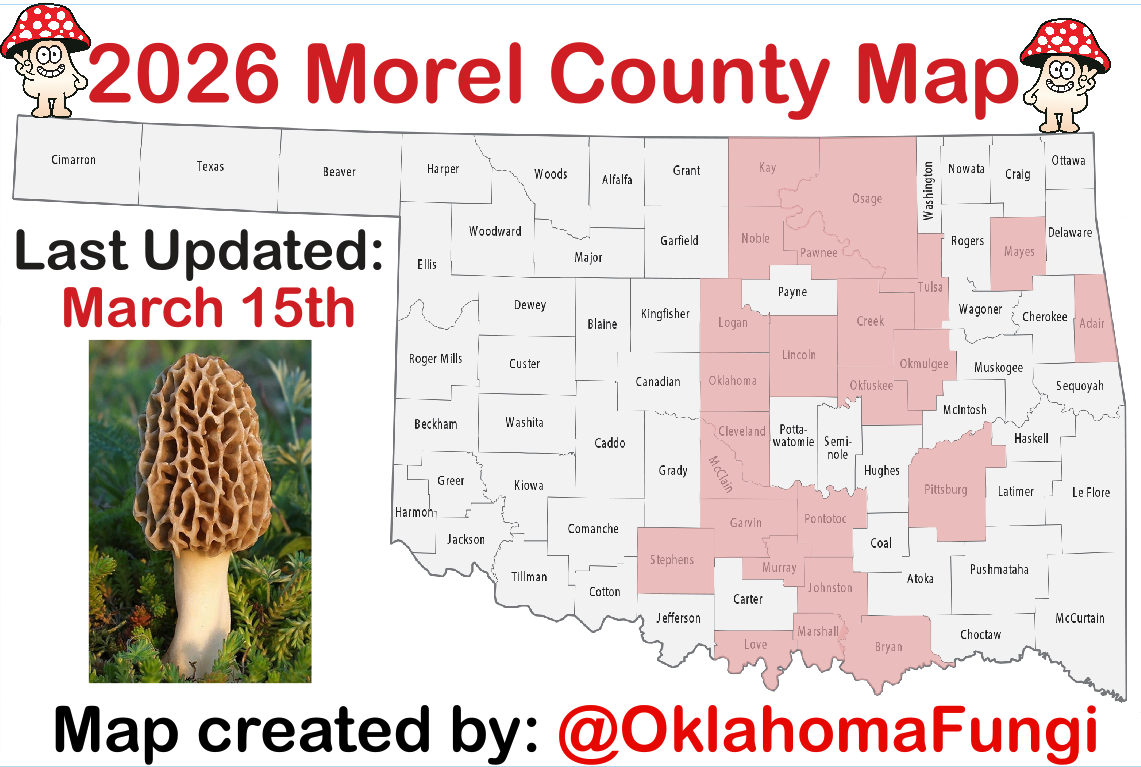
Foraging for morel mushrooms is one of the most exciting and rewarding activities for outdoor enthusiasts in Oklahoma. The most common edible morel species that grows in Oklahoma is the Yellow Morel (Morchella americana)which is prized for its distinctive appearance and delicious flavor. Morels emerge in the spring butunlike crops that follow a set growing seasonthey appear sporadicallyinfluenced by weather conditionssoil temperatureand other environmental factors.
If you want to go even deeper into the world of mushroomsconsider creating a free account on The Mushroom Directory. It is an easy way to learn more about different speciesstay updated on educational resourcesand meet others who share your passion. You can connect with local mushroom clubsexplore upcoming eventsand shop from verified mushroom vendors who care about quality and safety. Whether you are a growerforageror someone just getting startedThe Mushroom Directory gives you a reliable place to grow your knowledge and find trusted products from vendors around the globe.
When Do Morels Start to Fruit?
Morels typically begin to fruit when soil temperatures reach between 50-60°F at a depth of about 4 inches. Consistent nighttime temperatures above 40°F also contribute to their emergence. Rainfallfollowed by warm dayscan significantly boost morel growth.
Plant indicators can also help foragers know when morels might start appearing. Key signs to look for include:
Redbud trees blooming – This is often one of the best indicators that conditions are just right for morels.
Mayapples emerging – These umbrella-like plants tend to sprout around the same time that morels do.
Because of this unpredictabilityknowing when and where morels have been found in Oklahoma can be incredibly useful for foragers. To help the mushroom community track morel sightings and improve foraging successI created the Oklahoma Morel Mushroom Sighting Map—a county-based tracking system that highlights areas where morels have been found. Every time a morel mushroom is confirmed in a new countythat county is highlighted in red. This map serves as a community resourceallowing foragers to make informed decisions about when to start searching for morels while still keeping their specific foraging spots private.
Where Are Morel Mushrooms Commonly Found?
Morel mushrooms thrive across the Midwest and Great Plains regions due to the mix of deciduous forestsriver valleysand temperate climates. They are commonly found in states such as MissouriKansasNebraskaIowaIllinoisIndianaand Minnesotaas well as Oklahoma and Texas.
Typical locations where morels are commonly spotted include:
Hardwood forestsespecially near oakelmashand sycamore trees
Floodplains and river bottomswhere richmoist soil promotes growth
Burn sites and disturbed landas morels often flourish in post-wildfire areas
Orchardsparticularly abandoned apple orchardswhere the soil chemistry supports fungal growth
Foragers in the Midwest and Great Plains rely on many of the same indicators that guide Oklahoma foragerssuch as the blooming of redbud trees and the appearance of mayapples. By monitoring these patternsforagers can maximize their success in finding these elusive mushrooms.

Why Create A Morel Mushroom Sighting Map?
Since morels do not follow a strict scheduletheir emergence can vary from year to year. Factors such as soil temperaturerainfalland seasonal changes all play a role in when and where they will appear. By using the Morel Mushroom Sighting Mapforagers can:
Track morel activity across the state. Seeing which counties have confirmed morel sightings helps foragers anticipate when to begin their own search.
Avoid wasted trips. Instead of heading out blindlyforagers can use the map to determine if conditions in their area are favorable.
Collaborate with the community. While foragers understandably want to keep their exact spots privatesharing county-level data allows others to benefit from general trends.
Encourage more people to get outdoors. Knowing that morels are being found can motivate beginners and experienced foragers alike to explore nature.
Compare past years to predict future growth. Over the yearstracking morel growth patterns with the map helps foragers determine when to start searching each season. For examplein 2024the first confirmed morel sighting was on February 26while in 2023morels were first found on March 6. Observing these trends allows foragers to estimate when conditions will be right in their area.
Where Can You Legally Forage for Mushrooms in Oklahoma?
It is important to understand where foraging is permitted in Oklahoma. Currentlymorel foraging is allowed in three places:
Private Property – If you have permission from the landowneryou can forage for morels freely. Always get explicit consent before entering private land.
Chickasaw National Recreation Area – Located in south-central Oklahomathis national park allows foragingbut individuals are limited to a 5-gallon bucket of mushrooms per person per year. Learn more here.
Ouachita National Forest – This federally protected area also permits foraging with the same 5-gallon per person per year limit. Learn more here.
Foraging is not permitted on state-owned public landsincluding state parks and wildlife management areas managed by the Oklahoma Department of Wildlife Conservation. Always check local regulations before heading out.
Conclusion
Morel mushroom foraging in Oklahoma is an incredible way to connect with natureenjoy the outdoorsand harvest a delicious wild delicacy. The Morel Mushroom Sighting Map is a valuable tool that helps foragers track morel activitymake informed decisionsand collaborate with the community without giving away exact locations. By respecting legal foraging areasfollowing safety precautionsand contributing sightings to the mapwe can work together to make morel season in Oklahoma as productive and enjoyable as possible. Check back regularly for updatesand happy foraging!
