



Anemia
Anemia is when you have low levels of healthy red blood cells to carry oxygen throughout your body. Symptoms include fatigueweakness and feeling short of breath. They can be mild or severe. Anemia may be life-threatening. Many things may cause it and there are different types of the condition. Treatment varies depending on why you have anemia.
Advertisement
Cleveland Clinic is a non-profit academic medical center. Advertising on our site helps support our mission. We do not endorse non-Cleveland Clinic products or services. Policy
Overview
What is anemia?
Anemia is a blood disorder that happens when you don’t have enough red blood cells or your red blood cells don’t work as they should. Some types of anemia are inheritedbut people may also acquire or develop the condition during their lifetimes.
Advertisement
Cleveland Clinic is a non-profit academic medical center. Advertising on our site helps support our mission. We do not endorse non-Cleveland Clinic products or services. Policy
Anemia can affect your life in different ways. Some types of this condition have mild symptoms that ease with treatment. Other types are more seriouslike some that people inherit that cause lifelong medical issues. Severe anemia can be life-threatening. This condition may also be a symptom of serious conditions like cancer.
Is anemia a common disease?
Yesit is. Experts estimate that 3 million people in the U.S. have anemia. They also estimate the condition affects 1 in 3 people in the global population.
Symptoms and Causes
What are the symptoms of anemia?
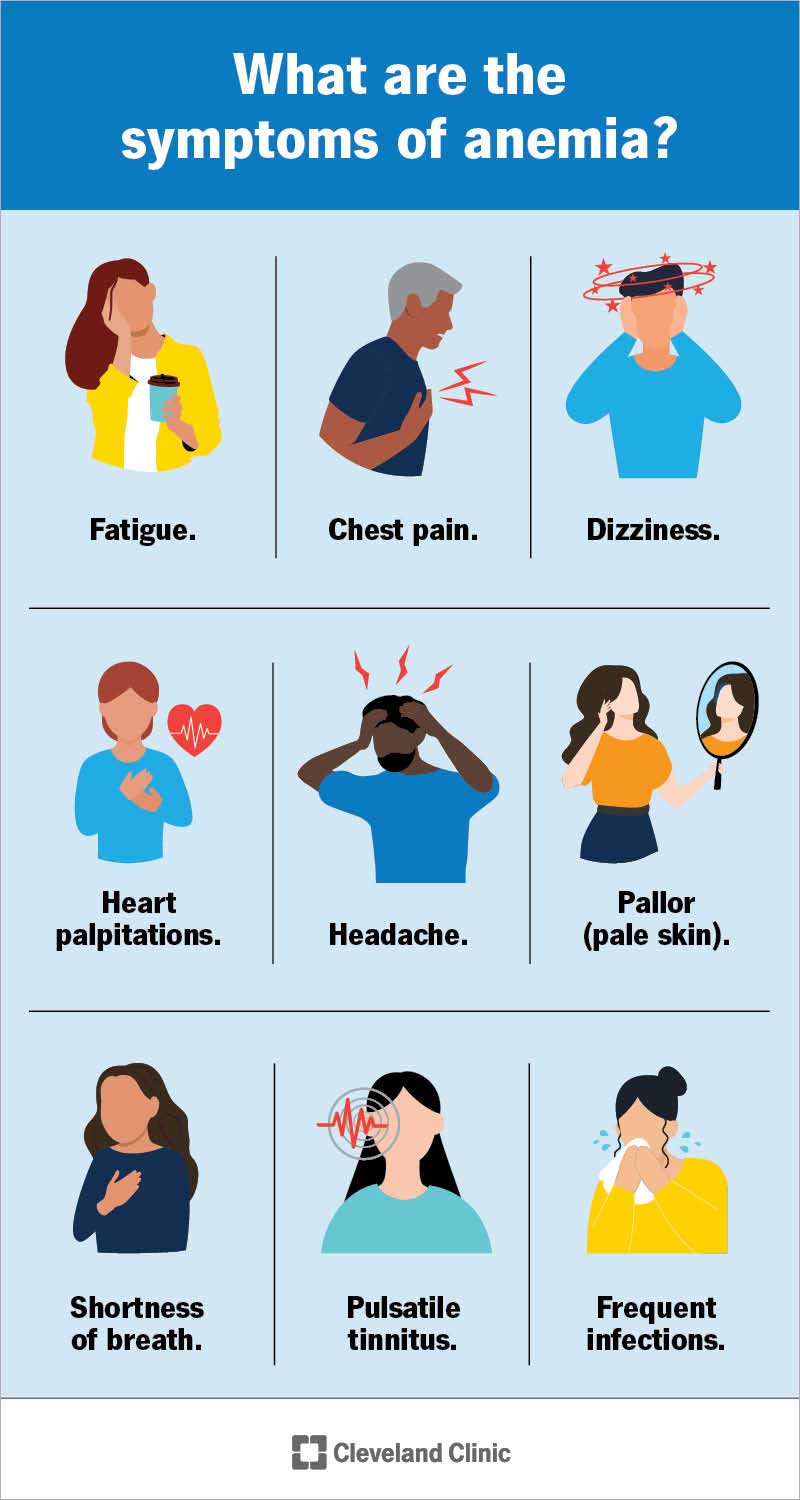
Fatigue — feeling too tired to manage your activities — is the most noticeable anemia symptom. Other symptoms may include:
- Chest pain.
- Dizziness.
- Frequent infections.
- Heart palpitations.
- Headache.
- Pallor (skin color that’s paler than usual).
- Pulsatile tinnitus.
- Shortness of breath (dyspnea).
What causes anemia?
Many things can cause it. For exampleiron-deficiency anemia is the most common type of anemia. You can develop this type if you don’t get enough iron from the food you eator if you lose blood from an injury or illness. Healthcare providers classify anemia as being acquired or inherited.
Acquired anemias
You develop or acquire anemia from something that happens during your lifetimelike a condition that causes it. Acquired anemias include:
Advertisement
- Anemia of chronic disease: You can develop this condition if you have an illness that causes chronic inflammationmaking it hard for your body to use the iron it needs to make red blood cells.
- Autoimmune hemolytic anemia: In this caseyour immune system attacks your red blood cells.
- Macrocytic anemia and megaloblastic anemia: These are types of anemia that develop when your bone marrow makes unusually large red blood cells. Certain medical conditions and vitamin deficiencies may cause these types of anemia. Healthcare providers may call these conditions vitamin deficiency anemia.
- Normocytic anemia: In this typeyou have fewer red blood cells than usual. There are many causes of normocytic anemia.
- Pernicious anemia: This conditionwhich is one of the causes of vitamin B12 deficiencyis an autoimmune condition that prevents your body from absorbing vitamin B12.
You can also develop anemia if you have certain chronic diseases. Anemia may be a symptom or complication of the following:
- Autoimmune diseases.
- Cancer.
- Inflammatory bowel disease (IBD).
- Kidney disease.
- Liver disease.
- Thyroid disease.
Inherited anemias
An inherited anemia is when you’re born with the condition. Inherited anemias include:
- Diamond-Blackfan anemia: This inherited disorder keeps your bone marrow from making enough red blood cells.
- Fanconi anemia: This is a rare blood disorder. People with Fanconi anemia have an increased risk of blood disordersincluding anemia.
- Sickle cell anemia: This condition changes your red blood cells’ shapeturning roundflexible discs into stiff and sticky sickle cells that block blood flow.
- Thalassemia: In this conditionyour body produces less hemoglobinresulting in small red blood cells and anemia.
Other anemia types
Some types of anemia may be inherited but can also be acquired:
- Aplastic anemia: This anemia happens when stem cells in your bone marrow don’t make enough blood cells.
- Hemolytic anemia: In this anemiayour red blood cells break down or die faster than usual.
- Microcytic anemia: This anemia happens when your red blood cells don’t have enough hemoglobin so they’re smaller than usual. Microcytic anemia occurs with iron deficiencythalassemiaand sideroblastic anemia. It also occurs in some people who have anemia of chronic disease.
- Sideroblastic anemia: Sideroblastic anemia results from abnormal iron use during red blood cell development.
Diagnosis and Tests
How is anemia diagnosed?
Your healthcare provider will ask questions about your symptoms. As anemia happens when you don’t have enough healthy red blood cellsthey’ll do blood testsincluding:
Advertisement
- Complete blood count (CBC): Healthcare providers use this test to check on all of your blood cellswith a focus on your red blood cells. Medical pathologists examine blood samples to count your red blood cells. They also examine your red blood cells’ size and shape. Healthcare providers may use this test to check on your vitamin B12 or B9 levels.
- Hemoglobin test: Hemoglobin is the main component of red blood cells. The test is often used to detect anemia.
- Hematocrit test: This test measures the percentage of red blood cells in your blood.
- Peripheral blood smear: Healthcare providers examine your red blood cells under a microscope to assess blood cell size and shape.
- Reticulocyte count: Reticulocytes are immature red blood cells. This test checks if your bone marrow is producing enough healthy red blood cells.
What are the complications of anemia?
Chronic anemia can cause serious medical issues like heart attackheart failure and organ damage. Chronic anemia is anemia that healthcare providers don’t diagnose and treat or that continues despite treatment.
Management and Treatment
How is anemia treated?
Your treatment will vary depending on the cause. If you have anemia because you have an underlying conditionyour provider will treat that condition. But they may also do the following treatments specifically for anemia. Treatments may include dietary supplements or medications.
Advertisement
Dietary supplements
Your provider may recommend the following supplements for anemia:
- Iron supplements: This supplement comes in capsules or tablets that you can take by mouth with a glass of water.
- Folic acid supplements: Vitamin B9 (folate) is an essential vitamin that helps your body form red blood cells and DNAwhich are the building blocks of your body.
- Vitamin B12 supplements: Vitamin B12 supplements support the production of healthy red blood cells.
Medications
Providers may prescribe medications for anemiaincluding:
- Erythropoietin: This medication helps your bone marrow to produce more blood stem cells.
- Immunosuppressants: If you have anemia because of an autoimmune disorderyour provider may prescribe medication that keeps your immune system from attacking your red blood cells.
Procedures
In some casesyour provider may recommend:
- Blood transfusion to replace red blood cells.
- Stem cell (bone marrow) transplant to replace unhealthy blood stem cells with healthy ones.
- Surgery to treat internal bleeding that’s causing anemia.
Can I fix anemia by myself?
Most of the timeanemia causes mild symptoms and is a short-term issue that you may be able to manage by changing your diet or taking supplements once a healthcare provider concludes that anemia is the reason why you have certain symptoms.
Advertisement
But anemia may cause symptoms similar to those of other diseases. For examplesomething other than anemia may be why you feel exhausted no matter how much rest you get.
Talk to your healthcare provider if you have fatigue or other changes in your body that don’t go away within two weeks. They’ll find out what’s causing your symptoms and treat the condition.
Outlook / Prognosis
Can you live a normal life with anemia?
That depends on your situation. Treatment may manage anemia symptoms. But many things can cause itlike incurable inherited disorders and chronic diseases. Chronic anemialike anemia that goes without treatmentcan cause serious complicationsincluding organ damage. If you have anemiaask your healthcare provider what you can expect.
Prevention
Can anemia be prevented?
You may be able to prevent the most common type of anemiairon-deficiency anemiaby including iron-rich foods in your everyday meals and snacks. But there are other types of anemia you can’t preventincluding inherited disorders.
Living With
How do I take care of myself?
While some types of anemia are short-term and mildothers can last a lifetime. Regardlessthere are several things you can do to help manage symptoms. Here are some suggestions:
- Follow a healthy eating plan: Poor eating habits are the primary reason why people develop anemia. Ask your healthcare provider about iron-rich foods and other foods you should eat to meet your body’s nutritional needs.
- Take your supplements as directed.
- Drink up: Drink lots of water so you stay hydrated.
- Keep moving: Regular exercise is part of a healthy life. But be sure to check with your healthcare provider about ways to exercise safely.
- Protect against infection: Wash your hands often. Ask your provider about vaccinations that help prevent viral and bacterial infections.
When should I seek medical care?
If you have anemiayou should check with your provider if your symptoms get worse despite treatment or if you notice changes in your body that may be new symptoms.
When should I go to the emergency room?
Anemia may increase your risk of a heart attack. Call 911 if you have the following symptoms:
- Chest pain.
- Shortness of breath or trouble breathing.
- Fatigue.
- Trouble sleeping (insomnia).
- Nausea or stomach discomfort. Heart attacks can often be mistaken for indigestion or heartburn.
- Heart palpitations.
- Anxiety or a feeling of “impending doom.”
- Sweating.
- Feeling lightheadeddizzy or passing out.
What questions should I ask my healthcare provider?
Anemia may affect your body in many ways. It may happen for many different reasons. If you have anemiahere are some questions you may want to ask your healthcare provider:
- What kind of anemia do I have?
- What caused it?
- What treatments do you recommend?
- When will I start to feel better?
- How long will I need treatment?
- Can you cure it?
A note from Cleveland Clinic
Anemia happens when you don’t have enough red blood cells or your red blood cells aren’t working as well as they could. Some people are born with forms of anemiabut most people who have anemia develop the condition over time. That’s why it’s important to keep track of changes in your body. For examplewe all have days when we feel worn out. But if you’re feeling very tired for several days despite getting restconsider talking to your healthcare provider.
Care at Cleveland Clinic
Cleveland Clinic’s primary care providers offer lifelong medical care. From sinus infections and high blood pressure to preventive screeningwe’re here for you.

Last reviewed on 04/16/2024.
Learn more about the Health Library and our editorial process.