The BlackBerry Pearl was an extremely popular phone in its time. Even todayit still generates plenty of web searches. Let’s take a look at what made it so popular…
Key Takeaways: The BlackBerry Pearl Era
- First of Its Kind: The BlackBerry Pearl was groundbreaking for being the first BlackBerry with a camera and media player.
- New Target Market: Aimed at both consumers and business usersthe Pearl expanded BlackBerry’s audience.
- Innovative Keyboard: The Pearl used BlackBerry’s SureType softwareoffering a unique hybrid of a traditional phone keypad and a QWERTY layout.
- Compact Design: Notably smaller than its peersthe Pearl emphasized portability and long battery life.
- Influence from Apple: The design incorporated a scroll-wheelclearly inspired by Apple’s iPod.
- Sales Success: It ran for eight generations and was one of the top-selling cellphones in 2009.
- End of an Era: The Pearl series ended as BlackBerry failed to adapt to the rise of Android and iOSleading to a decline in its market share.
Back in 2006the phone industry looked a lot different. Apple hadn’t entered the fray with its iPhone. Google had not yet acquired Android. It was a time when brands like NokiaPalmand BlackBerry ruled the roostand the most advanced things phones could do was web browsing and push email.
The phones during this era were not smartphones in the traditional sense of the word but they did pack in all the capabilities professionals needed to work on the move – stuff like email and messaging. But things moved slower back then. Google was only six years old at this point.
Real-time collaborative workingcloud computingremote working – these were all a decade down the line. In 2006you had email and text andif you were luckya camera on the back of your phone. There was no 3G and no fast mobile data. Just WAPand it was painfully slow.
But was the BlackBerry Pearl any good? Did it leave a lasting impression and/or mark on the industry at large? In order to answer this questionwe’ll go over what made the BlackBerry Pearl specialhow reviewers reacted to it at the timeand detail some of its – at the time – newbleeding-edge features.
BlackBerry Pearl Release Date
The original BlackBerry Pearl was released on September 122006. It was the first BlackBerry phone to ship with a camera and a media player. Dubbed “the fun BlackBerry”it spawned eight generations in total and was one of the first RIM phones to be marketed at both business users and consumers.
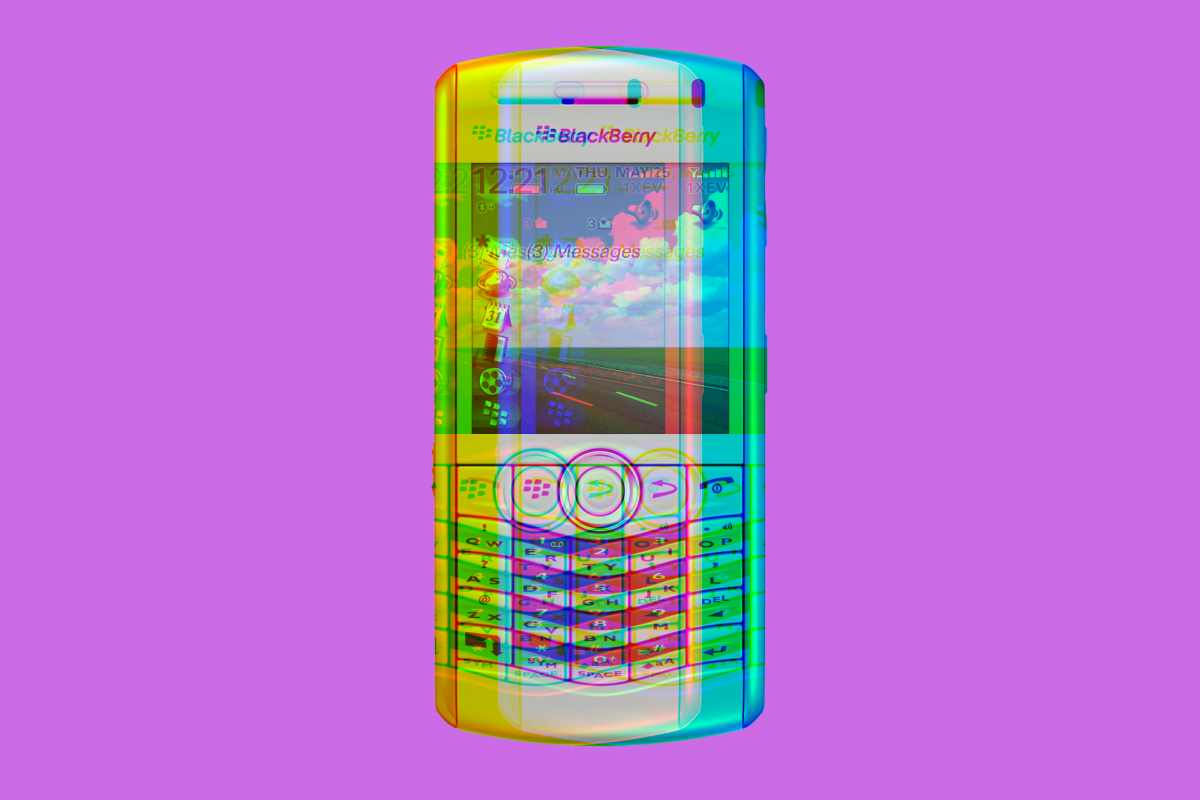
At this pointBlackBerry was fast becoming the biggest tech company on the planeta title it would officially claim in 2009. This era saw BlackBerry innovating away from its full QWERTY keyboard to a more compactmodern physical keyboard set in a 4-row x 5-column keypad which leveraged the company’s SureType software.
SureType is a QWERTY-based character input method for cell phones which is used on the BlackBerry Pearl. SureType combines a traditional telephone keypad with a QWERTY-based keyboard to create a non-standard way to input text on a cell phone.
In additionSureType contains a list of 35,000 English wordsso when a user types the beginning of a wordall the possible words which start with those letters show up on the screen. Additional words can also be added to the word list.
This was a big change for BlackBerry. Nearly all of its previous releases had used a full QWERTY keyboardso the move to this newmore modern keyboard was jarring for some. But the gamble paid offRIM marketed a svelter deviceand people got used to the new way of typing on their BlackBerry phones.
BlackBerry Pearl Design
Prior to the release of the BlackBerry Pearltrends have moved backwards towards larger and larger phones. This was done in order to accommodate flashiernew functions and features like WAP and emailand the larger batteries required to power them.
The BlackBerry Pearl was differentthough; it was extremely small compared to BlackBerry’s previous releases as well as most of its peers. It featured innovative new technologyRIM’s SureType Intelligent predictive typing softwarefor oneand a battery life that could last around 15 days on standby.
It joined the market competing with a raft of Nokia phonesthen powered by its Symbian OSMicrosoft’s last successful mobile operation systemWindows Mobileandof coursePalm’s line of phonesthe smartest of the bunch at the time.
Even thenthoughRIM was a stickler for function over frivolity; it designed its phones with security and work in mind. Fun was never part of the equation.
The Pearl was no exception. It lacked many of the features and abilities you’d find on Palm or Windows Phones of this era. But RIM did see fit to add in Bluetooth and a cameraas well as a web browser and a built-in media player that supported MP3 files and popular video formats.
The left side of the device has got the mini-USB power jackthe 2.5mm headphone jack and a quick-key that isby defaultprogrammed to activate voice dialling. The right side of the devicetraditionally housing the scroll wheelnow has volume up/down buttons and a quick-key that activates the camera. The top of the device has a mute button which can be quickly used to switch it between normal and silent.
The positioning of these buttons is not ideal. Having the headphone jack on the side of the device makes the whole thing a little clunky in the pocketwith the ‘phones sticking out the side of the device at an anglerather than lining up nicely with the top. Ditto for the power socket on the sidewhich would seem to work better located at the bottom of the device.
These are minor quibblesbut ones that hint at the device’s heritage as a quirky business devicenot one designed from the ground up for mass consumer usage.
Source
But RIM did borrow rather heavily from the design of Apple’s iPod for one aspect of the Pearl’s designhoweverillustrating even back then Apple’s ability to develop and set trends. BlackBerry execslike everybody elsehad no idea that in just a few short yearsit would be Apple – and Google – that would effectively kill off its entire phone business.
Most BlackBerry phones prior to the Pearl used a thumb wheel to navigate the phone’s settings and menus. But the Pearlin a blatant nod to Apple’s already iconic iPodswitched this out in favour of a scroll-wheel which was placed in the centre of the keyboard and featured a white centre buttonhence the name “pearl”.
It didn’t really behave much like the iPod’s scroll wheelhowevermuch to the dismay of many users. I guess RIM didn’t fancy a lawsuit from Apple. Rather than working like a simple scroll-wheelRIM‘s version was more like a trackballwhereby you stroke along the top of it in the direction you want to go – stroke left to move leftright to move rightand so on.
I was unable to find any obvious way to scroll in a given direction continually; you have to keep stroking. This is especially bad in the browserbecause the way many Web sites (like CNN.com and AccuWeather.com) render by defaultyou end up with a lot of material to scroll through to get to the real meat of the page. AccuWeather took dozens of downstrokes on the wheel until I got past what would have been side menus on a normally rendered page.
Source
HereagainBlackBerry hadn’t thought out who or what the Pearl would be used for. It wanted it to be a consumer phone but it didn’t realise that consumersand the web in generalwere in a state of flux. I was at university during this time andas Apple’s iPod became more and more popularI remember all too well the pains of accessing and reading web posts on my phone.
The First BlackBerry Phone With A Camera
Part of the BlackBerry Pearl’s initial consumer allure was thatlike many Nokia phones of the timeit shipped with a cameraso you could snap pictures using your phone – still very much a novelty in 2006 – and then view them on its screen.
Nowthe camera tech back in 2006 wasn’t anything to write home about. You had a 1.3MP sensor on the back of the BlackBerry Pearl which supported 5x digital zoom and a self-portrait mirror. Butas many reviewers pointed out at the timeits performance wasn’t exactly great.
But at least it had one. That was the point. RIM wanted to show its peers – NokiaPalmand Microsoft – that it too could produce a good-lookingfeature-packed phone that could not only take pictures and allow its user to watch videos and listen to music but also do all the core RIM stuff people demanded from their BlackBerry phones.
BlackBerry Bet Its Business on Email
Back in 2006social media was still very much in its infancy. Ditto the mobile web. But RIM remained steadfast in its focus on email. The popularity of email has not waned since 2006 – upwards of 81% of all business users claim it is still their main means of communication.
But what RIM failed to anticipate was the rise of social media networkstheir collective effect on how people communicatedandof coursethe changes that touchscreen phones – both iPhone and Android-based – would bring to the consumer market.
Similarlythe Pearl’s new keyboardat least for old-guard userswas described as being too muchtoo soon. It required that you effectively relearn how to typewhereas Apple’s iPhone placed a simple-to-use touchscreen QWERTY keyboard right under your fingertips thatimportantlygot out of the way when you weren’t using it.
RIM’s SureType attempted to make the new keyboard more palatable but it still didn’t get around the fact that the keyboard had been completely redesigned from the ground up. And thatof courserequired users to completely reprogram their muscle memoryafter years of honing on RIM’s full QWERTY keyboard.
Was The BlackBerry Pearl a Success?

Any phone that runs eight generations has to be considered a success. Indeedlooking back at the top five cellphones by sales volume from 2009 shows that the Pearl is placed fourth.
Not badright? Not at all. But what’s even more impressive is that three of the top five selling cell phones were all made by RIMwith the only exception being Apple’s iPhone 3G and the T-Mobile G1 – AKA the first proper Android phone.
From the release of the original BlackBerry Pearl in 2006there were eight updates overall to the platform. Here’s a list of all the BlackBerry Pearl models released between 2006 and 2010:
- BlackBerry Pearl 8100
- BlackBerry Pearl 8110
- BlackBerry Pearl 8120
- BlackBerry Pearl 8130
- BlackBerry Pearl 8220
- BlackBerry Pearl 8230
- BlackBerry Pearl 9100
- BlackBerry Pearl 9105
When the Pearl series was finally cancelled by RIM in 2010both Google and Apple were carving up the mobile space with their new operating systems. Apple’s iPhone was making huge inroads not only into the pockets of consumers but also business usersas BYOD culture increased at companies large and small.
RIM was still a big deal in 2010 but to many in the industryit was becoming incredibly obvious that RIM didn’t have a coherent plan to counter the rise of Android and iOS. Apple and Google’s phones could do what RIM’s phones could doand so much more besides. They had appsgamesand useful web browsers.
Once developers got started with iOS and Androidthe game was up for RIM. Apple and Google’s vision for cell phonesthat they should be funhave touchscreensand run games and appswon outwhile RIM’s focus on email and securitywhile perfectly logical at the timebegan to sound a little old-fashioned.
Shortly after 2008RIM’s market share fell off a cliffdropping from controlling 43% of the market to less than 20%.

From 2011its market share began to shrink more and moreand it never managed to recover. Attempts were made to make BlackBerry cool againbut none worked. RIM’s phones just didn’t have the samebroad appeal as the new generation of smartphones from AppleHTCSamsungand Motorola.
Ultimatelythe story of BlackBerry is one of failing to keep up with how people interact with a new and rapidly changing technology. It bears many parallels to the decline of email usage: emailonce revolutionary and ubiquitouswas considered to be on a rapid decline. Sleekerfaster ways of communicatingmany of them mobile-nativewere taking over (e.g.Slack and WhatsApp). A lot of communication also became image-based rather than text-based – and email did not lend itself well to that.
Source
If you need more info on where it all went wrong for BlackBerrycheck out our detailed analysis of the RISE AND FALL of BlackBerry…